


Amman Travel Guide
Originally built across seven hills, or , the capital of the Hashemite Kingdom of Jordan has expanded into a bustling metropolis that now stretches across numerous hills and valleys. Today, Amman is home to around 4.8 million people, nearly half of Jordan's population, and serves as the country's political, cultural, and economic centre.
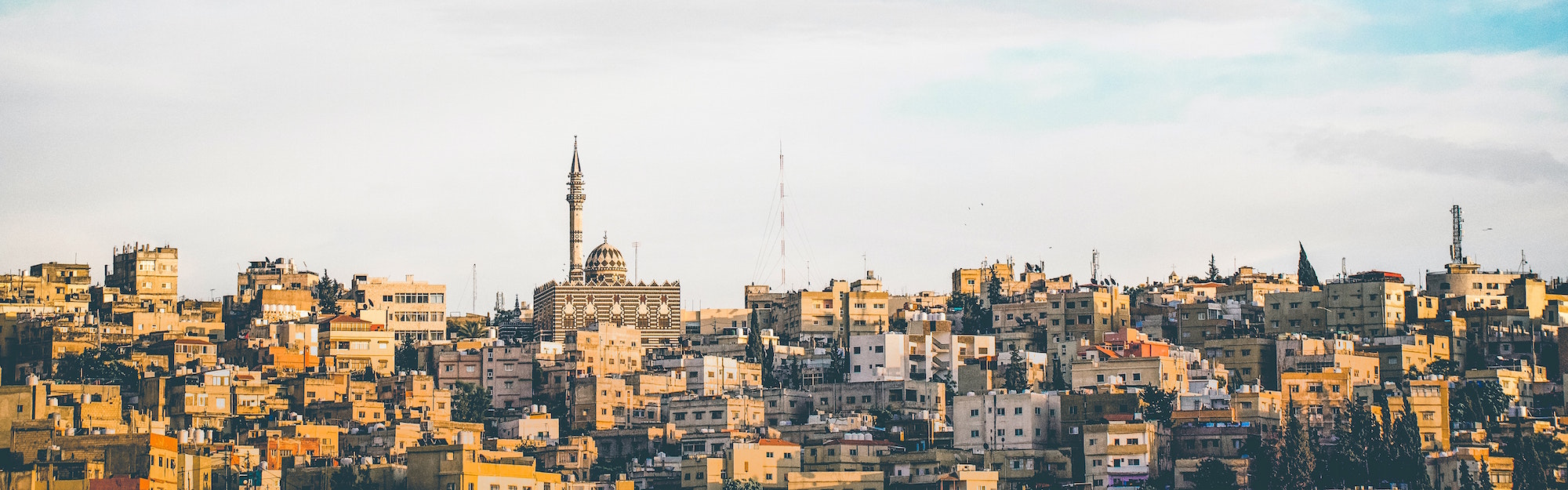
Nicknamed the White City, Amman's hills are covered with a patchwork of light-coloured limestone buildings. These are typically box-like in shape with flat rooftops, a feature common in traditional desert architecture. The city's landscape combines faded minarets, lively pavement markets, fragrant Arabian sweet shops, and remnants of ancient civilisations with sleek new towers, international restaurants, and stylish boutiques. This mix of old and new comes together most vividly in the city's bustling downtown, where Amman's famously welcoming residents go about their daily routines.
At the heart of this lively district stands the King Hussein Mosque, an Ottoman-style landmark that anchors the city's spiritual and social life. During prayer times, the surrounding streets are full of activity, filled with the sounds of bargaining in the souks (markets), the scent of spices and roasted nuts, and displays of glittering jewellery, textiles, and handmade crafts.
Amman's sense of history is as powerful as its atmosphere. With roots stretching back more than 5,500 years, it was once the ancient capital of the Ammonites, known as Rabbath-Ammon in the Old Testament. Under Greco-Roman rule, it became Philadelphia, one of the cities of the Decapolis. Overlooking modern Amman from Jabal al-Qal'a is the Citadel, the site of ancient Rabbath-Ammon, where ruins from Roman, Byzantine, and early Islamic periods still stand. At the base of the hill lies the city's most iconic archaeological site, the Roman amphitheatre, a remarkably well-preserved remnant of ancient Philadelphia.
Despite its deep historical roots, Amman is a thriving and modern city. It's a commercial and administrative hub that offers all the conveniences of a cosmopolitan capital while maintaining a strong tradition of hospitality. Thanks to its central location, Amman is also an ideal base for exploring Jordan. From the capital, no destination in the country is more than a five-hour drive away.
Things to do in Amman
The hilly capital of Amman is filled with excellent sightseeing opportunities and activities for all kinds of travellers. One popular route is the Desert Castle Loop, which stretches mostly east and southeast of the city. This route features a series of historic Umayyad desert castles, such as Qasr Al-Kharrana, Qasr Amra, and Qasr Al-Azraq. It makes for a fascinating day trip through Jordan's arid landscapes, with opportunities to explore unique architecture and centuries-old history, perfect for families and history enthusiasts alike.
Within the city itself, there's no shortage of things to do. A tour of the spectacular Roman Amphitheatre in downtown Amman is a must, offering a glimpse into the city's ancient past. Just a short walk away is Citadel Hill, or Jabal al-Qal'a, where visitors can climb up to enjoy panoramic views of Amman's sprawling hills and neighbourhoods. For a more relaxed experience, sitting at one of the city's many bustling street cafés offers an ideal way to soak in the atmosphere. Whether chatting with locals or simply observing daily life, visitors are encouraged to take some time to enjoy the city's vibrant street culture.
Not far from the capital, travellers can enjoy a variety of rewarding day trips. Highlights include Jerash, one of the best-preserved Roman cities in the world, Madaba, famous for its Byzantine mosaics, and Mount Nebo, a biblical site believed to be where Moses viewed the Promised Land. Each destination has its own unique charm and cultural importance, and all are easily reachable within an hour or two by car.
A visit to the Dead Sea is also a must when in Jordan. Just a short drive from Amman, the road descends through the olive-covered northern hills into the dramatic Jordan Rift Valley, eventually reaching the shores of the Dead Sea, the lowest point on earth's surface. Floating in its salty waters and witnessing the stark beauty of the surrounding desert makes for an unforgettable experience.
Amman offers an ideal mix of historic depth, modern charm, and easy access to many of Jordan's most iconic sites, making it an excellent base for exploration.
Citadel Hill
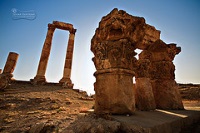
Perched atop Jabal al-Qal'a, the Amman Citadel offers sweeping views of the city and contains ruins from several ancient civilisations, including Roman, Byzantine, and early Islamic periods. Notable structures include the Umayyad Palace, a small Byzantine church, and the Temple of Hercules. While a small archaeological museum remains on site, most major artefacts, including the Dead Sea Scrolls, Iron Age sarcophagi, and a replica of the Mesha Stele, are now housed in the Jordan Museum in downtown Amman. The Citadel is a must-visit for those interested in Jordan's rich and layered history.
Roman Theatre
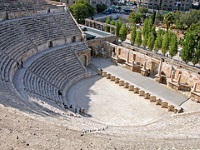
Below the Citadel lies the impressive Roman Theatre of Amman, which is carved into the hillside and able to seat up to 6,000 people. Built during the reign of Emperor Antoninus Pius between 138 and 161 CE, it remains a well-known landmark and is still occasionally used for concerts and cultural events. Flanking the theatre's stage are two small museums: the Jordan Folklore Museum, which displays traditional rural and urban life artifacts, and the Museum of Popular Traditions, featuring regional costumes and mosaics from 4th to 6th century Jordanian churches. The theatre sits adjacent to the Hashemite Plaza, the Odeon Theatre, and the nearby Nymphaeum fountain.
Jerash
Situated about 31 miles (50 km) north of Amman is one of Jordan's top attractions: the ancient city of Jerash. Often regarded as one of the best-preserved Roman provincial cities in the world, Jerash owes its exceptional state to centuries of abandonment, limited urban development, and gradual burial under earth and debris. Its magnificent baths, theatres, temples, arches, colonnaded streets, and stone-rutted roads have long attracted scholars and tourists alike to admire one of the most complete cities of the Roman Decapolis. Archaeological discoveries indicate human activity in the area since the Neolithic Age, though the city itself flourished during the Greco-Roman period. Today, visitors can marvel as the ancient amphitheatre comes to life during the annual Jerash Festival of Culture and Arts, where artists from around the globe sing, dance, act, and perform in a celebration of Jordanian and international culture.
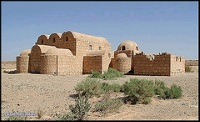
Desert Castle Loop
Stretching east of Amman toward Saudi Arabia and Iraq lies a vast desert plain dotted with historic castles, forts, baths, and palaces known as the Desert Castles. Built mostly during the Umayyad period (7th to 8th centuries AD), these sites served varied purposes including retreats, military outposts and caravan stops. Qasr Mushatta is the largest and most elaborate, though never completed, with its façade now in Berlin's Pergamon Museum. The best-preserved is Qusayr Amra, a UNESCO World Heritage Site famed for its domed bathhouse and colourful frescoes. Other notable sites include Qasr al-Azraq, once Lawrence of Arabia's base, Qasr al-Kharana, and the partially restored Qasr al-Hallabat.
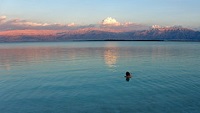
The Dead Sea
Situated about 28 miles (45 km) southwest of Amman lies the famous Dead Sea, the lowest point on Earth at around 1,410 feet (430m) below sea level. With a salt concentration nearly ten times that of the ocean, it's devoid of fish or plants, though microscopic organisms thrive. Its mineral-rich waters and black mud have made it an internationally renowned destination since ancient times, prized for their healing properties and the unique experience of floating effortlessly. Most visitors head to the northern shore resort area of Sweimeh, where they can enjoy beaches, restaurants, showers and spa treatments. Accommodation, including medical therapies, is available at the Dead Sea Spa Hotel and other nearby resorts.
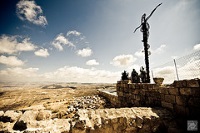
Mount Nebo
Mount Nebo is one of Jordan's most sacred sites, traditionally believed to be the place where Moses viewed the Promised Land before he died, though his exact burial site remains unknown. Located on the edge of a plateau about six miles (10km) from Madaba, Mount Nebo offers breath-taking views across the Jordan Valley and the Dead Sea, with Jerusalem sometimes visible on a clear day. A modern shrine, built over the remains of a 6th-century Byzantine monastery, protects the site's original floor mosaics. In the surrounding grounds stands the symbolic Serpentine Cross, representing both Moses' bronze serpent and the crucifixion of Christ.
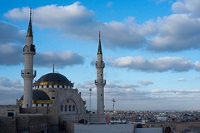
Madaba
Madaba is most famous for its spectacular Byzantine and early Islamic-era mosaics from the 5th to 8th centuries, found throughout the town's churches and historic buildings. Located just 19 miles (30 km) south of Amman, it's home to the renowned 6th-century Madaba Map, a detailed mosaic depicting Jerusalem and the Holy Land. One of the town's most beautiful mosaics decorates the floor of the Church of the Apostles, while the Archaeological Park features a rich collection of mosaics viewed from above via elevated ramps. The Greek Orthodox Church of St George houses the Madaba Map, the earliest surviving original map of the Holy Land, laid around 560 AD.
Getting Around
Amman is a sprawling city, but getting around is manageable with several transport options. Metered yellow taxis are inexpensive and widely available, while white shared taxis follow fixed routes. Uber and Careem operate reliably. The Bus Rapid Transit (BRT) system and Amman's modern municipal buses are efficient and safe, though most signage is in Arabic. Informal white minibuses also run throughout the city but can be harder to navigate without local knowledge. Helpful locals and transport apps such as Amman Bus make getting around easier. Car hire is available, but hiring a vehicle with a driver (at an added cost) is often a more comfortable option, especially for navigating traffic or making day trips beyond the city.
Amman Climate and Weather
Amman has a semi-arid climate, characterised by hot, dry summers and cool, wet winters. Summers last from June to early September, with high temperatures averaging around 86°F (32°C). Humidity is generally low, and breezes help moderate the heat. Rain is rare during summer, and nights are typically dry. Spring is brief, occurring from April to May, and can bring occasional rain showers. Winter, lasting from December to February or March, is cooler and wetter, with temperatures sometimes dropping near freezing. Snowfall is infrequent but possible between December and March, and fog is common during this season. The most comfortable times to visit Amman are generally spring and fall, when temperatures are milder, though summer can be enjoyable for those who prefer hot, dry weather.
Jordan travel info
Electricity
The electrical current is 230 volts, 50Hz. European two-pin plugs are most common, though occasionally UK flat three-pin plugs are used.
Language
Arabic is the official language of Jordan. English is also spoken in the tourism sector and is commonly understood by many Jordanians, especially in urban areas.
Money
The Jordanian dinar (JOD) is the official currency, divided into 100 piastres or 1,000 fils. Currency can be exchanged at banks, licensed moneychangers, and some hotels. Banks close on Fridays and often Saturdays.
Visa and MasterCard are widely accepted; American Express less so, and Diners Club is rare. ATMs are common in cities but limited in rural areas.
Apple Pay works at many modern businesses in urban areas. Google Pay is supported in some cases, depending on the card in question. Digital payments are growing, but it's wise to carry a physical card or cash, especially outside major cities.
Tipping
Many mid-range and high-end hotels and restaurants include a 10 percent service charge, though this may not go directly to staff. In smaller or local establishments, a five to 10 percent tip is appreciated if service is good. For taxis, it's customary to simply round up the fare rather than leave a separate tip.
Health
Travellers arriving from or transiting through countries with yellow fever may need to show proof of vaccination. A typhoid vaccine is also recommended for those visiting rural areas, staying long-term, or spending time with local families.
Bottled water is widely available and affordable, and is generally the safest choice. Some higher-end hotels may offer filtered water, but bottled is still preferred by most travellers.
Medical care in Amman and Aqaba is good, but facilities in rural areas are basic. For emergencies, treatment should be sought in one of these cities.
Comprehensive travel insurance is strongly advised, including coverage for medical treatment and emergency evacuation if needed.
Safety
Most visits to Jordan are safe and enjoyable, with the country welcoming many tourists each year. While the overall risk is low, travellers should stay aware in busy public areas and at tourist sites.
It's best to avoid travel near the borders with Syria and Iraq due to security concerns and limited emergency services. Public demonstrations are usually peaceful but can become unpredictable, so visitors should avoid large gatherings.
Crime levels are generally low, though minor theft such as pickpocketing or bag-snatching can happen. Visitors should keep valuables secure and be mindful in crowded places.
Local customs
Visitors are encouraged to be mindful of local customs, especially during Ramadan, when eating, drinking and smoking in public during daylight hours is best avoided. Alcohol is available in licensed places but should not be consumed in public areas.
Dressing modestly is appreciated; women may feel more comfortable with their shoulders and legs covered in public spaces.
Same-sex relationships are not illegal, though public displays of affection between couples, regardless of orientation, may be seen as inappropriate in more traditional settings.
Bedouin hospitality is sincere and generous. If travellers are offered tea or a meal, bringing a small gift is a thoughtful but not expected gesture.
Bargaining is a friendly part of shopping in markets and can be an enjoyable experience.
Doing business
Jordanian business attire tends to be formal, with men often wearing suits and ties, and women choosing modest professional outfits with high necklines and sleeves. In creative industries and urban workplaces, more relaxed attire is becoming acceptable. Meetings may begin slightly later than scheduled, but being on time is appreciated. English is commonly used, and using a few Arabic greetings and bilingual business cards can leave a positive impression.
It's not unusual to be invited to a meal, with the host covering costs. Offering a small, thoughtful gift (such as flowers or sweets) is kind but not expected, but it's important to avoid alcohol. The workweek runs from Sunday to Thursday, and typical hours are roughly 8.30am to 1pm and 3.30 to 6.30pm, though Ramadan and public holidays may bring adjustments.
Duty free
Travellers over 18 may bring up to 200 cigarettes, one litre of alcohol, and gifts worth up to JOD 50 into Jordan duty-free. Firearms require prior approval, and items such as narcotics, birds or bird products (without permission), and offensive materials are prohibited.
Communications
Jordan's dialling code is +962. To call abroad, visitors should dial 00 plus the country code. Free WiFi is common in hotels, cafes and shopping centres; visitors can purches local SIM cards for unlocked phones.
Passport & Visa
All foreign travellers to Jordan are generally required to hold a return or onward ticket and have the appropriate documentation for their next destination. Most nationalities must obtain a visa to enter, which is often available upon arrival by air. Passports should be valid for at least six months beyond the intended duration of visitors' stays in Jordan and should ideally include two blank pages. Immigration officials typically follow official policies and rarely impose unexpected or unofficial rules.
Entry requirements
US citizens must have a passport that is valid for at least six months beyond the date of their arrival in Jordan. A visa is required and can be obtained on arrival.
British citizens must have a passport that is valid for at least six months beyond the date of their arrival in Jordan. A visa is required and can be obtained on arrival.
Canadian citizens must have a passport that is valid for at least six months beyond the date of their arrival in Jordan. A visa is required and can be obtained on arrival.
Australian citizens must have a passport that is valid for at least six months beyond the date of their arrival in Jordan. A visa is required and can be obtained on arrival.
South African citizens must have a passport that is valid for at least six months beyond the date of their arrival in Jordan. A visa is required and can be obtained on arrival for a maximum stay of 30 days. It is possible to apply for an extension.
Irish citizens must have a passport that is valid for at least six months beyond the date of their arrival in Jordan. A visa is required and can be obtained on arrival.
New Zealand citizens must have a passport that is valid for at least six months beyond the date of their arrival in Jordan. A visa is required and can be obtained on arrival.
Useful contacts
Jordan Tourism Board, Amman: +96 26 5678 444 or www.visitjordan.com
112 (police) 140 (medical emergencies) 175 (fire and rescue).