


Antananarivo Travel Guide
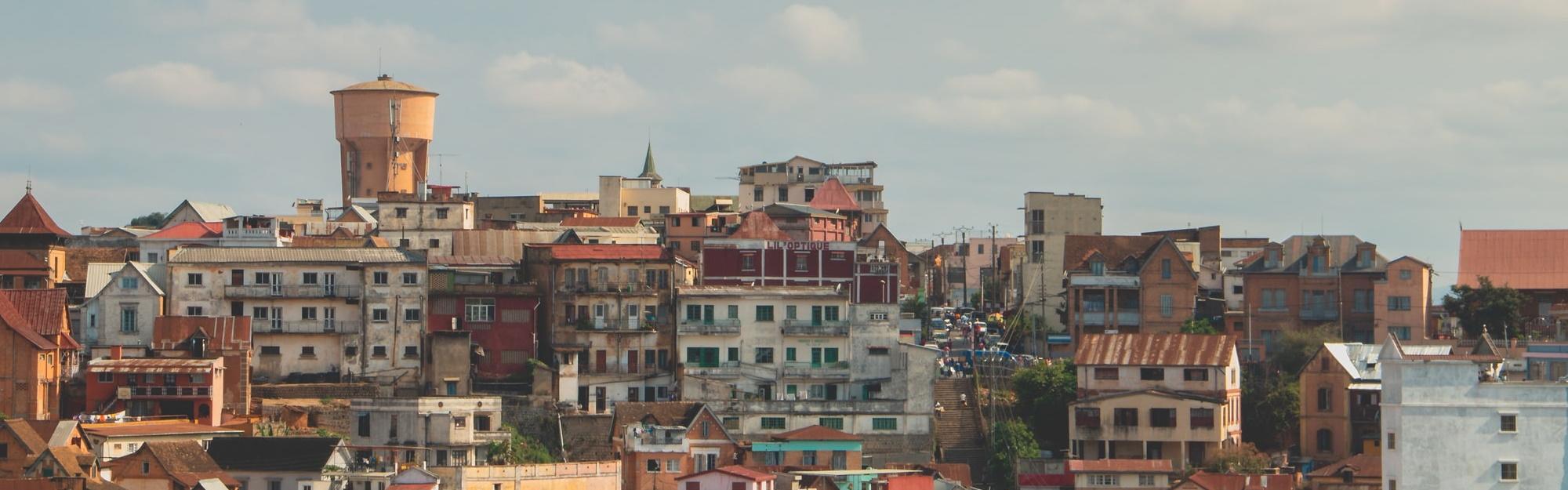
Locally known as 'Tana', Madagascar's lively capital, Antananarivo, sits amid rolling highland landscapes and is steeped in history. Perched on ridges and hillsides, its red rooftops scattered across the slopes, the city serves as the island's main gateway and offers an intriguing blend of tradition, colonial influence and modern energy.
French architectural touches blend with Malagasy culture in the city's winding streets, where red-brick houses and 19th-century churches add character to every turn. Antananarivo may be chaotic at times, but its atmosphere is vibrant and distinctive, making it an attraction in its own right.
Among the city's highlights are the Royal Hill of Ambohimanga (a UNESCO World Heritage Site and one of Madagascar's most sacred places), the Andafiavaratra Palace (formerly the Prime Minister's residence), and the Rova of Antananarivo. Once the Queen's Palace, the Rova was badly damaged by fire in 1995 and is now undergoing long-term restoration. The city's name, Antananarivo, meaning 'City of a Thousand', dates back to the 17th century, when King Andrianjaka stationed 1,000 soldiers here to defend the royal hill he had conquered. Today, the site remains a powerful symbol of national heritage.
Shopping in Tana is an adventure of its own, with a dynamic mix of street vendors, bustling markets, artisan stalls and modern shopping centres. While the legendary Zoma Market, once among the world's largest open-air markets, is no longer held, its spirit lives on in places such as the Analakely Market and the Andravoahangy artisan centre. These are excellent spots to find handcrafted souvenirs, from woodcarvings and oil paintings to handwoven fabrics, embroidered goods and straw hats.
Some items made from natural materials, such as coral or seashells, may be subject to export restrictions due to environmental protections, so it's best to check before buying. Haggling is part of the shopping experience, though visitors should expect to pay higher prices than locals. A few words of French can go a long way when bargaining and navigating local interactions.
As with any major city, opportunistic crime can be a concern. Visitors should keep a close eye on their belongings in crowded areas and take standard precautions, especially in busy markets.
Getting Around
Travellers in Antananarivo typically get around on foot within the central districts, though uneven sidewalks and petty crime mean caution is advised. The city's main public transport is the affordable but often crowded mini-buses known as taxi-be, which run on fixed routes but can be confusing for visitors. Most tourists prefer regular taxis, but should always negotiate fares before the ride, as meters are rarely used. Informal shared taxis and motorcycle taxis exist elsewhere in Madagascar but are uncommon or not recommended in Antananarivo; app-based ride services are limited and not widely available. Car rentals are possible but challenging due to poor road conditions and heavy traffic. For longer journeys, locals use taxi-brousse, shared minibuses connecting towns, but these are often crowded and slow.
Antananarivo Climate and Weather
Madagascar has a pleasant, subtropical highland climate. The hot, rainy season runs from November to April and a cooler, dry season from May to October. Antananarivo experiences regular thunderstorms during its rainy season, with average highs peaking at 80°F (27°C) and lows dropping to 62°F (17°C). July is the coolest month, with average highs of 68°F (20°C) and lows of 50°F (10°C). The best time to visit is in April, October, and November.
Madagascar travel info
Electricity
The electrical current is 220 volts, 50Hz. Plugs are generally of the two-pin variety.
Language
Malagasy and French are the official languages of Madagascar, though French is widely used in cities, government and business. English is not widely spoken, but some people working in tourism may have basic English skills.
Money
The official currency is the Malagasy Ariary (MGA), which replaced the Malagasy Franc. Older coins and notes show both currencies, but newer ones highlight the Ariary. One Ariary equals five Francs. Foreign currencies such as US Dollars and Euros can be exchanged at banks and official bureaux de change, but the Ariary cannot be converted back into foreign currency. Some banks only accept USD or EUR. ATMs are available in Antananarivo. Major credit cards are accepted at top hotels and travel agencies in the capital and other big towns, but acceptance is limited elsewhere. While Apple Pay and Google Pay are technically available for online and in-app payments, their use in physical stores is rare, so travellers should rely mainly on cash and local mobile money services.
Tipping
Tipping in Madagascar is appreciated but not mandatory. In restaurants, rounding up the bill or leaving five to 10 percent is customary; hotel staff, drivers and guides also welcome small tips. Travellers should always tip in local currency if possible. While not expected in rural areas, a small gesture of appreciation is considered polite in more tourist-oriented settings.
Health
Malaria is a risk throughout the year and the risk of infection is highest in coastal areas; visitors should take appropriate measures to avoid contracting the disease. All travellers coming from a country with yellow fever risk are required to prove they have been vaccinated against the disease to enter Madagascar. Vaccinations are also recommended for hepatitis A, hepatitis B, typhoid and influenza, and those at risk of animal bites should also consider a rabies vaccination. Tap water should not be drunk unless it has been boiled or chemically treated.
Medical facilities are severely limited in Madagascar, and outside of the capital medical care may be difficult to find. Limited French medications are available in Tana; however, it is advisable to bring along a medical kit for private use. If you require specific prescription medications it is best to bring them with you, in their original packaging, along with a signed and dated letter from your doctor stating what they are and why they are needed. Comprehensive medical insurance is advised.
Safety
Madagascar's political situation, especially in central Antananarivo (including Ambohijatovo, Lac Anosy, Antaninarenina, and Analakely), can sometimes be unpredictable, so it's best to avoid large gatherings or demonstrations as they may become tense. Travelling with a trusted tour operator is recommended, and solo travellers should keep an eye on local news. Visitors should be mindful of pickpockets, especially in busy places such as markets and airports. They should also avoid walking alone in city centres after dark and be cautious when travelling on roads outside urban areas at night. It's advisable that travellers carry their original passport and keep a photocopy safely stored. The cyclone season peaks from January to March, mainly affecting coastal areas; piracy is still a risk in the Gulf of Aden and Indian Ocean for boats.
Local customs
Madagascar has a rich and diverse culture shaped by Southeast Asian, African and French influences, and respecting local customs is important, especially in rural areas where traditional beliefs are deeply rooted. One unique aspect is fady, or local taboos that can vary from place to place. These may relate to food (such as avoiding pork or shellfish), behaviour (such as pointing at graves), or clothing (such as not wearing red near sacred sites). They are taken seriously, so when in doubt, visitors should ask a guide or local host. Modest dress is appreciated, particularly in villages and religious areas. A warm greeting ('Salama!') goes a long way, and it's polite to ask before taking photos of people or ceremonies. With a little cultural awareness, visitors will be welcomed with genuine warmth and curiosity.
Doing business
In Madagascar, business etiquette places importance on respect, patience and building relationships. While punctuality is valued, meetings often begin late, so flexibility and courtesy are essential. A handshake with eye contact is the standard greeting, and using French titles such as Monsieur or Madame is considered respectful. Hierarchy plays a significant role, so it's important to address senior figures first and to wait before being invited to speak in formal settings. Business cards are commonly exchanged and should be offered and received with both hands. Communication is often indirect, and open disagreement is discouraged. Trust develops gradually, so negotiations may take time. Professional, conservative dress is expected. Showing interest in Malagasy culture and learning a few local phrases helps strengthen business relationships.
Duty free
Visitors may bring 500 cigarettes or 25 cigars or 500g tobacco, as well as one bottle of alcohol into the country without incurring import duty.
Communications
The international dialling code for Madagascar is +261. The outgoing code is 00 followed by the relevant country code (e.g. 0027 for South Africa). Visitors can easily buy prepaid SIM cards for unlocked phones; many hotels, cafes and restaurants in towns and cities offer WiFi, though connectivity can be less reliable in rural areas.
Passport & Visa
Foreign visitors to Madagascar (except Burundi) can obtain a tourist visa on arrival or via eVisa if their passport has at least six months' validity remaining, includes three blank pages, and they hold a return or onward ticket. Visas are valid for 15, 30, 60 or 90 days. On-arrival visas are limited to 60 days (extendable to 90), while 90-day stays require an eVisa. Visitors will need proof of yellow fever vaccination if they've recently been in or passed through a country where it's a risk. It's highly recommended that travellers' passport have at least six months' validity remaining after the intended date of departure from their travel destination. Immigration officials often apply different rules to those stated by travel agents and official sources.
Entry requirements
US citizens must have a passport that is valid for at least six months beyond the date of entry into Madagascar, with sufficient blank pages for visa stamps. A tourist visa allowing a stay of up to 90 days can be obtained on arrival or via eVisa.
British citizens must have a passport that is valid for at least six months beyond the date of entry into Madagascar, with sufficient blank pages for visa stamps. A tourist visa allowing a stay of up to 90 days can be obtained on arrival or via eVisa.
Canadian citizens must have a passport that is valid for at least six months beyond the date of entry into Madagascar, with sufficient blank pages for visa stamps. A tourist visa allowing a stay of up to 90 days can be obtained on arrival or via eVisa.
Australian citizens must have a passport that is valid for at least six months beyond the date of entry into Madagascar, with sufficient blank pages for visa stamps. A tourist visa allowing a stay of up to 90 days can be obtained on arrival or via eVisa.
South African citizens must have a passport that is valid for at least six months beyond the date of entry into Madagascar, with sufficient blank pages for visa stamps. A tourist visa allowing a stay of up to 90 days can be obtained on arrival or via eVisa.
Irish citizens must have a passport that is valid for at least six months beyond the date of entry into Madagascar, with sufficient blank pages for visa stamps. A tourist visa allowing a stay of up to 90 days can be obtained on arrival or via eVisa.
New Zealand citizens must have a passport that is valid for at least six months beyond the date of entry into Madagascar, with sufficient blank pages for visa stamps. A tourist visa allowing a stay of up to 90 days can be obtained on arrival or via eVisa.
Useful contacts
Madagascar Tourism Website: www.madagascar-tourisme.com
117 (Police)