

City guides
 Canada
Nova Scotia
Canada
Nova Scotia
Halifax Travel Guide
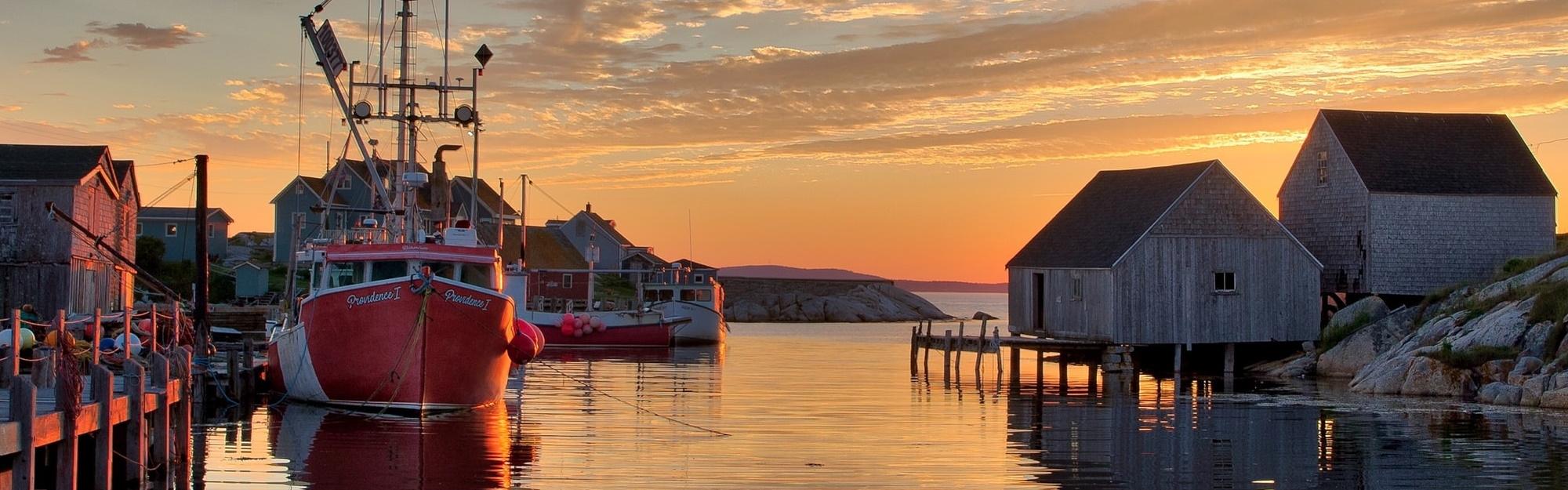
Halifax is the provincial capital of Nova Scotia, and serves as the centre of commerce for Atlantic Canada. It sits on one of the largest natural harbours in the world and has long been an important maritime centre.
Founded in 1749 by the British who sought to strengthen their presence in the North Atlantic, the city retains its British military air. Many historic stone and wood buildings have been preserved, particularly in the restored waterfront area, which has become a major tourist attraction. The metro offers shopping, exciting nightlife, eclectic restaurants and a diversity of entertainment, and it boasts North America's oldest yacht club, Northwest Arm.
Halifax is also the cultural hub of Nova Scotia and the Atlantic provinces as a whole. It has a number of art galleries, museums, theatres and other charming cultural attractions. It's also home to the Nova Scotia Symphony, and also hosts many cultural festivals such as the Nova Scotia International Tattoo, Shakespeare by the Sea, the Halifax International Busker Festival and the Atlantic Film Festival.
Visitors can find out more about the city's culture from reading The Coast, its free alternative arts weekly magazine which can be found online. The city also offers a range of lovely recreational sites, such as parks, beaches, walking trails and some living-history experiences such as the firing of the noon day gun at the Halifax Citadel and the working locks of the Shubenacadie Canal.
Halifax offers visitors a fascinating glimpse into life in Canada's Atlantic provinces, and there's so much to see and do here that tourists will hardly ever experience a dull moment.
Things to do in Halifax
Halifax's waterfront is a tourist playground of pubs, shops, museums, craft markets and outdoor concerts. In fact, the city's student population ensures a lively pub and bar scene well beyond the waterfront district.
Visitors will encounter plenty of history too, such as the graves of about 150 victims of the Titanic disaster, Pier 21, which is where immigrants were once processed for entry to Canada, and the Halifax Citadel. Visitors who enjoy maritime history should stop at the Maritime Museum of the Atlantic.
Most tourist attractions are located downtown and can be reached on foot. Visitors who want to explore more widely should consider booking a tour or hiring a car, as the public transport system is not comprehensive. Travellers should note that some attractions only open in the summer months.
Citadel
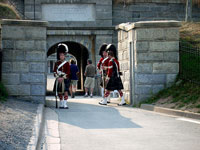
One of Halifax's military-history heritage sites, the Citadel was built between 1828 and 1856. It's designed in a star shape and features vaulted rooms, a dry defensive ditch and a musketry gallery, offering an awe-inspiring view of Halifax and its harbour from the ramparts. Visitors can watch an audio-visual presentation about the defences of Halifax and visit the soldiers' library, barrack rooms, powder magazine and garrison cell. The site also has exhibits on the communications, engineering and construction of the Citadel. Guides at the site wear the uniform of soldiers of the Royal Artillery and the 78th Highlanders of 1869, and conduct tours in English and French.

Memory Lane Heritage Village
This site in Clam Harbour Road, Lake Charlotte, is owned and operated by the community, and features 13 restored buildings that illustrate rural village life in Nova Scotia in the 1940s. Local people demonstrate traditional skills such as rug hooking, while the cookhouse offers typical meals of the period, completing the feeling of immersion in a historically-accurate coastal community. An award winner, this interesting living museum fills a few hours with fun for the whole family.
Maritime Museum of the Atlantic
This museum has one of Canada's finest collections of both ship models and ship portraits, as well as the world's largest assemblage of wooden artefacts from the Titanic. In addition to a collection of about 24,000 marine photographs, some dating back to the 19th century, there are also examples of rare and unique Nova Scotian boat-building traditions with its small craft displays. The exhibition includes shipwreck treasures, naval World War II convoys, steamboats and the opportunity to explore the 1913-built ship CSS Acadia at the dockside. The museum also boasts a large collection of genealogical resources, including journals, diaries, ship's logs, shipping registers and a library containing more than 5,000 shipping-related books.
Getting Around
Central Halifax is walkable, but visitors who want to explore more widely should hire a car. That said, Metro Transit provides a bus service in the city and to surrounding areas, and runs passenger ferries from various city-based terminals. Free transfers are available from the ferry to buses. Cabs can be hailed in the downtown area and there are taxi ranks at the largest hotels and shopping centres.
Halifax Climate and Weather
Its position on the coast ensures that Halifax experiences less extremes in its climate compared to inland Nova Scotia. Summer temperatures average between about 57°F (14°C) and 75°F (24°C). Spring arrives in April, marred by rain and fog, but as summer moves in conditions warm up and balmy ocean breezes blow the damp away. Autumn is a beautiful season, the days warm, nights cool, and the foliage taking on spectacular hues. Winters are cold and wet, with both rain and snow, and average temperatures between 17°F (-8°C) and 37°F (3°C).
Canada travel info
Electricity
Electrical current is 120 volts, 60Hz. American-style flat two-pin plugs and a plug with a third round grounding pin are standard.
Language
The official languages are English and French (spoken predominantly in Quebec).
Money
The currency used is the Canadian dollar (CAD). Banks and bureaux de change will change cash, as will some hotels. Major credit cards are widely accepted and ATMs are widespread. US dollars are widely accepted.
Tipping
A tip of around 15 percent is standard in restaurants, and hairdressers and taxi drivers are usually tipped at the same rate. Bellhops, doormen, porters, and similar service providers at hotels, airports, and stations are generally paid at the customer's discretion.
Health
Travellers should be up to date with your COVID-19 vaccines before traveling to Canada, and should consider taking routine vaccines as a standard precaution. Medical care is excellent but expensive, so medical insurance is advised.
Safety
While most visits to Canada are trouble-free, the country does share the common international risk of terrorism. The crime rate is low but travellers are advised to take sensible precautions to safeguard their belongings, as they would anywhere. Parts of Canada are prone to tornadoes between May and September.
Local customs
Rowdiness and loud speech are inappropriate except under special circumstances or in places such as bars, as Canadians tend to be soft spoken, patient and almost apologetic in their public behaviour. They are generally tolerant of the complex network of cultural differences in public behaviour, particularly in cities where such diversity is more common place. Recreational cannabis is legally available throughout Canada, though local laws can vary depending on the province or territory travellers are visiting.
Doing business
Vancouver, Toronto, Calgary, and Montreal are the main business centres, and English is the language of business except in French-speaking Quebec, where all written material and business cards should be in French. Business cards are not traditionally exchanged during an initial meeting, but at some appropriate time thereafter; it is best to wait for the host to offer theirs first.
A firm handshake is used by way of greeting and punctuality should be taken seriously for meetings. Canadians dress conservatively and smartly for business and suits are the norm. Gifts can be given in conclusion to celebrate a deal, but should be understated; taking someone out for a meal is a popular way to conclude business dealings.
Canadians are reserved and frown on emotional outbursts. Business is based on facts and figures rather than relationships, so it is best to be as prepared as possible for meetings. Hours of business are usually 9am to 5pm, Monday to Friday.
Duty free
Travellers to Canada are allowed to enter the country with the following items without incurring custom duties: gifts to the value of C$60 per recipient (excluding advertising material, tobacco and alcoholic beverages); 200 cigarettes, 50 cigars or cigarillos and 200g of tobacco or 200 tobacco sticks; 1.14 litres of liquor or wine or 24 x 355ml bottles or cans of beer or ale. There are strict regulations governing the import of the following: explosives, endangered animal and plant species, items of heritage, fresh foodstuffs and weapons.
Communications
The international access code for Canada is +1. The outgoing code is 011 followed by the relevant country code. The outgoing code is not necessary for calls to the US and the Caribbean. Hotels, cafes and restaurants offering free WiFi are widely available. As international roaming costs can be high, purchasing a local prepaid SIM card can be a cheaper option.
Passport & Visa
All visitors must hold a valid passport, and it's recommended that passports always be valid for six months after the intended period of travel. Visitors are required to hold onward or return tickets, all documents needed for the next destination and sufficient funds to cover the period of intended stay.
Travellers from most visa-exempt countries arriving in Canada by air need to fill in an Electronic Travel Authorisation (eTA) form online prior to visiting Canada. This requirement is applicable to all but U.S citizens and travellers with a valid Canadian visa. Canadian citizens, including dual citizens, and Canadian permanent residents cannot apply for an eTA. As part of the Western Hemisphere Travel Initiative (WHTI), all travellers travelling between the United States and Canada, Mexico, Bermuda, and the Caribbean region are required to present a passport or other valid travel documents to enter or re-enter the United States. If departing from the USA a valid passport will be required by immigration authorities.
Entry requirements
US travellers should have a valid passport if departing from the USA. Other proof of citizenship is accepted in the form of a birth certificate, a US certificate of citizenship, a US certificate of naturalisation, or a NEXUS card. A visa is not required for a stay of up to six months.
UK nationals must have a passport valid for the period of intended stay. A visa is not required for a stay of up to six months, though UK travellers must have Electronic Travel Authorisation (eTA).
Australians must hold passports valid for period of intended stay. Nationals of Australia with an Electronic Travel Authorisation (eTA) are visa exempt for a maximum stay of 6 months.
South African nationals must be in possession of a passport valid for the period of intended stay. A visa is required. South African temporary passports are not recognised. Passports, identity or travel documents of Bophuthatswana, Ciskei, Transkei and Venda are not accepted.
Irish nationals must hold a passport valid for the period of intended stay. A visa is not required for stays of up to six months. However, the individual must have an Electronic Travel Authorisation (eTA).
New Zealanders require a passport valid for the period of the intended stay. No visa is required for stays of up to 6 months. However, the traveller requires an Electronic Travel Authorisation (eTA).
Useful contacts
Canadian Tourism Commission, Vancouver: +1 604 638 8300 or www.travelcanada.ca
911 (all emergencies)