

City guides
 United States of America
Mississippi
United States of America
Mississippi
Jackson Mississippi Travel Guide
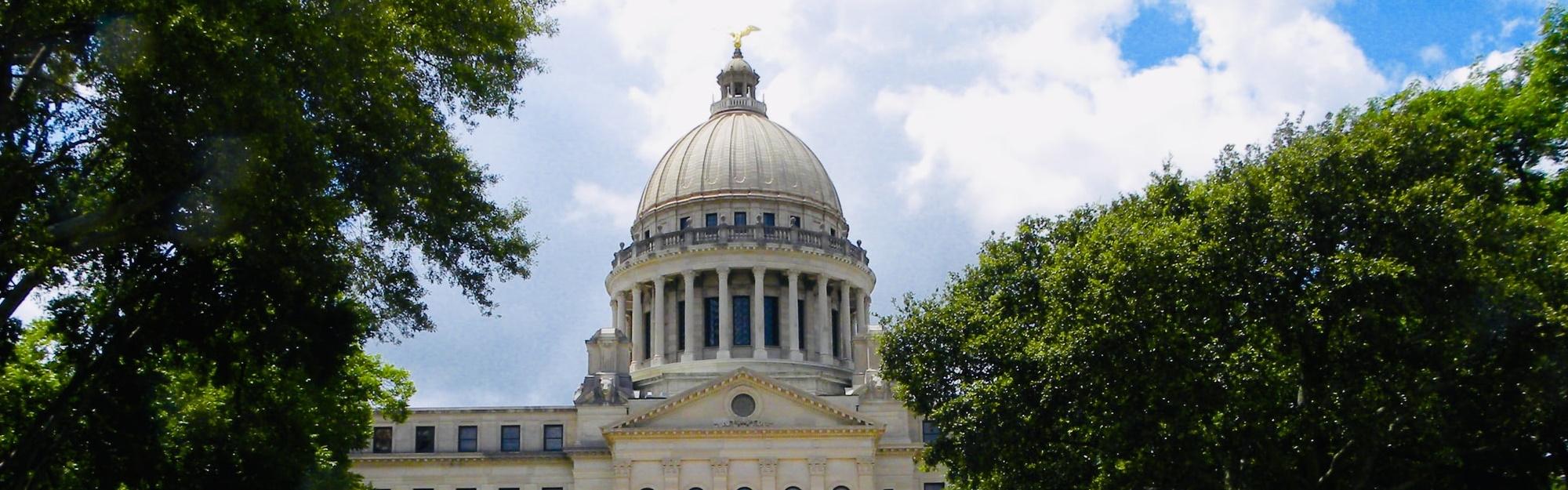
Although it's Mississippi's largest city and the state capital, Jackson has a slow pace and a distinctly southern lifestyle. Its population of about 167 000 is spread over a large geographic area, making it seem smaller than it is. The main landmark in the city is the old Mississippi State Capitol building in the very centre of the downtown area.
Founded as a trading post in 1821, Jackson meanders along the banks of the winding Pearl River and is an exceedingly well-ordered city thanks to thoughtful town planning. However, because it's spread out, exploring its distinct neighbourhoods is best done by car.
Cultural centres, historic buildings and museums are located downtown, but visitors need to travel to areas such as Ridgeland, a few miles out, to find good shopping, eating, lodging and nightlife opportunities. The neighbourhood of Mid North has some great recreational areas, such as Le Fleur's Bluff State Park, while to the west of Downtown is the significant Farish Street Historic District, a centre of black culture, politics, religion and business.
Things to do in Jackson Mississippi
Mississippi's capital isn't known as a glamourous or trendy city, but visitors will find plenty to see and do. For those in search of rich history and lots of culture, Jackson certainly won't disappoint.
The fascinating history is evident in attractions such as the Old Capitol Museum, where the past is covered through fun, eye-catching, interactive exhibits; the Farish Street Historic District, a historic neighbourhood in Jackson; the War Memorial Museum, which offers history and architecture to marvel at, and the Eudora Welty House, the home of the notable author for nearly eighty years. The Smith Robertson Museum and Cultural Centre is also a must-see as it traces African-American cultural history.
The Jackson Zoo is a great attraction for families with children, as is the Russell C Davis Planetarium, which puts on regular Sky Shows on astronomy, astronauts and space exploration. Downtown Jackson is also a great spot to explore and while fairly compact, visitors will find there are lots of attractions made accessible on a self-guided walking tour of the city. For those who enjoy a slow pace and a delightful Southern lifestyle, Jackson makes for a wonderful and historical destination.

Old Capitol Museum
Originally called State House, the Old Capitol building has filled three purposes in its long history. From 1839 to 1903 it served as the state capitol, between 1917 and 1959 it housed government offices, and from 1961 to the present it has become an award-winning museum enshrining Mississippi's history. The exhibits are arranged in several categories, the highlight being 'Mississippi 1500 to 1800', which depicts the era when Americans, Europeans, and Africans first encountered each other in the state, drastically altering the lives and society of the Native Americans who lived here. Full-scale dioramas illustrate the importance of cotton in the state's development, and interactive audio-visual experiences explain the profound effects of the Civil War on Mississippi.
The Governor's Mansion
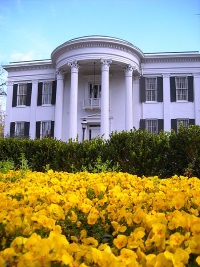
The Mississippi Governor's Mansion in downtown Jackson is the second oldest continuously occupied governor's residence in the United States. Built in the Greek revival style, the most popular style of the period, it was first occupied in 1842 by Governor Tilghman Tucker and his family. Today architectural historians consider the mansion one of the best surviving examples of this style in the country, and in 1975 the building was designated a National Historic Landmark. The historic section of the mansion, furnished in period Empire style, is open to the public.

Russell C. Davis Planetarium
Jackson's impressive planetarium is one of the largest in the world, with a huge hemispheric wrap-around screen that presents regular Sky Shows on astronomy, astronauts, and space exploration. The planetarium, situated in the downtown cultural district, also presents laser light concerts featuring the music of contemporary and classic rock and roll artists combined with the imagery of a powerful indoor laser system, as well as astronomy hobby courses and workshops.

Mississippi Museum of Art
The State's largest art museum, the Mississippi Museum of Art in Jackson houses more than 4,000 works, including the world's largest collection by Mississippi artists. Seventy five percent of the permanent collection comprising American artists; visitors will be able to view important works such as some of Georgia O'Keeffe's striking flowers and landscapes, and Walker Evans' carefully photographed Depression images. The rest of the permanent exhibition consists of European, Asian and Ethnographic art. Contemporary masters such as Miro, Picasso, Degas and Cezanne are on display, as are gorgeous Japanese prints and South American ceramics.
Farish Street Historical District
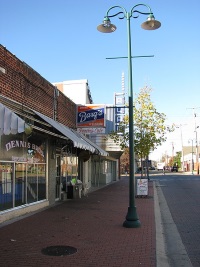
The 125-acre neighbourhood near downtown known as Farish District is bounded by Mill Street, Amite Street, Fortification Street, and Jackson Street. It's one of the few historically black districts, built by former slaves, listed on the national register. It takes its name from Walter Farish, a freed slave who settled on the northeast corner of Davis and Farish Streets. The district was once the centre of political, religious, economic, educational and entertainment activities for the black professionals and craftsmen who lived in the area's 700-odd buildings, most dating from between 1890 and 1930. Visitors should look out for 229 East Church Street, as it's one of the more notable buildings in the district. It's the former home of Dr Sidney Redmond, who was a wealthy and successful businessman, and the old Farish Street Baptist Church. Renovation in the district is ongoing and private home ownership is being encouraged in an effort at urban renewal. The area is being redeveloped as an entertainment district, and there are many theatres, live music venues and historic landmarks such as Ace Records and the Speir Phonograph Company.

Vicksburg National Military Park
The Vicksburg National Military Park commemorates one of the most decisive battles of the American Civil War: the campaign, siege, and defence of the city of Vicksburg, 44 miles (71km) west of Jackson in Mississippi. Vicksburg was under siege for 47 days in 1863 as confederate forces vainly tried to defend the city high on the bluff guarding the Mississippi River. The battlefield at Vicksburg is in a good state of preservation and visitors can explore 1,325 historic monuments and markers, 20 miles (32km) of reconstructed trenches and earthworks, an antebellum home, 144 cannon emplacements, the restored Union gunboat, USS Cairo, and the Vicksburg National Cemetery.
Elvis Presley Birthplace
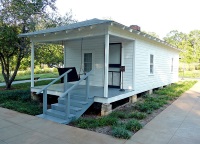
The King of Rock and Roll, Elvis Presley, was born in Tupelo, northern Mississippi in 1935 in a humble home where he began his meteoric rise to fame. The simple two-room house where Elvis drew his first breath is now contained in a park, which has become a place of pilgrimage for thousands of fans every day. The city of Tupelo has other attractions to make a trip north of Jackson worthwhile. Elvis Presley Park includes not only the period-furnished house, but also a museum, memorial chapel, gift shop, and a life-size statue of the legend, aged 13, as he was when he moved from Tupelo to Memphis, Tennessee, with his family.
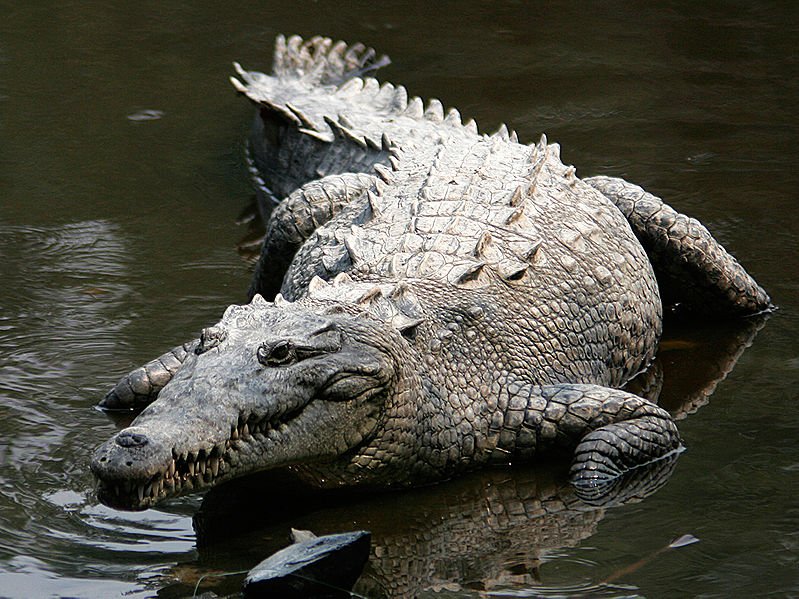
Mississippi Museum of Natural Science
The Mississippi Museum of Natural Science was founded in 1932 by biological researcher, Francis Cook, and to this day remains the Magnolia State's largest museum. A passionate student of Mississippi's natural resources, Cook's vision was to establish a museum that would focus on the promotion and protection of the state's natural landscape. In LeFleur's Bluff State Park, she chose an ideal setting for such a project. The museum grounds feature a 73,000 square foot complex overlooking a 300-acre natural landscape, 2.5 miles (about 4km) of nature trails, an open-air amphitheatre, a series of life-size displays of the state's diverse habitats, a 100,000-gallon aquarium network housing more than 200 living species, and a 1,700 square foot greenhouse. It's obvious that Cook's conservancy ideals have been faithfully followed over the last 80 or so years, as the museum's astonishing collection of more than a million specimens of fish, reptiles, amphibians, birds, mammals, invertebrates, plants, and fossils is nothing less than a living, breathing monument to biodiversity conservation.
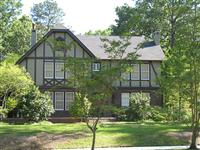
Eudora Welty House
One of America's most influential writers, Eudora Welty lived for 76 years at 1119 Pinehurst Plaza in Jackson, before bequeathing the house to the State of Mississippi when she passed away in 2001. The beautiful, Tudor Revival-style house was built by Welty's parents in 1925, and has since been added to the National Register of Historic Places and declared a National Historic Landmark. Significantly, the interior of the house has remained untouched; visitors to the Eudora Welty house will be given the chance to see exactly how this Pulitzer Prize-winning author lived and worked. Her books still line the shelves, and her typewriter still sits on the writing desk by the window in the upstairs bedroom. Included in the tour is a walk around the exquisite gardens that Welty and her mother cultivated over the years. For fans of American literature, a visit to the Eudora Welty house-cum-museum is an absolute must.
Getting Around
Hiring a car is the best way to get around in Jackson as many of the attractions lie outside the city. Parking is easy to find everywhere but downtown. The JATRAN bus is a reliable way to get around. It operates Monday to Friday 5.15am to 7.45pm and on Saturday from 6.45am to 6.45pm. Most routes operate every 60 minutes with limited service every 30 minutes on Routes 1, 8 and 12. Metered taxis are available, but must be booked by phone at least 30 minutes in advance, as cabs do not cruise or wait at taxi ranks. Lyft and Uber are also available.
Jackson Mississippi Climate and Weather
The weather in Jackson is warm and humid in summer (June to August), and fairly mild in winter (December to February), and temperature extremes are rare. Summer temperatures average between 68ºF (20ºC) and 90F (32ºC), while winter temperatures average between 35ºF (2ºC) and 60F (15ºC). Rainfall is fairly high, and can occur at any time of year. In the late summer and autumn, Jackson is sometimes in the path of hurricanes moving north from the Gulf of Mexico. Tornadoes are also a threat between February and May.
United States of America travel info
Electricity
The electrical current is 120 volts, 60Hz. Plugs are mainly the type with two flat pins, though three-pin plugs (two flat parallel pins and a rounded pin) are also widely used. European appliances without dual-voltage capabilities will require an adapter.
Language
English is the most common language spoken but Spanish is often heard in the south-western states.
Money
The official currency is the US Dollar (USD), which is divided into 100 cents. Only major banks exchange foreign currency. ATMs are widespread and credit cards are widely accepted; Apple Pay and Google Pay are very popular. Banking hours are Monday to Friday 9am to 3pm.
Tipping
A 15 percent tip is expected by taxi drivers, bartenders, hairdressers and waiters, but travellers shouldn't tip in fast-food or self-service restaurants. In expensive restaurants or for large parties, the tip should be 20 percent of the bill. It's normal to tip staff such as valets and porters in hotels; this is discretionary, although a minimum of $5 is expected. Most services are customarily tipped if the service is good.
Health
There are no specific health risks associated with travel within the USA. Medical facilities are excellent, but expensive. Only emergencies are treated without prior payment and treatment can be refused without evidence of insurance or proof of funds. Good medical insurance is essential.
Safety
Travel within the United States is generally trouble-free, though travellers should be aware that the US shares with the rest of the world an increased threat from terrorist incidents. Security has been heightened, particularly at airports. Restrictions on hand luggage apply and travellers are advised to check on the latest situation with airlines in advance. Travellers should also be alert to the dangers of car and street crime in cities and should use common sense and take basic precautions. Hurricanes are common between June and November, putting the southern USA, including the Gulf Coast and the eastern US at risk. There's a risk of wildfires in many dry areas in the US, particularly on the West Coast from March to November.
Local customs
Laws vary from state to state, including speed limit, fines and punishment. The age at which alcohol may be legally bought and consumed is 21 years.
Doing business
In such a large country, filled with so many diverse groups, business practices may differ according to each state, though rarely to any large degree. The East Coast is traditionally more formal than the West Coast, though in states such as California, dress code and conservative appearance are as common as they would be in New York. Punctuality is important throughout the country and it's considered rude to be late for a meeting. Gift-giving is uncommon as it may be construed as bribery. Appropriate titles (Mr, Mrs, Ms) are used upon introduction and until otherwise stated. Americans favour politeness and greetings of 'Hello' and 'How are you?' are often expressed with sincerity. Business hours may vary in each state, but an 8am start and 5pm finish Monday to Friday is the most common with an hour over lunch.
Status and age are not necessarily indicative of seniority, nor do they carry much weight in themselves. Those doing business in the States should be mindful of this fact; foreigners should never make assumptions about someone's position or rank. Best practice is to be respectful to all parties. That said, the US upholds a hierarchal business structure in which 'the boss' is the ultimate decision-maker. Senior leaders have the power of the last word, and can go against the grain just as easily as they can follow popular opinion. Foreigners should concentrate on winning over this individual, even if the greater group seems unsupportive. Americans value a direct style of communication. In this fast-paced, consumer culture 'time is money', and small-talk is viewed as unnecessary and wasteful. It's best for foreigners to get to the point quickly, speak about issues in a frank and open manner, and to avoid taking offence if someone questions or challenges them outright.
Duty free
Travellers to the United States who are returning residents of the country do not have to pay duty on articles purchased abroad to the value of $800 provided their stay was longer than 48 hours and their duty-free allowance was not used in the 30-day period prior. For passengers arriving from Samoa, Guam and the U.S. Virgin Islands, a duty-free allowance of $1,600 is allowed. The following items are included in this: 50 cigarettes and 10 cigars and 150 millilitres (5 fl. oz.) of alcoholic beverages or 150 millilitres (5 fl. oz.) of perfume containing alcohol. Restrictions may apply to goods from Cuba, Iran, North Korea, Burma (Myanmar), Angola, Liberia and Sudan. It is prohibited to import Cuban cigars from any country.
Travellers to the United States who are non-residents do not have to pay duty on the following items: 50 cigars or 200 cigarettes and gifts to the value of $100 provided their stay in the USA is not less than 72 hours and that the allowance has not been used in the preceding six-month period.
Prohibited items for residents and non-residents include meat or meat products, poultry, narcotics, absinthe, plants, seeds, vegetables, fruits, soil, live insects and other living plants or animal pests. Fish is prohibited unless it carries disease-free certification. Wildlife and animals or their by-products carry restrictions. Dairy products and eggs from specified countries are not allowed. Firearms and ammunition are not allowed without the necessary license and permit.
Communications
The international country dialling code for the United States is +1. Mobile networks cover most of the country, especially all urban areas; travellers can purchase local prepaid SIM cards for unlocked phones or use eSIMs if their cellular providers support it on their networks. WiFi is widely available.
Passport & Visa
It is highly recommended that travellers' passports have at least six months' validity remaining after the intended date of departure from them travel destination. A visa is required for short visits unless travellers qualify for entry under the Visa Waiver Program.
The Visa Waiver Program (VWP) enables citizens of certain countries to travel to the US for a stay of up to 90 days without a visa. Visitors under the VWP need a valid Electronic System for Travel Authorization (ESTA), which allows the US government to screen all visitors before travel. Visitors entering the country under the VWP must have a machine-readable passport (MRP) that has a barcode on the photo page. Travellers under the VWP must have passports that include biometrics if they wish to enter the country without a visa, which means that passports must contain unique personal data such as fingerprints or iris details. All passports must contain a digital photo image in order to travel visa-free. All visitors to the USA have a photograph and two fingerprints taken by an inkless scanner on arrival, including those travelling visa-free under the VWP.
As part of the Western Hemisphere Travel Initiative (WHTI), all travellers travelling between the United States and Canada, Mexico, Bermuda, and the Caribbean region are required to present a passport or other valid travel document to enter or re-enter the United States. If departing from the USA, a valid passport is required by immigration authorities. Immigration officials often apply different rules to those stated by travel agents and official sources.
Entry requirements
US citizens require passports.
UK nationals require a passport valid for duration of stay. Most passport holders can get an Electronic System for Travel Authorisation (ESTA) through the Visa Waiver Programme, which allows travel to the US for up to 90 days. The VWP includes tourism, certain types of business visit and transit to another country.
The most important requirement on entering the U.S. is providing proof of Canadian citizenship. A valid Canadian passport is the best document to prove Canadian citizenship and the right to return to Canada. However, several other documents can serve, depending on the mode of transport. Generally, Canadian citizens do not require visitor, business, transit or other visas to enter the United States from Canada, though there are some exceptions.
Passports must be valid for the period of intended stay. If visiting the US for fewer than 90 days, Australian nationals may be eligible to apply for an Electronic System for Travel Authorization (ESTA), and enter under the Visa Waiver Program (VWP).
South Africans must hold a passport valid for duration of stay. A visa is required.
Passports must be valid for duration of stay. Irish nationals can get an Electronic System for Travel Authorisation (ESTA) under the Visa Waiver Programme for entry into the United States.
Passports must be valid for duration of stay. New Zealand nationals can get an Electronic System for Travel Authorisation (ESTA) under the Visa Waiver Programme for entry into the United States.