

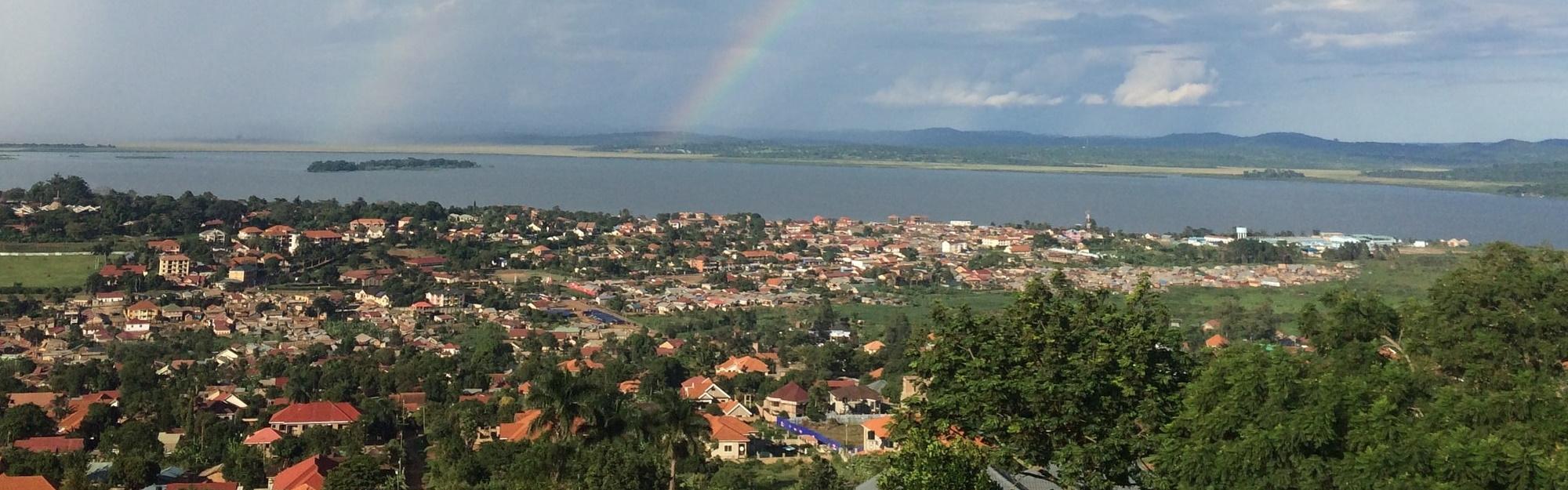

Kampala Travel Guide
Kampala is Uganda's largest city and its chief urban centre. Known for its friendly, welcoming people, and beautiful setting, the city is built over seven hills, and stretches to the shores of Lake Victoria.
While the buildings and other vestiges of urban infrastructure may still have a ramshackle quality and an air of neglect about them, aspects of the city are booming. Tourism, and the presence of NGOs, has brought new money and fresh ideas to Kampala, reflected in the diverse international cuisine, burgeoning local art scene and, inevitably, the increasing number of traffic jams to be found there.
Many visitors come overland from Kenya and find Kampala's relaxed air and reputation for safety a welcome relief from the (comparative) hazards of Nairobi. There is little in the way of must-see attractions in Kampala itself. Some interesting options include the Kasubi Tombs, a former key site that was extensively damaged by fire in 2009, and remains closed; and the Uganda National Museum. The Uganda Railway Station building is worth a look, as it remains a wonderful example of grand colonial architecture.
Some of the most appealing experiences are to be had in the city's vibrant markets. Owino market is a famously chaotic and eclectic place, with everything from original artworks to charity clothing for sale. The smaller Nakasero fresh-food market is very colourful, and stocks fruit and vegetables from all over the region, much of it unfamiliar to western eyes (and palates). For arts and crafts, the roadside market on Buganda Road rewards those with a keen eye, and robust bargaining skills.
Kampala is typically used as a base by visitors, who are en route to the one of the great natural attractions found in its outlying areas. The most popular of these is undoubtedly the gorilla-viewing experience at Bwindi National Park, closely followed by wild chimpanzee feeding at Ngamba Island near Entebbe. The nearby Nile River also offers numerous activities: rafting and jet-skiing in the headwaters is an exhilarating experience, while an excursion or weekend trip to the Ssese Islands is well worth the time as well.
Uganda travel info
Electricity
The electrical current is 220 to 240 volts, 50Hz. Three-pin, rectangular blade plugs are in use.
Language
English and Swahili are the official national languages in Uganda. Luganda is also widely spoken and is the most common of the numerous indigenous languages.
Money
The official currency is the Ugandan Shilling (UGX), which is divided into 100 cents. Foreign currency can be exchanged at banks and bureaux de change; the best currencies to change are US Dollars, Euros, or Pounds Sterling, but visitors should only exchange at official establishments. ATMs are available in major towns and cities. Credit cards are only accepted at major hotels, shops, and restaurants, usually only Kampala and other main towns.
Tipping
Tipping is not common at local hotels and restaurants in Uganda, but amounts of 5 to 10 percent of the bill are expected at tourist-orientated establishments. It is customary to tip guides and drivers.
Health
Travellers' diarrhoea is the most common complaint for visitors to Uganda. Recommended vaccinations include Covid-19, hepatitis A, hepatitis B and typhoid; visitors require vaccination against yellow fever. Cholera outbreaks occur occasionally, but most travellers are at low risk of infection. Bottled water is widely available. Visitors should take prescription medicine to prevent Malaria, and should exercise normal precautions to avoid exposure to HIV or AIDS. Outbreaks of meningitis occur and visitors should insure that vaccinations are up to date. Uganda has also seen outbreaks of Ebola in the past, so visitors should follow guidance from agencies such as the UK Health Security Agency. Limited health facilities are available outside of Kampala; comprehensive medical insurance is advised.
Safety
Most national parks are safe to visit and a holiday to Uganda is generally trouble free. Kampala, the capital, is a relatively safe city, though visitors should take sensible precautions against opportunistic crime and at night. Theft of EU passports has been on the increase.
Due to the risk of banditry and attacks by rebel groups and tribal clashes, most foreign governments advise against travel to the northeast of Uganda. Travellers in the northwest near the border with Sudan and the DRC are also at risk of banditry, and travel outside of the main towns is to be avoided after dark.
Areas bordering Sudan in the north, the region known as West Nile in the north west (except Arua town, which can be visited by air), and the Karamoja region of north eastern Uganda are insecure and can pose a serious risk to travellers. Kidepo Valley National Park should be visited by air only. Gorilla trekking excursions that cross over into the DRC should be avoided.
Local customs
Visitors to Uganda are advised not to take photographs of military or official sites, including Owen Falls Dam. Homosexual activity is illegal and not tolerated in Uganda's conservative society.
Doing business
Uganda has one of the fastest-growing economies and is one of the most liberal countries in Africa. Agriculture is the largest sector of the economy, with coffee being the chief export. Uganda is most welcoming for foreign investment and business is steadily on the increase. Appointments should always be made prior to business meetings; formal dress attire is to be observed, and the shaking of hands is expected on introduction. Business is usually conducted in English and office hours are generally 8am to 5pm, Monday to Friday, with an hour taken over lunch.
Duty free
Travellers to Uganda over 18 years of age do not have to pay duty on 250g of tobacco products; one litre of spirits or two litres of wine; and 500ml of perfume or eau de toilette, of which up to 250ml may be perfume.
Communications
The international dialling code for Uganda is +256. Travellers can purchase local prepaid SIM cards for unlocked phones; WiFi is available at hotels.
Passport & Visa
All visitors to Uganda must have a passport valid for at least six months beyond entry, with at least one blank page. A yellow fever vaccination certificate is required for travellers arriving from or transiting through affected countries. Visitors must also show proof of return or onward travel, accommodation or a contact address in Uganda, and sufficient funds for their stay.
Tourist visas must be obtained in advance through Uganda's official e-Visa portal. The standard Single-Entry Tourist Visa costs approximately USD 50 and is valid for up to 90 days. Alternatively, travellers may apply for the East Africa Tourist Visa (EATV), which costs USD 100 and allows multiple entries between Uganda, Kenya, and Rwanda for 90 days. Travellers using the EATV must first enter the country that issued the visa.
Once approved, an e-Visa authorisation letter is emailed to the applicant. This letter must be printed and presented to immigration officials on arrival, where biometric data may be collected and a visa sticker issued. Travellers should apply at least one to two weeks before they travel. Printed approval is required for boarding.
Entry requirements
US nationals require a passport valid for six months from date of arrival and a visa.
UK nationals require a passport valid for six months from arrival date and a visa.
Canadians require a passport valid for six months beyond arrival date and a visa.
Australians require a passport valid for six months beyond arrival date and a visa.
South Africans require a passport valid for six months beyond arrival date and a visa.
Irish nationals require a passport valid for six months beyond arrival date and a visa.
New Zealand nationals require a passport valid for six months beyond arrival date and a visa.
Useful contacts
Uganda Tourist Board, Kampala: +256 (0)41 342 196 or www.visituganda.com
999 or 112 (General)