


Kerala Travel Guide
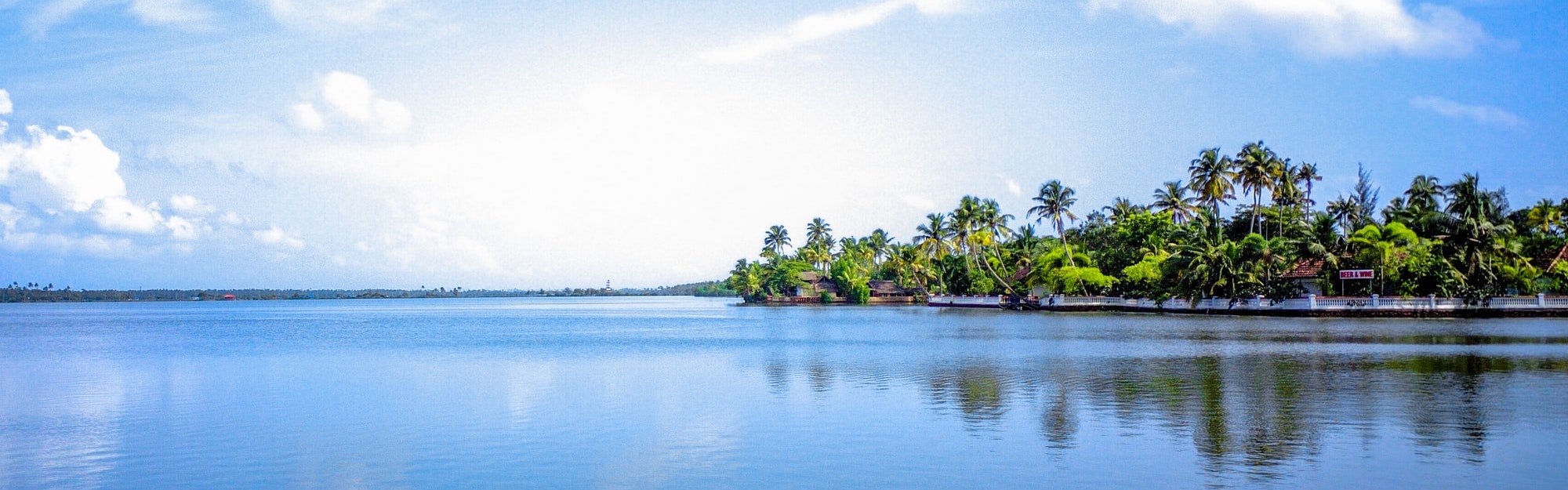
Tucked away in the southwest corner of India, Kerala is a narrow strip of land between the Arabian Sea and the Western Ghat mountains. The name means 'land of coconuts', and palms still shade almost the entire state from the blazing sun. The tropical landscape is crisscrossed by dozens of rivers and countless waterways, and visitors can spend idle days riding small ferries through the backwater lagoons, observing village life close-up in this, India's most serenely beautiful state. When the rest of India gets too hot to handle, Kerala is often soothing and rejuvenating. Whether visitors stick to the lowlands or head for the hills, they will pass through scenery dotted with churches and temples; spice, tea, coffee and rubber plantations; and natural forests with wildlife reserves filled with elephants.
Kerala has some of India's best coastal resorts; among the finest is the much-photographed Kovalam, which many argue has the best beach in the country. Here visitors can take in Kerala's rich cultural and artistic life, and enjoy arguably the best vegetarian cuisine on the planet.
Compared to the rest of India, Kerala is short on monumental sights; the state's real draw card is its natural beauty. The countryside undulates westward from the mountains, offering vistas of rich green valleys. Rivers glide across the plains towards the sea, creating attractions such as the Athirampally Falls, before ending in a linked chain of lagoons where the silence of the still waters is broken only by boats and canoes, seagulls and cranes.
Things to do in Kerala
Although most commonly associated with sedate boat trips through beautiful, labyrinthine waterways, Kerala does have a variety of tourist attractions. It is true that things to see and do in Kerala tend to revolve around the lush landscapes and natural assets of the region, but as India's most populous state, Kerala is also an ideal destination for those seeking insight into local customs and lifestyles.
Kerala is endowed with more than its fair share of nature's bounty, through its stunning rivers, lagoons and backwaters, numerous wildlife sanctuaries and reserves, and sublime beaches. In fact, one of the most famous attractions in Kerala is the coastal resort area of Kovalam, which some insist has the best beach in India. Other much-loved beaches include Varkala Beach and Papanasam Beach on the southwestern coast. For those interested in the local wildlife, there are five national parks and thirteen wildlife sanctuaries in Kerala, making it an amazing destination for animal lovers. The Periyar Wildlife Sanctuary and the Peppara Wildlife Sanctuary are both favourites. And, of course, a trip to Kerala would be woefully incomplete without meandering through the backwaters in a boat.
As visitors explore the beautiful landscapes of Kerala they will also witness the day-to-day activities of locals and for many the region's laid-back, rural lifestyle is fascinating. Although not celebrated for its cities, Kerala does boast some decent urban sightseeing as well. The capital of Kerala, Thiruvananthapuram (still commonly known as Trivandrum), has some cultural attractions to explore, including the Shri Padmanabhaswamy Temple, the Puttan Malika Palace, and the Padmanabhapuram Palace.
Thiruvananthapuram (Trivandrum)
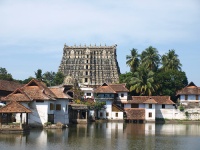
Thiruvananthapuram (still commonly known as Trivandrum) sits on a hilltop at the southern end of India and is Kerala's capital. For most visitors the capital is simply a transit-point on their way to Kovalam, the popular beach resort a few miles to the south. However, it is worth lingering for a day or so in this easy-going city to explore the narrow backstreets, old gabled houses and expansive parks. The most fascinating parts of Trivandrum are the Fort area around the Shri Padmanabhaswamy Temple (closed to non-Hindus), and Puttan Malika Palace, seat of the Travancore Rajas. Some of the palace has been turned into a museum, and displays a collection of heirlooms and artefacts.
Periyar Wildlife Sanctuary
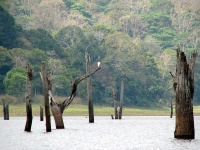
Situated in the Cardamom Hills region of the Western Ghats, the Periyar Wildlife Sanctuary is one of the most popular wildlife reserves in India. It is home to a great variety of game, including elephant, sambar, wild pig, mongoose, the Malabar flying squirrel and almost 300 species of bird. Leopards and dwindling numbers of tigers are also here, but are, unfortunately, rarely glimpsed by visitors. The park lies 75 miles southeast of Cochin at cool altitudes, between about 3,000 and 6,000 feet (900 and 1800 metres). Most people view Periyar from a boat on the lake; however, many visitors prefer to explore the area on foot. Local guides take small groups on treks of various lengths.
The Backwaters of Kerala
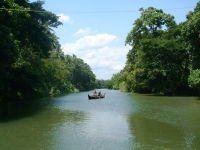
One of the most memorable experiences for many travellers in Kerala is a boat journey on the state's famous backwaters. The best known of these areas is Kuttanad, situated between the hills in the west and the Arabian Sea, and stretching for 50 miles south of Kochi (formerly Cochin). This extraordinary maze of rivers, lakes, canals and estuaries is lined with dense tropical greenery and reveals a Keralan lifestyle that is totally hidden from the road. Boats are the only way to explore this area, billed as Kaleidoscope Kerala, where views change around every bend.
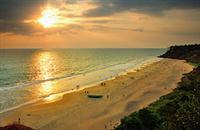
Varkala
Located on Kerala's southwestern coast, just 32 miles (50km) from the state capital of Trivandrum, Varkala is one of those tourist destinations that get more and more popular each year, as word of its stunning coastline and lively atmosphere gets out. Varkala is considered a less-crowded, less-commercial alternative to the beautiful Goa; although Varkala's main beach (Papanasam Beach) cannot boast the white sand and towering palm trees of some of its Goan counterparts, it is flanked by a steep and staggeringly beautiful cliff-face. In between relaxing on the beach and shopping at the markets in town, tourists can also take an enjoyable walk to the nearby Janardanaswamy Temple, a 2,000-year-old structure.
Kerala Climate and Weather
Kerala features a wet maritime climate and experiences heavy rains during the summer monsoon season (June to August), while in the east a drier tropical climate prevails. The average daytime temperature ranges from 82F to 90F (28C to 32C) on the plains, but drops to about 68F (20C) in the highlands. During the summer months Kerala experiences gale force winds, storm surges, and cyclone-related torrential downpours; while the winter months are much cooler and calmer.
The best time to visit is between November and March, when the weather is pleasantly warm, the rains have passed, and wildlife viewing is at its best. However, Kerala does tend to be less swelteringly hot than most other parts of India, even in summer, so it is one of the best summer destinations in the country; visitors should go expecting rain and stormy weather. Generally, anytime from November to May is suitable for a visit, but the monsoon season is best avoided. Having said that, travel during the wet monsoon months is becoming increasingly popular for the adventurous, and the Indian government is actively promoting monsoon tourism in Kerala.
India travel info
Electricity
230 volts, 50Hz. A variety of power outlets are used in India, but most plugs have two or three round pins.
Language
India has a total of 22 official languages, including English and Hindi. Hindi is spoken by about 40 percent of the population; Urdu is the language common with the Muslim demographic.
Money
The currency is the Indian rupee (INR), which is divided into 100 paise (singular paisa). Major currencies can be changed at banks, and authorised bureaux de change. It is illegal to exchange money through the black market and it is advisable to refuse torn notes, as no one will accept them apart from the National Bank. It is best to change money into small denominations. Major credit cards are widely accepted, particularly in tourist orientated establishments. ATMs are available in large cities and airports but are not generally available in rural areas.
Tipping
Taxi drivers do not expect to be tipped, though it's standard to leave a gratuity for porters, guides, hotel staff and waiters in small establishments. A 10 percent service charge is often added to bills in tourist restaurants or hotels. 'Baksheesh' is common in India. It's more a bribe than a tip and is given before rather than after service.
Health
There are many health risks associated with travel to India. Although no vaccinations are required for entry into the country, travellers should take medical advice on vaccinations at least three weeks before departure. Outbreaks of dengue fever and chikungunya virus occur, and Malaria is common, particularly in the northeast of the country. Outbreaks of cholera occur frequently. Travellers coming to India from an infected area should hold a yellow fever certificate. Rabies is also a hazard; travellers should get immediate medical advice if bitten.
Food poisoning is the most common problem among travellers to India. Visitors should only drink bottled water and ensure that the seal on the bottle is intact. Travellers should avoid ice, as it's often made from tap water. Meat and fish should be eaten with care in all but the best restaurants, and should always be well cooked and served hot. Salads and unpeeled fruit should be avoided.
Health facilities are adequate in the larger cities, but limited in rural areas. Travellers should have comprehensive medical insurance, and carry a small first-aid kit complete with a traveller's diarrhoea kit and a course of general antibiotics.
Safety
Although the vast majority of trips to India are trouble free, there are some risks that travellers should be aware of. As in many countries, there is a threat of terrorism; in the past there have been attacks in popular tourist haunts such as hotels, markets and temples. Travellers should take caution at large religious events, where huge crowds can result in life-threatening stampedes.
On a more everyday level, there is a risk of minor theft such as pick-pocketing, and credit card and ATM fraud occurs. Travellers using India's vast railway network are advised to lock their baggage, and keep it close. Visitors should remember that if someone offers them a 'business opportunity' that seems too be good to be true, it probably is. Scammers usually target foreigners at airports and in tourist areas with scams involving the exportation of, among other things, jewels, gemstones, carpets. Taxi drivers may offer them money to export such items.
Female travellers should note that there are rare incidents of rape and assault. Women should respect local dress codes and customs, and avoid travel to secluded rural areas, including beaches, at any time of day. Foreign offices advise against travel to Jammu and Kashmir, as there are risks of civil disorder and acts of terrorism in many districts.
Local customs
India is a tolerant society, but visitors should educate themselves about the country's religious and social customs so as not to cause offence. In this regard, smoking in public is banned, and there is a ban on e-cigarettes and related products. Consumption of alcohol is prohibited in Bihar, Gujarat, Mizoram, Nagaland and the union territory of Lakshadweep; there is a partial ban in parts of Manipur.
When visiting temples, visitors will probably be required to remove their footwear and cover their heads. Generally, women should dress more conservatively than they may be used to doing at home, both to respect local sensibilities and to avoid unwanted attention. Topless bathing is illegal. Indians do not like to disappoint and, often instead of saying 'no', will come up with something that sounds positive, even if incorrect. Social order and status are very important in Indian culture, so it's important to remain respectful and obliging with elders. Visitors should avoid using their left hand, particularly when eating. Although homosexuality is no longer prohibited by law, Indian society remains conservative and public attitudes towards LGBT people can less tolerant than in the west.
Doing business
Business in India is conducted formally, with punctuality an important aspect. Suits and ties are appropriate, and women in particular should dress modestly. If it is very hot, jackets are usually not required and short-sleeve shirts are deemed appropriate. It is customary to engage in small talk before getting down to business, and conversation can cover a wide range of topics that may include anything from cricket to politics. Business cards are usually exchanged on initial introduction, using the right hand only. Handshakes are fairly common, though one should wait to see if greeted with a hand, or a 'namaste': a traditional Indian greeting of a small bow accompanied by hands clasped as if in prayer. Visitors should return the greeting as it is given. It is common for women to participate in business meetings, and hold high positions in companies, and foreign businesswomen are readily accepted. Business hours are usually from 9.30 to 5.30pm (weekdays) with a lunch break from 1pm to 2pm, and Saturdays from 9.30am to 1pm.
Duty free
Travellers to India over 18 years do not have to pay duty on 100 cigarettes or 25 cigars or 125g tobacco; two litre bottle of alcohol; medicine in reasonable amounts; and goods for personal use. Prohibited items include livestock, bird and pig meat products, and e-cigarettes.
Communications
The international access code for India is +91. International calls are expensive and there are often high surcharges on calls made from hotels. Buying a local SIM card is a good option, as international roaming fees can be high. Free WiFi is offered at cafes and hotels in major cities.
Passport & Visa
Indian law does not permit dual citizenship for nationals of India. An Indian national holding dual nationality should contact their embassy or consulate for further information. Passengers in possession of an "Overseas Citizen of India" card or a "Person of Indian Origin" card, however, are allowed to enter the country without a visa.
Travellers should note that a yellow fever vaccination certificate is required, if arriving in India within six days of leaving or transiting through heavily infected areas.
They should also note that the following areas of India are restricted, and require that visitors obtain a permit before entering them: (Protected Areas) parts of the state of Manipur, parts of the state of Mizoram, parts of the state of Arunachal Pradesh, parts of the state of Uttar Pradesh and Uttarakhand, the whole State of Sikkim, parts of the state of Jammu and Kashmir, parts of the state of Himachal Pradesh; (Restricted Areas) the whole of the union territory of Andaman and Nicobar Islands, part of the state of Sikkim.
It is highly recommended that travellers' passports have at least six months' validity remaining after the intended date of departure from their travel destination. Immigration officials often apply different rules to those stated by travel agents and official sources.
Entry requirements
US citizens must have a passport that is valid for at least six months from the date of arrival in India, with at least two blank pages. A visa is required unless the traveller holds a valid Overseas Citizen of India (OCI) or Person of Indian Origin (PIO) card. E-visas must be obtained online before departure, and travellers using the e-visa for the first time must carry printed confirmation of the Electronic Travel Authorisation (ETA).
UK citizens must have a passport that is valid for at least six months from the date of arrival in India, with at least two blank pages. A visa is required unless the traveller holds a valid OCI or PIO card. E-visas must be obtained online before departure, and travellers using the e-visa for the first time must carry printed confirmation of the ETA. Eligible travellers may be granted continuous stays of up to 180 days on certain e-tourist visas.
Canadian citizens must have a passport that is valid for at least six months from the date of arrival in India, with at least two blank pages. A visa is required unless the traveller holds a valid OCI or PIO card. E-visas must be obtained online before departure, and travellers using the e-visa for the first time must carry printed confirmation of the ETA. Eligible travellers may be granted continuous stays of up to 180 days on certain e-tourist visas.
Australian citizens must have a passport that is valid for at least six months from the date of arrival in India, with at least two blank pages. A visa is required unless the traveller holds a valid OCI or PIO card. E-visas must be obtained online before departure. Travellers must carry a printed copy of the e-tourist visa confirmation and are advised to have return or onward tickets.
South African citizens must have a passport that is valid for at least six months from the date of arrival in India, with at least two blank pages. A visa is required unless the traveller holds a valid OCI or PIO card. E-visas must be obtained online before departure. Travellers must carry a printed copy of the e-tourist visa confirmation.
Irish citizens must have a passport that is valid for at least six months from the date of arrival in India, with at least two blank pages. A visa is required unless the traveller holds a valid OCI or PIO card. E-visas must be obtained online before departure, and travellers using the e-visa for the first time must carry printed confirmation of the ETA.
New Zealand citizens must have a passport that is valid for at least six months from the date of arrival in India, with at least two blank pages. A visa is required unless the traveller holds a valid OCI or PIO card. E-visas must be obtained online before departure. Travellers must carry a printed copy of the e-tourist visa confirmation and are advised to have return or onward tickets. E-tourist visas can be issued a maximum of two times per calendar year.
Useful contacts
Indian Tourist Office, New Delhi: www.incredibleindia.org
100 (Police), 102 (Ambulance), 101 (Fire)