

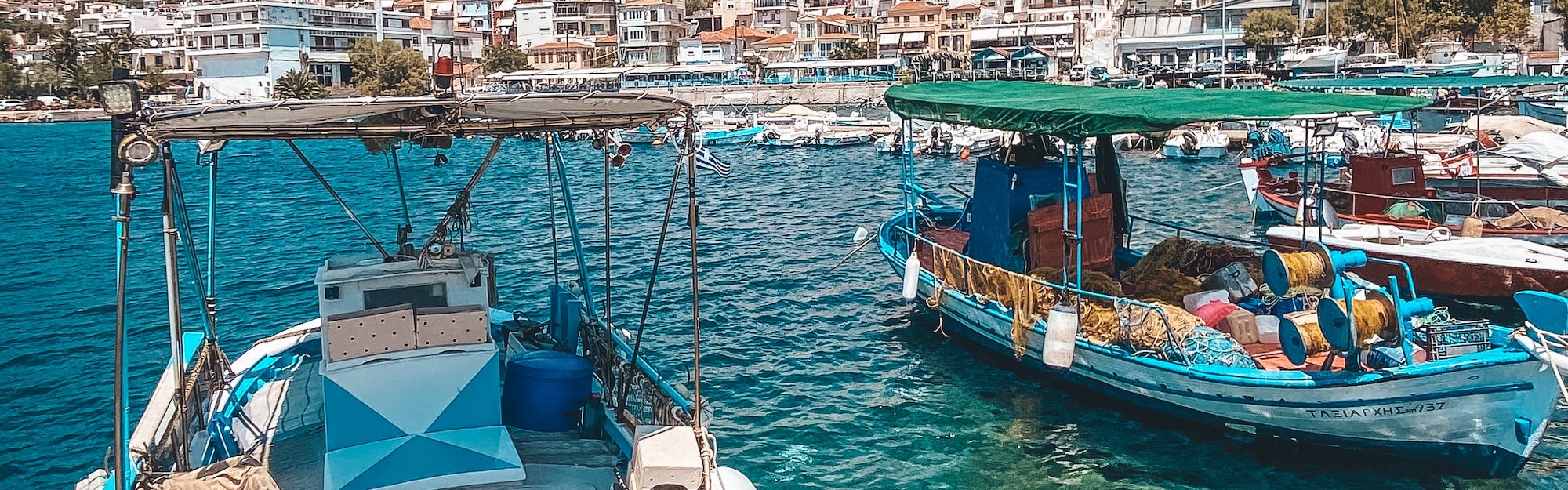

Lesvos Travel Guide
The stunning island of Lesvos is a jewel in the Aegean Sea and a must for anyone who wants a taste of Greek bliss. Visitors will find pale sandy beaches, secluded coves and quaint fishing villages along the rugged coastline, as well as olive groves and pine-forested mountains in the interior. Many parts of the destination have remained virtually untouched despite its popularity, and the crowds are much smaller than on other islands.
Mitilini is the main town, though most holidaymakers head for the charming, northern village of Molivos and its cobblestone streets and stone houses, and the south coast town of Plomari, which is known for its gorgeous shoreline and lush hills. Sigri is also popular, given its location near one of the world's largest petrified forests. Apart from beautiful beaches and superb opportunities for walking and bird-watching, Lesvos has relics of a long and proud history. Indeed, the island has been inhabited since the Bronze Age and rose to glory around the 6th century BC, when only Athens rivalled it as a centre of civilisation. Classicists know Lesvos as the ancient poet Sappho's birthplace.
Things to do in Lesvos
Lesvos' stunning beaches and breath-taking scenery make it a fabulous stop for sun chasers. However, knowledge lovers will find much to their liking as well. History buffs will appreciate the Archaeological Museum and the Theophilos Museum in the capital, Mitilini, as well as the roman aqueduct in Moria. Science enthusiasts should visit the highly regarded Geological Museum in Sigri.
Visitors also enjoy exploring the scenic town of Mandamados, which produces very good cheeses, and the war ruins at Pyrgi Thermis are another favourite. The holiday resort town of Molivos boasts a fantastic maze of winding streets, red-roofed stone houses, and exciting remnants of its medieval past, as well as donkey trekking through the surrounding mountains, with trails leading to views over the sparkling ocean. Sigri's Petrified Forest is one of the world's most important natural monuments, and has fossilised remains that date back 15 million years. Molivos' pebble beaches are great for sunbathing, while its turquoise waters provide excellent snorkelling conditions. Plomari and Vatera are also good beaches.
Eftalou Thermal Baths
A trip to the Eftalou Thermal Baths is a wonderful excursion for anyone on holiday in Lesvos. The hot, natural springs are located nearly three miles (4km) outside of Molyvos on the northern coast of Lesvos and are highly popular with tourists. The Eftalou's Springs are located at the beach and are one of the few springs in Greece where men and women can bathe together.
The temperature of the water is between 109ºF and 116ºF (43ºC and 47ºC), which is very hot; bathing in the water is recommended for a number of conditions and illnesses including blood pressure problems, rheumatism, gallstones and neuralgia. It's also just extremely relaxing and therapeutic! However, it's recommended that visitors avoid staying in the water for longer than 20 minutes in each session due to the extreme heat.
There's an old, domed bath house, which has a charming, old-fashioned atmosphere and is an experience in itself, and a newly renovated spa building next door to it that offers a variety of treatments and facilities. The coastal setting is also pretty and enjoyable, which adds to the experience. A novelty for children, this is an activity the whole family will enjoy.
Petrified Forest of Sigri
One of the three largest petrified forests in the world, the Petrified Forest of Sigri on the western edge of the island dates back 15 million years and is protected as a natural monument. A visit to the area is a fascinating outing for families with children or for anybody interested in natural phenomena.
The forest was the result of a volcanic eruption around 21 to 15 million years ago that buried the flora and trees of the region (including oaks and sequoias) beneath layers of ash. Visitors can view 'the Pompeii of the plant world', which features some impressively well-preserved specimens; on some of the trees visitors can still see leaves and fruit preserved for millennia.
Visitors can view the Petrified Forest along three main mountain trails: Trail One is called 'Discovering the Petrified Forest' and is a good introduction to the area; Trail Two, 'The History of the Petrified Coniferous Forest', details the process by which the trees were preserved; and Trail Three, which is the longest, takes people to the tallest standing trunks. In Sigri there's an interesting museum dedicated to the forest that displays some stunning examples of petrified wood and explains the process well.
Donkey trekking
Donkey trekking is a great activity for the whole family. Travellers can enjoy day-excursions through verdant green valleys, past olive groves and along mountain paths. Sunset-treks are also wonderful, with tasty, beach barbeques waiting to reward riders at the finish. Along with being a terrific way to appreciate the island's scenery, donkey treks allow visitors to discover its traditions. Indeed, Lesvos is self-sufficient and proud, with well-preserved local customs. It also has a refreshing lack of tourist trappings, despite its popularity with travellers.
Shopping
Though Lesvos offers its fair share of tacky souvenirs, visitors can find some gems in Mitilini or Molivos. Popular buys include graviera cheese, Ouzo Wine, leather goods, ceramics, jewellery, woven goods and interesting folk art.
Nightlife
Lesvos isn't a renowned party destination, but it has enough bars, clubs and tavernas to satisfy travellers looking for a night out. Most of the action takes place around the waterfront, where a good mix of establishments ensures that younger and older crowds will find appealing spots. The hilltop Byzantine castle occasionally hosts music and drama performances, providing a very special setting for night-time entertainment. Lesvos is also a great place for gay and lesbian couples.
Greece travel info
Electricity
Electrical current is 230 volts and 50Hz. A variety of plugs are in use, including the European-style two-pin and the round three-pin.
Language
Greek is the national language, but English is widely spoken.
Money
The official currency is the euro (EUR), which is divided into 100 cents. All major credit cards are accepted and ATMs are widespread; mobile payment systems such as Google Pay and Apple Pay are supported.
Tipping
A service charge is automatically added to most restaurant bills and an additional tip is not expected, though it's always welcome. Rounding up the bill is sufficient for drinks at cafes; taxis, porters and cloakroom attendants will expect a tip.
Health
Most health problems come from too much sun and too much food or alcohol, though there's also the risk of encountering sea urchins, jellyfish and mosquitoes. Medical facilities in major cities are excellent but some of the smaller islands are a long way from a decent hospital. Larger towns and resorts have English-speaking private doctors and the highly professional local pharmacies can usually deal with any minor complaint. Travellers should take along any necessary prescription medication in the original container, which should have a prescription label. The name on the prescription must match the name on the traveller's passport. Food and water are safe, but those visiting for short periods should consider sticking to bottled water. After Brexit, the Global Health Insurance Card (GHIC) replaced the European Health Insurance Card (EHIC) for UK citizens. The GHIC allows UK citizens access to state healthcare during visits to the EU. The GHIC is not valid in Norway, Iceland, Liechtenstein or Switzerland, nor is it an alternative to travel insurance.
Safety
Though Greece is a safe destination, peak tourist season usually sees a spike in petty theft cases, especially in crowded areas. Visitors should conceal valuables or store them in hotel safes and watch out for pickpockets. Violent crime is rare but there have been incidents on some islands; visitors travelling alone should not accept lifts from strangers.
Demonstrations take place regularly, particularly in Athens around Syntagma Square, Omonia Square and Exarchia, and Thessaloniki around Aristotelous Square, Egnatia Street, the Arch of Galerius and the campus of Aristotle University. These protests draw large groups of people and often take place with little notice. They can disrupt public transport and roads; protesters and police might also clash. Sometimes petrol bombs and fireworks are thrown by protesters, and police deploy tear gas. Protests are usually held on days of social or historical significance, such as Workers' Day on 1 May, the commemoration of the Athens Polytechnic uprising of 1973 on 17 November, and the commemoration of the riots of 2008 on 6 December. Violent clashes can occur between supporters of rival football teams during which Molotov cocktails and stones have been thrown, and people have been killed. Travellers should avoid areas where demonstrations and large gatherings are taking place, follow the instructions of local authorities, and monitor local media for information on ongoing demonstrations. Transport and tour operators don't always follow safety and maintenance standards. Travellers should always check if their travel insurance policy covers the pursuit in question, ask about and insist on minimum safety requirements, and always use available safety gear, such as life jackets or seatbelts. If proper safety equipment isn't available, they should use another provider. There's a high risk of wildfires during the summer season from April to October, and visitors should be cautious if they're in or near an area affected by wildfires. If travellers find themselves in these sorts of situations, they should follow the guidance of the emergency services, or call the Greek emergency services on 112 if they're in immediate danger.
Local customs
Most Greeks are more traditional than the British in some ways, but they're also friendly and welcoming enough to seem intrusive to reserved British tourists. Greeks are the heaviest smokers in Europe and will often ignore the smoking ban in public places. Swimwear is expected on the beach but tourists should dress properly in bars and restaurants.
Doing business
Greeks prefer to dress formally in dark-coloured suits for men and stylish outfits for women. Punctuality is important to them, though meetings may not start immediately. Visitors should offer a firm handshake and maintain eye contact when greeting Greek men and women for the first time, and print business cards in both Greek and English. There's no ritual surrounding the exchange of business cards.
As Greeks like getting to know their colleagues before conducting any serious business, it's unlikely a deal will take shape at the first meeting. The local culture follows a hierarchical structure and visitors should show respect in the same way. Gift giving is common in social settings but not necessarily in business.
Duty free
Travellers visiting from inside the EU can bring in 800 cigarettes, or 200 cigars, or 400 cigarillos, or 1kg of tobacco, 10 litres of spirits with an alcohol volume over 22 percent, 20 litres of spirits with an alcohol volume under 22 percent, 90 litres of wine and 110 litres of beer.
Visitors arriving from outside the EU and are over the age of 17 will not pay duty for 200 cigarettes, or 50 cigars, or 100 cigarillos, or 250g of tobacco, 1 litres of spirits with an alcohol volume over 22 percent, 2 litres of spirits with an alcohol volume under 22 percent, 4 litres of wine and 16 litres of beer.
Communications
The international access code for Greece is +30 and the outgoing code is 00, followed by the relevant country code (e.g. 0044 for the United Kingdom). Free WiFi is available at cafes, hotels, restaurants and similar establishments throughout Greece; travellers can purchase local prepaid SIM cards for unlocked phones or use eSIMs if their cellular providers support it on their networks.
Passport & Visa
The borderless region known as the Schengen Area includes the following countries: Austria, Belgium, Czech Republic, Denmark, Estonia, Finland, France, Germany, Greece, Hungary, Iceland, Italy, Latvia, Lithuania, Luxembourg, Malta, The Netherlands, Norway, Poland, Portugal, Slovakia, Slovenia, Spain, Sweden, and Switzerland. All of these countries issue a standard Schengen visa that has a multiple entry option, and which allows the holder to travel freely within the borders of all the aforementioned countries.
Non-EEA travellers to Greece must hold visible means of financial support to cover their stay in the country. It's also recommended that non-EEA members hold return or onward tickets, and the necessary travel documentation for their next destination. Passengers not holding onward tickets may be asked for proof of sufficient funds for their return or onward journey. It's highly recommended that travellers' passports have at least six months' validity remaining after the intended date of departure from their travel destination. Immigration officials often apply different rules to those stated by travel agents and official sources.
Entry requirements
US citizens must have a passport that is valid for six months beyond the period of intended stay. No visa is required for a touristic stay of up to 90 days within a 180 day period.
UK citizens must have a passport that is valid for six months beyond the period of intended stay. No visa is required for a touristic stay of up to 90 days within a 180 day period.
Canadian citizens must have a passport that is valid for at least three months beyond the period of intended stay in Greece. No visa is required for a touristic stay of up to 90 days within a 180 day period.
Australian citizens must have a passport that is valid for at least six months beyond the period of intended stay in Greece. No visa is required for a touristic stay of up to 90 days within a 180 day period.
South African citizens must have a passport that is valid for at least three months beyond the period of intended stay, and a valid Schengen visa, to enter Greece.
Irish citizens must have a passport that is valid on arrival in Greece. No visa is required.
New Zealand citizens must have a passport that is valid for at least three months beyond the period of intended stay in Greece. No visa is required for a touristic stay of up to 90 days within a 180 day period.
Useful contacts
Greek National Tourism Organisation, Athens: www.visitgreece.gr
112 (general European emergency number); 171 (tourist police)