

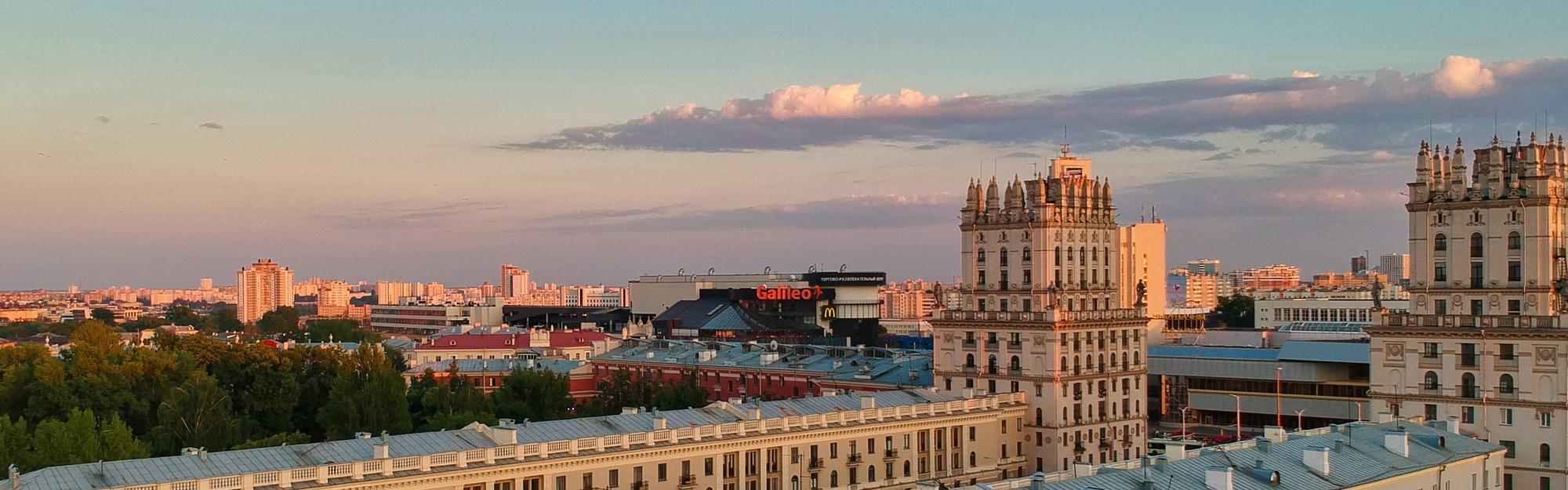

Minsk Travel Guide
Minsk, the capital of Belarus, is a city full of surprises, where wide, open streets meet quiet pockets of history and green spaces. First mentioned in 1067, it has been rebuilt and reshaped many times, particularly after the devastation of World War II, which left the city with a clean, spacious layout alongside a few surviving historic corners.
At the heart of Minsk is Independence Avenue, a long boulevard lined with shops, cafés, and grand public buildings. Just a short walk away, the quieter Upper Town offers narrow streets, colourful churches, and small museums that hint at the city's older past. The Svisloch River winds through Minsk, with parks along its banks that are perfect for strolling, cycling, or simply watching the world go by.
Culture and nightlife are easy to enjoy here. The National Opera and Ballet Theatre hosts frequent performances, galleries showcase both traditional and contemporary Belarusian art, and local restaurants serve classic dishes such as potato pancakes alongside international options. In the evenings, cosy bars and cafés, as well as the lively stretch around Zybitskaya Street, provide welcoming places to unwind.
Minsk also makes a convenient base for exploring the wider country. Forests, lakes, and small villages are just a short drive away, and sites such as the Khatyn Memorial or the open-air museum at Dudutki give insight into Belarus's history and traditions.
Visitors often leave Minsk surprised by its combination of open, modern streets, quiet historic corners, and a relaxed cultural rhythm. It's a city that gradually reveals its character and rewards those willing to explore it on foot.
Minsk Climate and Weather
Minsk has a humid continental climate, with cold winters and warm summers. The city experiences precipitation on many days throughout the year, with wet summers and snowy winters. The average January temperature is around 25°F (−4°C), while the average July temperature is about 64°F (18°C). Winters (December to February) are cold, with snow likely, while summers (June to August) are warm, though typically damp, with the majority of the annual precipitation occurring during the warmer months. The best time to visit is between May and September, when temperatures are mild, though September can feel cooler with more rain. Fog is common in the autumn and spring months.
Belarus travel info
Electricity
Electricity in Azerbaijan is 220 volts at 50Hz. Most sockets accept European two-pin plugs, and Schuko plugs are also widely used.
Language
Belarus has two official languages, Belarusian and Russian. Most people speak Russian in their daily lives, especially in the cities.
Money
The currency in Belarus is the Belarusian ruble (BYN), which is divided into 100 kopecks. Travellers can exchange money at banks and licensed bureaux de change in Minsk and other major towns. US Dollars and Euros are the easiest to exchange, while some other currencies may not be accepted. Visa and Mastercard are generally the most reliable cards, but foreign card payments don't always go through, and American Express or Discover are rarely accepted. ATMs are common in major cities, though some may limit withdrawals or reject foreign cards. Apple Pay works in Belarus for certain cards, but visitors shouldn't rely on mobile wallets alone, as acceptance varies and some foreign-issued cards may not work. Banks usually operate on weekdays, roughly from 9am to 5pm, though hours can differ slightly by branch.
Tipping
Tipping in Belarus isn't a big part of local custom, but it's always fine to round up the bill or a taxi fare. In restaurants, leaving around 10 percent for really good service is appreciated, though not expected.
Health
There are no mandatory vaccination certificates required for entry to Belarus, though it's sensible for travellers to be up to date with routine vaccines, and some may choose to get additional ones such as hepatitis A or tick-borne encephalitis depending on their plans. Tap water isn't always treated to the same standards visitors may be used to, which is why many travellers opt for bottled or boiled water. In the major cities, healthcare is generally suitable for routine needs, and private clinics in Minsk offer the most modern facilities. Options can be more limited in smaller towns, and for that reason travellers are advised to bring any essential medications with them. Clinics may ask for payment at the time; having travel insurance with good medical and evacuation cover provides genuine peace of mind.
Safety
Crime levels in Belarus are generally low, and most trips pass without any problems. Even so, visitors should take the usual precautions against pick-pocketing, muggings, and theft from cars or hotel rooms. It's also wise to keep an eye on belongings when using sleeper trains, as there have been occasional cases of theft on overnight journeys.
Local customs
Visitors to Belarus should avoid photographing military sites, uniformed officials, or buildings that appear to have an official function, as this may attract unwanted attention from the authorities. Pedestrians can be fined for crossing roads outside designated areas, so it's advisable to use marked crossings. Whistling indoors is generally regarded as unlucky, and most people refrain from it.
Doing business
Business meetings in Belarus should be arranged well in advance, and it's often helpful to work through a reliable local contact. A handshake is the usual greeting, and people generally expect a formal style of address. Meetings tend to be structured and serious, and negotiations can take time and involve some give and take. Bureaucratic and legal processes can be complicated, so many visitors choose to hire local professionals for support.
Duty free
For visitors to Belarus: you may bring in up to 3 litres of alcoholic beverages and up to 200 cigarettes (or up to 250 g of other tobacco products) duty-free. In addition, they are allowed non-commercial goods for personal use, up to a value of about €1,500 and a weight limit of 50 kg (depending on conditions). A modest amount of perfume for personal use is also permitted.
Communications
The international dialling code for Belarus is +375. Mobile coverage is strong in major towns and along the main highways, and most rural areas now have reasonable reception, although very remote locations may still experience weaker signal. Internet access is widely available in cities and larger towns through mobile data and public WiFi, but connections can be slower or less reliable in smaller or remote settlements.
Passport & Visa
Visitors to Belarus need a valid passport and, in most cases, a visa. Many travellers are expected to arrange their visa before arriving, although a visa on arrival at Minsk National Airport is possible for some nationalities if the required documents are submitted in advance. Tourist visas often need an invitation or voucher from a hotel, tour company or local contact. Travellers are expected to have suitable health insurance for the duration of their stay. Anyone staying for more than a short period must register their address with the authorities. Hotels usually handle this registration automatically for their guests. It's sensible to ensure that passports have several months of validity beyond the planned date of departure.
Entry requirements
United States citizens need a passport and do require a visa to enter Belarus.
British citizens need a passport and may enter visa-free for up to 30 days if arriving and departing via Minsk National Airport (not via Russia).
Canadian citizens need a passport and may enter visa-free for up to 30 days if arriving and departing via Minsk National Airport (not via Russia).
Australian citizens need a passport and require a visa to enter Belarus. However, there are specific conditions that may allow them to enter visa-free for up to 30 days if arriving and departing via Minsk National Airport (not via Russia).
South African citizens need a passport and require a visa to enter Belarus. No specific visa exemptions for up to 30 days are listed.
Irish citizens need a passport and may enter visa-free for up to 30 days if arriving and departing via Minsk National Airport (not via Russia).
New Zealand citizens need a passport and may enter visa-free for up to 30 days if arriving and departing via Minsk National Airport (not via Russia).
Useful contacts
Tourist Information: www.belarustourism.by
Emergencies: 103 (medical), 102 (police). Note that operators may not speak English.