

City guides
 United States of America
Louisiana
United States of America
Louisiana
New Orleans Travel Guide
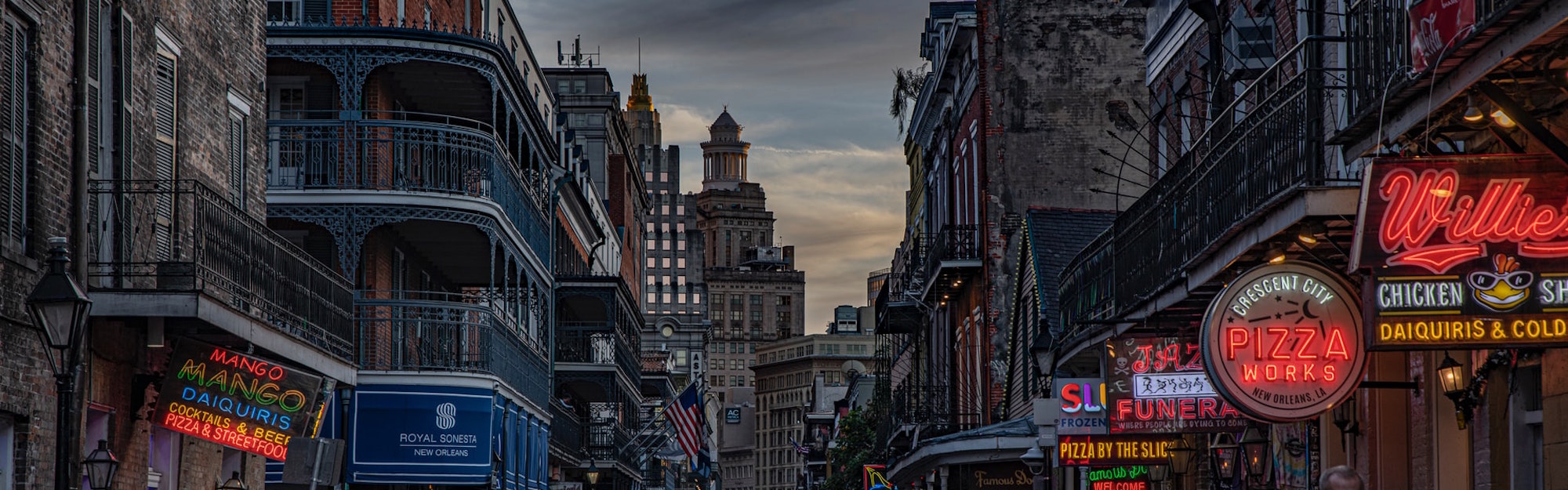
New Orleans has undeniable soul, tangible in her bustling jazz bars, hearty eateries, and sluggish swamps. The beating heart of New Orleans is her jazz scene. From the bustling live performance spots dotted throughout the French Quarter, to the numerous festivals that fill the city with parades and party-goers on a regular basis, visitors will find jazz riffs spilling out onto the streets and into their tapping toes and snapping fingers.
This historic city, also known as 'The Big Easy' or simply 'NOLA', is located in the southeast of Louisiana, straddling the Mississippi River. At times in its history, New Orleans has been occupied by both the French and the Spanish, a legacy that has trickled down into the distinct Creole architecture and delectable Cajun food offered by many restaurants in the city.
New Orleans' reputation as a top-notch holiday destination took a strong blow from the devastating hurricanes Katrina and Rita, which swept through in 2005, flooding almost 80 percent of the city.
But the people of New Orleans rallied together and the city is back to its former glory. Still, some evidence of the disaster remains, which travellers can see on one of the specifically tailored Katrina Tours which traverse the less-touristy areas of the city.
NOLA is world-renowned for her hectic festival schedule, most famous of which is, of course, Mardi Gras. Other festivals, which celebrate everything from St Patrick's Day to Gay Easter, occur throughout the year.
Fans of the more macabre will enjoy taking in some of the Voodoo culture of New Orleans, whether at the Voodoo Museum or on a cemetery tour. If travellers thought New Orleans was just about the nightlife, they should consider again. This is a place that offers something for everyone, all done with its very own special style and flair.
Best time to visit New Orleans
Spring time, which falls between March and May, is a great time to pay a visit to The Big Easy. Temperatures are moderate, and comfortable enough to walk around in shorts and a t-shirt, and it is also one of the least humid times of year. Several festivals also fall over this period, including St Patrick's Day, The Gay Easter Parade, and the French Quarter Festival, making it a fun time to visit.
What to see in New Orleans
-Visit Mardi Gras World to experience the most famous festival in the world year-round.
-Explore the comprehensive and riveting National WWII Museum for insight into this historical event.
-The New Orleans Historic Voodoo Museum is where visitors can learn all about the history of the 'dark arts' in the area and much more besides.
-The Audubon Aquarium of the Americas is popular for its own recreation of the Gulf of Mexico.
What to do in New Orleans
-Go for a picnic in one of the city's many beautiful parks, such as City Park or Louis Armstrong Park.
-Ride along the Mississippi river in a traditional steamboat.
-Visit the acclaimed New Orleans Museum of Art, situated in the lovely City Park.
-Enjoy a jaunt in the French Quarter; it's hard to top a night out on Bourbon Street.
Beyond New Orleans
There are several options for day trips or weekend getaways just outside of New Orleans. For a taste of bayou life, one of the Jean Lafitte National Historical Park and Preserve sites is a wonderful option. If travellers like things spicy, they can visit the birthplace of Tabasco sauce on Avery Island. While they're there, they can take a peek at the swamp 'gators at Jungle Gardens wildlife refuge, or do some bird watching at Bird City.
If visitors would like to explore a little further afield in Louisiana, the state capital, Baton Rouge, is located some 75 miles (121km) away. This is a great city for exploring stately historic plantation houses, and studying a slice of the country's past. Other highlights in the area include a trip to the USS Kidd at the Baton Rouge Nautical Centre, and the Louisiana Art and Science Museum.
Getting there
Louis Armstrong International Airport is located 15 miles (24km) west of central New Orleans, and is reachable by public buses, shuttles and taxis. Flights to New Orleans are available from a large number of major US airports.
Did you know?
-Canal Street, just outside the French Quarter, was once the widest street in the world, named for a canal that was never built.
-The total mileage of canals both above and below ground is more than that of Venice.
-Poker was invented in New Orleans in the early 1800s.
-Mardi Gras colours purple, green and gold were chosen in 1872 to honour Russian Grand Duke Alexis Romanoff who was visiting New Orleans. The purple signifies justice, green for faith and gold for power.
Things to do in New Orleans
Home to one of the world's largest street parties, New Orleans isn't short on attractions and the place to start is without a doubt the world-renowned French Quarter. Visitors can take a stroll along the legendary Bourbon Street to lap up the sights, sounds and smells of the Big Easy.
To gain more perspective into the city's history, visiting D-Day National World War II Museum is a number one destinations. The New Orleans Voodoo Museum shows off the city's underbelly while tourists can marvel at Mardi Gras floats at Mardi Gras World.
The city has many marvellous parks, not least of all the City Park, which is ideal for an afternoon picnic or a morning with a good book. Areas of the city are navigable on bike, with a favourite route taking riders through Garden District, a suburb favoured by several celebrities.
Sports fan should see if there are any football games on at Caesars Superdome, though the facility is worth checking out anyway, as its 680 ft (210m) diameter makes it one of the largest dome structures in the world.
Visitors will do well to purchase the New Orleans Power Pass. Available in one, two, three or five consecutive day options, it provides discounted admission to about 27 of New Orleans' top attractions, offering cheaper admission and the opportunity to skip the queue at many locations.
Mardi Gras World
If travellers are not able to visit New Orleans during its famous annual celebrations, they shouldn't worry. Mardi Gras World offers the festival experience all year long. The museum was actually the working studio of the foremost carnival float designer, Blaine Kern, for whom producing floats and props for the city's annual Mardi Gras was a fulltime job. Today, visitors can watch the museum's team design and construct the giant sculptures, including everything from cartoon characters to mythological figures and creatures that they'll eventually parade through the streets. Tours are offered every half an hour, including a Mardi Gras costume display, a historical video and even a free slice of traditional Mardi Gras King Cake.
Louisiana State Museum
The Louisiana State Museum, affectionately called the Cabildo, is an entertaining and informative attraction in the city's vibrant French Quarter. The exhibitions explore the history of Louisiana from a multicultural perspective, from the first European explorations to the post-Civil War Reconstruction era. The museum is the flagship of the Louisiana State Museum facilities and housed in the historic building of its namesake, dating back to 1799, originally serving as the Spanish city council offices. Two major historic events took place in the Cabildo building: the Louisiana Purchase Transfer ceremonies in 1803, and the landmark Supreme Court decision that legalised racial segregation.

The National WWII Museum
Founded in 2000 by historian and author Dr Stephen Ambrose, the unique D-Day National World War II Museum is as a highlight of any New Orleans sightseeing tour. Situated in New Orleans' Warehouse District, the museum depicts the June 6, 1944 invasion of Normandy, the Home Front during World War II, and the D-Day Invasions in the Pacific. Exhibits include text panels, artefacts, and personal account stations where visitors can listen to the stories of war veterans. A panorama exhibit recreates a Normandy beach landing and there are also regular film shows. This is a modern, imaginatively curated museum which brings the war to life for visitors.
Audubon Aquarium of the Americas
Situated on the banks of the Mississippi River is New Orleans' state-of-the-art Audubon Aquarium, regarded as one of the best in America. Underwater tunnels allow visitors to marvel at a Caribbean Reef and a re-creation of the Gulf of Mexico, complete with sharks. There's also a walkthrough Amazon rainforest and an exhibit displaying the inside story of swamp life. The aquarium features almost every type of aquatic creature imaginable, from jellyfish and sea horses to otters and penguins. Audobon Aquarium's sister attractions, also run by the Audubon Institute, are the excellent New Orleans City Zoo, situated in Audubon Park further uptown, and the Audubon Insectarium, situated in the historic Custom House on Canal Street. The zoo is a fun diversion for kids, and the insectarium, a more unusual attraction, is one of the largest freestanding insectariums in the US, housing more than 900,000 species.
French Quarter
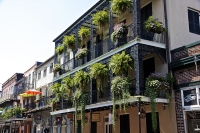
Regarded as the heart and soul of New Orleans, the French Quarter is the historic part of town covering about 90 square blocks radiating out from Chartres Street and Jackson Square. Established in 1734, the French Quarter is also known as the Vieux Carre. Originally a French military outpost, which was later taken over by the Spanish, it gradually developed into a cultural hub incorporating slaves, pirates, mercenaries, call-girls and various freemen of every colour and creed. Today, the area looks and feels much as it did before Hurricane Katrina, with its wrought-iron railings and tall doorways. There's a thrilling offering of nightclubs, bars, live music venues, Cajun-seafood restaurants and all sorts of shops. By day it is one of the best people-watching spots in the world and is the focus for visitors to New Orleans. By night, areas such as the famous Bourbon Street become giant street parties, with a world-class dining districts backed by a soundtrack of jazz music.

Hurricane Katrina Tour
Since Hurricane Katrina decimated New Orleans in August 2005, its people have been rebuilding. The beautiful, vibrant city has largely recovered but remnants of the tragedy remain. In many ways, the memory of the hurricane has become integral to the city's identity. Gray Line Tours offers a three-hour bus ride around some of the hardest hit areas in New Orleans, including Lakeview and Gentilly, and is aimed at gathering support to continue the rebuilding of the city. To respect the privacy of the locals, buses will not allow tourists off the bus to take pictures. Instead, they will pass around pictures of the storm and its destruction, and guides will describe the events before and after the storm hit the city, as well as explaining the significance of the levee system.
Preservation Hall
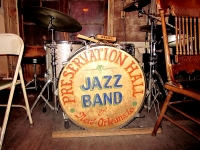
Historic Preservation Hall is New Orleans' most popular jazz venue, where Preservation Hall jazz bands serve up first-rate Dixieland Jazz every night in the French Quarter building, originally built as a residence in 1750. There are three performances a night, each lasting about 45 minutes. No seating, food or drinks are available, but crowds of all ages flock here simply for the wonderful music. It's possible to get tickets at the door without booking in advance, but it's advisable to arrive about 30 minutes before the show to avoid long queues or disappointment when tickets sell out.
New Orleans Museum of Art
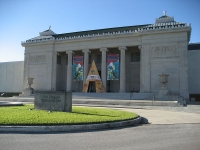
The New Orleans Museum of Art (NOMA) is a world-class facility. The permanent collection at the museum features over 40,000 objects, from the Italian Renaissance to the modern era, and is celebrated for its collection of both American and European works, including art by masters such as Degas, Matisse, Rodin, Jackson Pollock, Monet, Renoir, Georgia O'Keeffe and Picasso. The museum sits in the lovely City Park, surrounded by ancient oak trees and lagoons. There is also a small amusement park and Storyland, a charming fairytale playground, in the park to help amuse younger travellers. One of the most impressive parts of the museum is the superb Sydney and Walda Besthoff Sculpture Garden. The Sculpture Garden provides a unique opportunity for visitors who treasure the arts, with a varied collection of modern and contemporary sculptures presented in an exquisite natural setting.
Louisiana Children's Museum
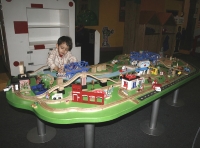
The Louisiana Children's Museum offers kids a vast selection of exhibits, art activities and educational programmes to help make learning fun. The kid-sized Winn-Dixie grocery store is a favourite, as are the climbing wall and the giant bubble that kids can play in. Eye to Eye has fun showing the workings of the human eye, and Art Trek features drawing, painting and sculpture lessons. The games and facilities change fairly often and the museum hosts regular events and activities to keep eager young minds captivated. A great option for a rainy day!
Mississippi River Boat Rides
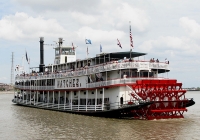
The Mississippi River is really the primary reason New Orleans exists. It is the trade and transport artery which made the situation of the city such an asset over the centuries. New Orleans is therefore a great place to take a boat ride, whether it's simply a fun paddle boat excursion with the kids, or a historic riverboat tour. The Natchez steamboat traverses this great river and passes many of the city's historical sites, while the John James Audubon ferries passengers between the Aquarium of the Americas and the Audubon Zoo. There are also a number of Louisiana swamp tours, which are fun for the whole family. Travellers can't visit New Orleans without experiencing the Mississippi!

Jean Lafitte National Historical Park and Preserve
Jean Lafitte National Historical Park and Preserve is a great place to experience bayou life in Louisiana. The park, named after the notorious early-19th century pirate, consists of six physically separate sites and a park headquarters. These include the Acadian Cultural Center in Lafayette, the Prairie Acadian Cultural Center in Eunice, the Wetlands Acadian Cultural Center in Thibodaux, the Barataria Preserve in Marrero, the Chalmette Battlefield and National Cemetery in Chalmetter, and the French Quarter Visitor Center in New Orleans. The park offers a variety of activities, including bayou cruises from the Acadian Cultural Center, birdwatching and swamp walks in Barataria Preserve, and paddlewheel boat trips from New Orleans to the historic Chalmette Battlefield sites.
Grand Isle
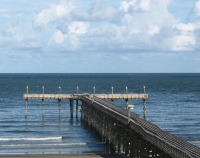
A great weekend getaway from New Orleans, Grand Isle is a popular holiday town located on an island in the Gulf of Mexico. Formerly a busy port of call for notorious pirates such as Jean Lafitte, Grand Isle is now a peaceful haven for relaxation, fishing and birdwatching, revelling in its reputation for being a sportsperson's paradise. Grand Isle State Park is home to one of the top winter beaches in the US, and there is a small town nearby with a few restaurants and self-catering accommodation. Grand Isle comes alive each year for the Grand Isle Tarpon Rodeo, a salt-water fishing rodeo that draws some 15,000 people annually. Another popular event is the Grand Isle Migratory Bird Festival, held each spring.

Avery Island
Avery Island is located on an eight-mile (13km) deep salt dome in Iberia Parish, 137 miles (220km) west of New Orleans. A rock salt mine opened on the island during the American Civil War, producing enormous amounts of salt for the Confederacy. Known as the birthplace of Tabasco Sauce, Avery Island is still home to the Tabasco Pepper Sauce Factory, which offers tours to the public. The island also contains the Jungle Gardens wildlife refuge, home to alligators, deer and raccoons, and Bird City, a pond with specially built piers for viewing snowy egrets, among other birds.
Things to do with kids in New Orleans
With its reputation for indulgent street parties and voodoo, parents might think twice about a family holiday in New Orleans. However, the city should actually delight children and it's quite possible to avoid the more adult forms of entertainment while still experiencing the best of the destination.
Kids are welcome at New Orleans' institutions such as Preservation Hall and children of all ages delight in the fancy dress and parades of the many festivals. The city also has fantastic attractions tailored to children on holiday, including fun parks, aquariums, and museums.
The little ones love to visit the Audubon Aquarium as well as the creatures at the Audubon Insectarium. While adults take in the exhibitions at the New Orleans Museum of Art, kids can play at nearby Storyland and the Carousel Gardens Amusement Park.
Another popular destination is the Louisiana Children's Museum; children also adore going on boat rides up and down the Mississippi River, or out into the bayous and Louisiana swamps.
Audubon Aquarium of the Americas
Situated on the banks of the Mississippi River is New Orleans' state-of-the-art Audubon Aquarium, regarded as one of the best in America. Underwater tunnels allow visitors to marvel at a Caribbean Reef and a re-creation of the Gulf of Mexico, complete with sharks. There's also a walkthrough Amazon rainforest and an exhibit displaying the inside story of swamp life. The aquarium features almost every type of aquatic creature imaginable, from jellyfish and sea horses to otters and penguins. Audobon Aquarium's sister attractions, also run by the Audubon Institute, are the excellent New Orleans City Zoo, situated in Audubon Park further uptown, and the Audubon Insectarium, situated in the historic Custom House on Canal Street. The zoo is a fun diversion for kids, and the insectarium, a more unusual attraction, is one of the largest freestanding insectariums in the US, housing more than 900,000 species.
Louisiana Children's Museum
The Louisiana Children's Museum offers kids a vast selection of exhibits, art activities and educational programmes to help make learning fun. The kid-sized Winn-Dixie grocery store is a favourite, as are the climbing wall and the giant bubble that kids can play in. Eye to Eye has fun showing the workings of the human eye, and Art Trek features drawing, painting and sculpture lessons. The games and facilities change fairly often and the museum hosts regular events and activities to keep eager young minds captivated. A great option for a rainy day!
Mississippi River Boat Rides
The Mississippi River is really the primary reason New Orleans exists. It is the trade and transport artery which made the situation of the city such an asset over the centuries. New Orleans is therefore a great place to take a boat ride, whether it's simply a fun paddle boat excursion with the kids, or a historic riverboat tour. The Natchez steamboat traverses this great river and passes many of the city's historical sites, while the John James Audubon ferries passengers between the Aquarium of the Americas and the Audubon Zoo. There are also a number of Louisiana swamp tours, which are fun for the whole family. Travellers can't visit New Orleans without experiencing the Mississippi!
Eating Out
Known for its use of Cajun pepper, tropical fruits, and spices, dining out in New Orleans is an exciting sensory experience. Creole cuisine is a melting pot, incorporating French, Spanish, Mediterranean, Caribbean and African flavours, as well as hearty comfort food from the Deep South.
Travellers will find the world-famous French Quarter, mostly geared towards tourists, is where just about any and every kind of Creole restaurant is found, particularly on the famous Bourbon Street. Restaurants serve mouth-watering arrays of jambalaya, red beans and rice, gumbo and Cajun crawfish, among other local favourites.
Those with a sweet tooth are in for a treat in New Orleans, where the desserts are as sticky as they come. Favourites include pecan pie, while pralines and Bananas Foster are staples on most restaurant menus.
Visitors shouldn't forget an order of deep-fried beignets with their coffee, nor should they miss the chance to sample a notorious cocktail called the 'Hurricane'.
New Orleans has its own special take on the sandwich, which comes in two varieties. Po'boys are served on a round French loaf and packed to the rafters with beef, oysters, shrimp, gravy and all the trimmings; uffalettas are huge Italian loaves stuffed with cold meats and olive salad.
Shopping
Shopping in New Orleans promises a great selection of antiques, arts, vintage clothing and unique jewellery. There are various malls, markets, boutiques and specialist shops that satisfy most retail desires. Like the city itself, the shopping experience tends to be quirky.
The French Quarter is unsurpassed as a sightseeing or boutique shopping experience. It's also home to legendary New Orleans voodoo shops and some fantastic costume and mask shops, great for extravagant Mardi Gras celebrations or Halloween.
Magazine Street also has costume and mask shops, as well as stores offering elegant furnishings, hand-smocked garments and local arts. There are various jewellers in town offering unique, custom-made adornments.
New Orleans confectioners have a special touch, and sweets such as pralines make popular gifts. Some of the best are sampled at Southern Candymakers, Leah's Candy Kitchen and Aunt Sally's Praline Shop. For those into food markets, there's Crescent City Farmer's Market, which sells exotic vegetables, beautiful flowers and fresh seafood.
Travellers shouldn't forget to sample the best in local music. Dixieland records make fabulous souvenirs, bought at many vibrant music stores. Items such as Louis XIV chairs and African masks are available from numerous antique stores, while art galleries on Royal Street also hold infinite treasures.
Nightlife
New Orleans is a city of music and rhythm, most famous for jazz, Cajun and zydeco music, and its nightlife reflects this with enthusiasm. There are countless bars along Bourbon Street, and the party invariably pours out onto the sidewalks. While most places have a cover charge, it's not always necessary to actually go inside! Some of the best clubs and bars are in the neighbourhoods of the French Quarter and Faubourg Marigny.
Preservation Hall is a must for jazz fans, while Maple Leaf Bar is another popular spot for live music. Molly's is said to be the best bar in the French Quarter and Napoleon House offers a fantastic Pimm's Cup Cocktail. Nightclubs come and go but the best nightlife districts are lively and fun almost every night of the year.
Getting Around
When in New Orleans, the vintage electric rail vehicles or 'streetcars' are the way to go. With various lines crossing the city, most destinations are accessible by these trams.
The Jazzy Pass allows unlimited rides on buses and streetcars. The Canal Street Ferry takes passengers across to the suburb of Algiers, offering fine views of the city skyline. Walking, cycling, taxis and rental cars are some of the other options, with many tourist areas, such as the French Quarter, being most enjoyable on foot. Rideshares such as Lyft and Uber are also available.
New Orleans Climate and Weather
New Orleans has a humid subtropical climate with very hot and humid summers, and mild, short-lived winters. Summers in New Orleans are relatively long, with high temperatures hovering around 90F (32C) from May to September.
In winter, from December to February, temperatures average between 44F (7C) and a comfortable 62F (17C). New Orleans experiences high annual rainfall, most of it falling in mid-late summer, often as a spin-off from tropical storms.
Heavy rain during the June to September Gulf Coast hurricane season has occasionally caused flooding in the city. Snow and ice are rarities in New Orleans, but there have been incidences of light snowfall causing a 'White Christmas'.
United States of America travel info
Electricity
The electrical current is 120 volts, 60Hz. Plugs are mainly the type with two flat pins, though three-pin plugs (two flat parallel pins and a rounded pin) are also widely used. European appliances without dual-voltage capabilities will require an adapter.
Language
English is the most common language spoken but Spanish is often heard in the south-western states.
Money
The official currency is the US Dollar (USD), which is divided into 100 cents. Only major banks exchange foreign currency. ATMs are widespread and credit cards are widely accepted; Apple Pay and Google Pay are very popular. Banking hours are Monday to Friday 9am to 3pm.
Tipping
A 15 percent tip is expected by taxi drivers, bartenders, hairdressers and waiters, but travellers shouldn't tip in fast-food or self-service restaurants. In expensive restaurants or for large parties, the tip should be 20 percent of the bill. It's normal to tip staff such as valets and porters in hotels; this is discretionary, although a minimum of $5 is expected. Most services are customarily tipped if the service is good.
Health
There are no specific health risks associated with travel within the USA. Medical facilities are excellent, but expensive. Only emergencies are treated without prior payment and treatment can be refused without evidence of insurance or proof of funds. Good medical insurance is essential.
Safety
Travel within the United States is generally trouble-free, though travellers should be aware that the US shares with the rest of the world an increased threat from terrorist incidents. Security has been heightened, particularly at airports. Restrictions on hand luggage apply and travellers are advised to check on the latest situation with airlines in advance. Travellers should also be alert to the dangers of car and street crime in cities and should use common sense and take basic precautions. Hurricanes are common between June and November, putting the southern USA, including the Gulf Coast and the eastern US at risk. There's a risk of wildfires in many dry areas in the US, particularly on the West Coast from March to November.
Local customs
Laws vary from state to state, including speed limit, fines and punishment. The age at which alcohol may be legally bought and consumed is 21 years.
Doing business
In such a large country, filled with so many diverse groups, business practices may differ according to each state, though rarely to any large degree. The East Coast is traditionally more formal than the West Coast, though in states such as California, dress code and conservative appearance are as common as they would be in New York. Punctuality is important throughout the country and it's considered rude to be late for a meeting. Gift-giving is uncommon as it may be construed as bribery. Appropriate titles (Mr, Mrs, Ms) are used upon introduction and until otherwise stated. Americans favour politeness and greetings of 'Hello' and 'How are you?' are often expressed with sincerity. Business hours may vary in each state, but an 8am start and 5pm finish Monday to Friday is the most common with an hour over lunch.
Status and age are not necessarily indicative of seniority, nor do they carry much weight in themselves. Those doing business in the States should be mindful of this fact; foreigners should never make assumptions about someone's position or rank. Best practice is to be respectful to all parties. That said, the US upholds a hierarchal business structure in which 'the boss' is the ultimate decision-maker. Senior leaders have the power of the last word, and can go against the grain just as easily as they can follow popular opinion. Foreigners should concentrate on winning over this individual, even if the greater group seems unsupportive. Americans value a direct style of communication. In this fast-paced, consumer culture 'time is money', and small-talk is viewed as unnecessary and wasteful. It's best for foreigners to get to the point quickly, speak about issues in a frank and open manner, and to avoid taking offence if someone questions or challenges them outright.
Duty free
Travellers to the United States who are returning residents of the country do not have to pay duty on articles purchased abroad to the value of $800 provided their stay was longer than 48 hours and their duty-free allowance was not used in the 30-day period prior. For passengers arriving from Samoa, Guam and the U.S. Virgin Islands, a duty-free allowance of $1,600 is allowed. The following items are included in this: 50 cigarettes and 10 cigars and 150 millilitres (5 fl. oz.) of alcoholic beverages or 150 millilitres (5 fl. oz.) of perfume containing alcohol. Restrictions may apply to goods from Cuba, Iran, North Korea, Burma (Myanmar), Angola, Liberia and Sudan. It is prohibited to import Cuban cigars from any country.
Travellers to the United States who are non-residents do not have to pay duty on the following items: 50 cigars or 200 cigarettes and gifts to the value of $100 provided their stay in the USA is not less than 72 hours and that the allowance has not been used in the preceding six-month period.
Prohibited items for residents and non-residents include meat or meat products, poultry, narcotics, absinthe, plants, seeds, vegetables, fruits, soil, live insects and other living plants or animal pests. Fish is prohibited unless it carries disease-free certification. Wildlife and animals or their by-products carry restrictions. Dairy products and eggs from specified countries are not allowed. Firearms and ammunition are not allowed without the necessary license and permit.
Communications
The international country dialling code for the United States is +1. Mobile networks cover most of the country, especially all urban areas; travellers can purchase local prepaid SIM cards for unlocked phones or use eSIMs if their cellular providers support it on their networks. WiFi is widely available.
Passport & Visa
It is highly recommended that travellers' passports have at least six months' validity remaining after the intended date of departure from them travel destination. A visa is required for short visits unless travellers qualify for entry under the Visa Waiver Program.
The Visa Waiver Program (VWP) enables citizens of certain countries to travel to the US for a stay of up to 90 days without a visa. Visitors under the VWP need a valid Electronic System for Travel Authorization (ESTA), which allows the US government to screen all visitors before travel. Visitors entering the country under the VWP must have a machine-readable passport (MRP) that has a barcode on the photo page. Travellers under the VWP must have passports that include biometrics if they wish to enter the country without a visa, which means that passports must contain unique personal data such as fingerprints or iris details. All passports must contain a digital photo image in order to travel visa-free. All visitors to the USA have a photograph and two fingerprints taken by an inkless scanner on arrival, including those travelling visa-free under the VWP.
As part of the Western Hemisphere Travel Initiative (WHTI), all travellers travelling between the United States and Canada, Mexico, Bermuda, and the Caribbean region are required to present a passport or other valid travel document to enter or re-enter the United States. If departing from the USA, a valid passport is required by immigration authorities. Immigration officials often apply different rules to those stated by travel agents and official sources.
Entry requirements
US citizens require passports.
UK nationals require a passport valid for duration of stay. Most passport holders can get an Electronic System for Travel Authorisation (ESTA) through the Visa Waiver Programme, which allows travel to the US for up to 90 days. The VWP includes tourism, certain types of business visit and transit to another country.
The most important requirement on entering the U.S. is providing proof of Canadian citizenship. A valid Canadian passport is the best document to prove Canadian citizenship and the right to return to Canada. However, several other documents can serve, depending on the mode of transport. Generally, Canadian citizens do not require visitor, business, transit or other visas to enter the United States from Canada, though there are some exceptions.
Passports must be valid for the period of intended stay. If visiting the US for fewer than 90 days, Australian nationals may be eligible to apply for an Electronic System for Travel Authorization (ESTA), and enter under the Visa Waiver Program (VWP).
South Africans must hold a passport valid for duration of stay. A visa is required.
Passports must be valid for duration of stay. Irish nationals can get an Electronic System for Travel Authorisation (ESTA) under the Visa Waiver Programme for entry into the United States.
Passports must be valid for duration of stay. New Zealand nationals can get an Electronic System for Travel Authorisation (ESTA) under the Visa Waiver Programme for entry into the United States.