


Paramaribo Travel Guide
Suriname's quiet, unassuming capital of Paramaribo is one of South America and the Caribbean's true hidden gems. A vibrant city with an interesting Dutch heritage, modern-day Paramaribo is a proudly multicultural setting. Its 250,000-strong population comprises citizens of Indian, African, Javanese, Chinese and Dutch descent, with cathedrals, synagogues, temples and mosques existing side by side in harmony.
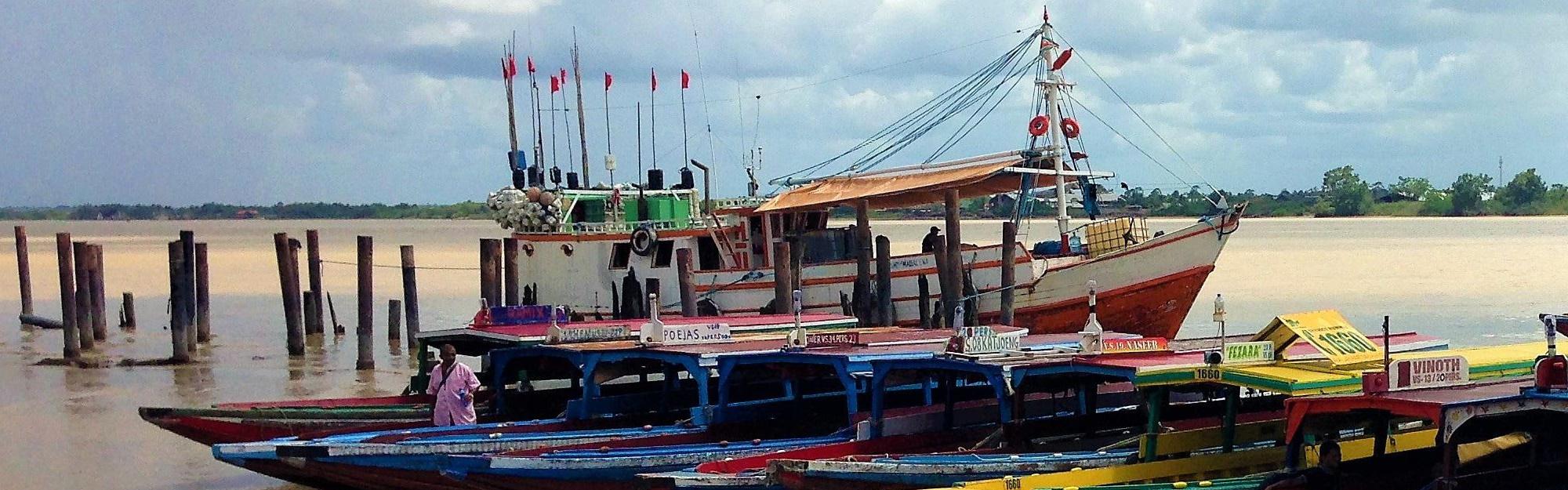
The great attraction of Parbo, as it's affectionately known, is its historic inner city, an area home to a wealth of quaint wooden Dutch-colonial buildings. Along with these wonderfully photogenic structures, visitors to Paramaribo can admire austere Dutch forts (such as Fort Zeelandia) and the St Peter and Paul Cathedral, one of the tallest wooden buildings in the western hemisphere. The lovely Waterkant (waterfront) area of the city is the perfect place to grab a fresh cocktail and watch the sun sink over the Suriname River.
In many ways, a visit to Paramaribo's Central Market is the easiest way to experience the wonderful multiculturalism of this fascinating city. The Central Market, which sprawls along the pretty Waterkant area, is a busy, frenetic place, with three distinct sections all boasting their own unique sights, smells and sounds. For foreign visitors, the most culturally interesting section of the market is the Maroon area, with its bones and feathers, exotic animals and assortment of traditional medicines and tonics for sale. The Asian and Indian section of the market sells cheap goods and clothing, and a heady selection of spicy snacks and beverages. One could also buy fresh table fare at the clamorous outdoor fish market, where fishermen unload their boats in the centre of the action and seafood can be picked up at a bargain.
Paramaribo is exotic and diverse, a true sparkling diamond in the gorgeous silver sands of the Caribbean. Visitors will revel in a blend of the old and the new, with a mix of Dutch and indigenous heritage. Its treasured historic inner city shines bright while its bustling market won't disappoint.
Getting Around
Public transport in Paramaribo is not extensive. Buses and taxis are available, and car hire companies are present in the city. Most of the main attractions in Paramaribo can easily be explored on foot, while hiring a bicycle is a pleasant way of exploring the city.
Buses are privately operated and travel along set routes but don't have predetermined schedules; buses will often only leave the station once they are full. Taxis are reasonably priced but unmetered, so it's best to negotiate a fare before getting in. Water taxis also ply their trade across the Suriname River to the Commewijne District.
Driving in Suriname follows the British system, so cars drive on the left side of the road. There are a number of car hire companies at the airport and in the city. Rental cars are expensive and not always in the best condition. There are few good roads outside of Paramaribo so travelling outside of the city will most likely require a four-wheel drive vehicle.
Paramaribo Climate and Weather
Paramaribo has a hot and humid tropical climate. Rainfall is common all year round, with June being the wettest month. Temperatures are consistently high throughout the year; daytime temperatures rarely fall below 77°F (25°C), with highs averaging around 88°F (31°C), although continuous trade winds do bring some cooling relief. The best times to visit Suriname are between February and April and from August to November. Fortunately, Suriname lies outside the Atlantic Hurricane Zone, so it is not prone to these tropical storms.
Suriname travel info
Electricity
Electrical current ranges between 110 volts and 230 volts, 60Hz. European-style two-pin plugs are standard.
Language
The official language is Dutch. The local creole language, Sranan Tongo, is also widely spoken.
Money
The official currency is the Surinamese Dollar (SRD). Money can be exchanged at banks; the best currencies to change are Euros, US Dollars, or Pounds Sterling. Major international credit cards are accepted at larger hotels and restaurants. ATMs are available in towns and cities throughout the country.
Warning: Undefined property: stdClass::$tipping in /home/tripreport/public_html/components/country-travel-info.php on line 33
Health
Malaria medication is recommended for those visiting the provinces of Brokopondo and Sipaliwini, while others planning to eat outside restaurants and hotels may want to consider a vaccination for typhoid. There is a risk of yellow fever in Suriname, with travellers arriving from infected areas requiring proof of a yellow fever vaccination. Tap water shouldn't be drunk unless it has first been boiled, filtered or chemically disinfected. Medical facilities are extremely limited in Suriname and travellers are advised to have comprehensive travel health insurance. All required medications should be taken along in their original packaging and accompanied by a signed and dated letter from a doctor detailing what they are and why they are needed.
Warning: Undefined property: stdClass::$safety in /home/tripreport/public_html/components/country-travel-info.php on line 35
Local customs
Local culture in Suriname is relaxed and friendly, but strictly patriarchal. Women are expected to dress conservatively. It is customary to greet a new acquaintance with a handshake and a good friend with a hug. It is polite to remove your shoes when entering someone's home. Ask permission before photographing government, military buildings or any landmark considered to be holy.
Warning: Undefined property: stdClass::$business in /home/tripreport/public_html/components/country-travel-info.php on line 37
Duty free
Visitors to Suriname may import the following goods duty-free: 200 cigarettes or 20 cigars or 500 grams of tobacco; 1 litre of spirits, 4 litres of wine and 8 liters of beer; perfume for personal use; and other goods up to the value of USD 500.
Communications
The international dialling code for Suriname is +597. Mobile coverage is adequate in towns and cities, but is limited in more remote areas of the interior. Internet cafes are available in major towns.
Passport & Visa
Passports must be valid at least six months after travel and passengers must have an onward ticket. Visitors requiring visas but arriving from a country without Suriname representation can also usually obtain a visa on arrival, provided they have pre-approval. It is highly recommended that passports have at least six months validity remaining after your intended date of departure from your travel destination. Immigration officials often apply different rules to those stated by travel agents and official sources.
Entry requirements
US nationals require a passport valid for six months beyond intended travel. A visa is required for stays longer than 90 days. Passengers with a Persons of Surinamese Origin document are visa exempt.
UK nationals require a passport valid for six months beyond intended travel. British nationals travelling as tourists are visa exempt for 90 days. Passengers with a Persons of Surinamese Origin document are visa exempt.
Canadian nationals require a passport valid for six months beyond intended travel. Visa exemptions apply to passengers travelling as tourists for a maximum stay of 90 days. Passengers with a Persons of Surinamese Origin document are visa exempt.
Australian nationals require a passport valid for six months beyond intended travel. A visa is required. Passengers travelling as tourists are visa exempt for a maximum stay of 90 days. Passengers can obtain a visa on arrival for a maximum stay of 2 months. They must have confirmation that the visa has been approved before they travel. Passengers with a Persons of Surinamese Origin document are visa exempt.
South African nationals require a passport valid for six months beyond intended travel. Passengers travelling as tourists are visa exempt for a maximum stay of 90 days. Passengers with a Persons of Surinamese Origin document are visa exempt.
Irish nationals require a passport valid for six months beyond intended travel. A visa is required. Passengers travelling as tourists are visa exempt for a maximum stay of 90 days. Passengers with a Persons of Surinamese Origin document are visa exempt.
New Zealand nationals require a passport valid for six months beyond intended travel. A visa is required. Passengers travelling as tourists are visa exempt for a maximum stay of 90 days. Passengers with a Persons of Surinamese Origin document are visa exempt.
Useful contacts
Surinam Tourism Foundation, Paramaribo, Suriname: +597 42 4878 or info@surinametourism.sr
115 for police and general emergencies, 113 for the ambulance, and 110 for the fire department