

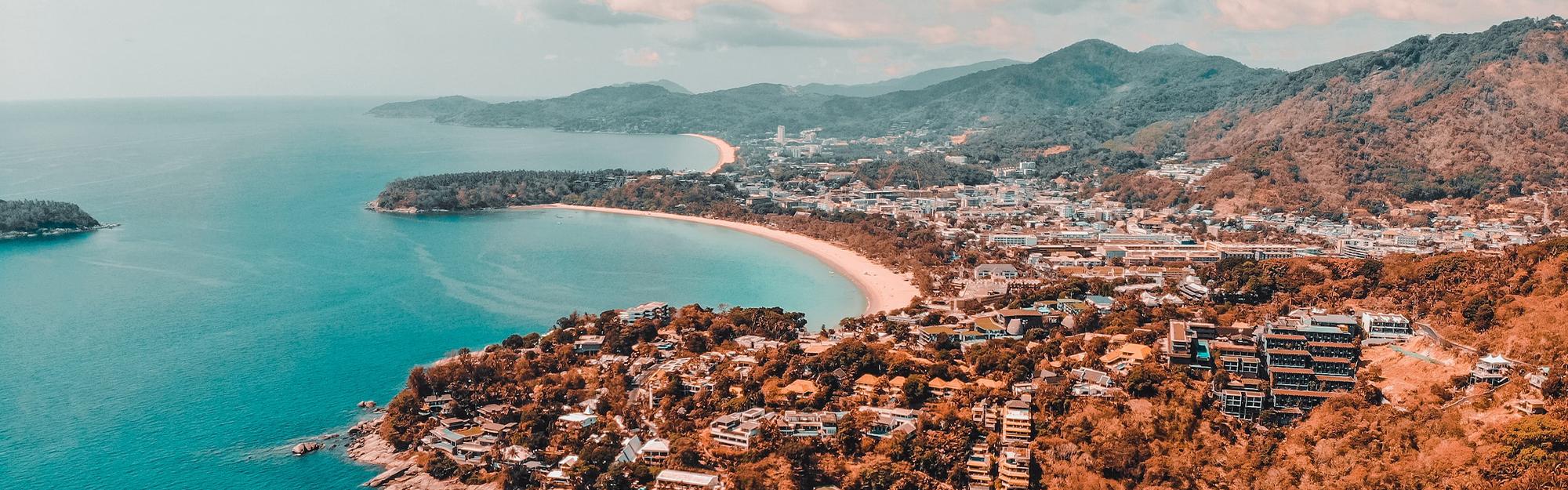

Phuket Travel Guide
Located in the Andaman Sea off Thailand's west coast, the holiday hub of Phuket, or the 'Pearl of the South' as it has become known, is connected to the mainland by the Sarasin Bridge. Along with being Thailand's largest island, Phuket has an incredibly diverse list of attractions, which include rocky and sandy beaches, tall cliffs, forests, waterfalls, and temples.
Phuket caters to all, with accommodation options that range from backpackers and simple guesthouses to modern luxury hotels, though beachfront bungalows on unspoilt stretches of white sand are more rare now than they used to be. There are numerous activities in or near the destination, including mountain biking, bungee jumping, and golf, and it's even possible to go elephant trekking. A variety of tours offer day trips to the cliffs of nearby Phang Nga Bay, Koh Phi Phi, and the beaches and islands around Krabi. Several offshore islands are good for snorkelling and scuba diving. Phuket also has a huge variety of goods and shopping establishments, from markets and street stalls to department stores and specialist shops, and a range of restaurants that includes Thai seafood, Indian and Western cuisine.
The island's airport makes it easy to get to and from Bangkok and, though thousands of tourists visit in peak season, Phuket's sheer size allows travellers to escape from the madding crowds. Patong Beach is the island's most famous and developed beach resort, and offers a wide choice of holiday activities, dining options, and nightlife. It's situated nine miles (15km) from Phuket City.
Things to do in Phuket
Though many visitors holiday in Phuket simply for the beaches, there are many things to see and do away from the water as well. Phuket's long and fascinating history is detailed at the Thalang National Museum, while the island has almost 40 Buddhist temples, including the famous Wat Chalong. The 147-foot (45m) Big Buddha is also a popular attraction, and is visible from most of southern Phuket.
Phuket has rightly earned its reputation as a paradise for outdoor activities, and visitors will enjoy exploring some of the biggest waterfalls in Thailand, and other pastimes such as fishing and hiking. Also interesting are the Muay Thai boxing matches staged in Saphan Hin Stadium.
Fun in the sun and sea is the main attraction of Phuket, however, and there's no end of opportunities for snorkelling, scuba diving, cliff diving, sailing, kayaking, and jet-skiing. Travellers can take a ferry from Phuket to the Phang Nga Bay islands, or Koh Phi Phi, or take a trip to explore the nearby holiday hotpots of Krabi or Koh Lanta.
Koh Lanta
Koh Lanta is a popular resort area in southern Thailand. Consisting of two islands, Koh Lanta Yai and Koh Lanta Noi, almost all of the tourist development is on Koh Lanta Yai, which is often referred to as simply Koh Lanta. The island is a great place for travellers looking for a beach holiday away from the parties and crowds of Phuket, and is popular with slightly older tourists who populate the resorts and bungalows that line the beaches. There are plenty of things to see and do on Koh Lanta, including exploring the Khao Mai Kaew Caves on foot or elephant-back, visiting the orchid nursery farm at Long Beach (Pra Ae Beach), and sunning on the beaches of Klong Dao, Kor Kwang, and the beautiful Kantiang Bay. Visitors can also get a taste of the culture of Koh Lanta by visiting Lanta Old Town and the Sea Gypsy Village. Koh Lanta's diving spots, including Koh Haa and Hin Muang, are rated as some of the best diving locations in Thailand.
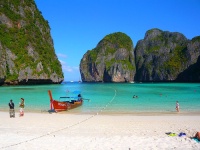
Koh Phi Phi
This stunning archipelago is a must-visit destination for travellers seeking natural beauty and adventure. Famous for its crystal-clear waters, vibrant marine life and dramatic limestone cliffs, it's an ideal spot for snorkeling, diving and hiking. The islands offer a lively atmosphere with beachfront bars, delicious seafood and a variety of water activities, and movie fans should absolutely visit Maya Bay, which was made famous by the Leonardo DiCaprio film, 'The Beach'. With its mix of relaxation and adventure, Koh Phi Phi promises an unforgettable experience in one of Thailand's most picturesque locales. Travellers should note that there are no cars on Koh Phi Phi, so people with walking difficulties will find the hills and lack of transport trying.
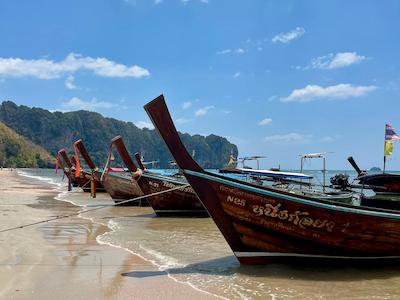
Krabi
Located on the Andaman Coast, Krabi is renowned for its stunning beaches, clear turquoise waters and dramatic limestone cliffs. Popular spots such as Railay Beach, Ao Nang and Phi Phi Islands draw travellers seeking adventure, relaxation and breathtaking, natural beauty. The province offers activities such as rock climbing, snorkelling and island hopping, while Krabi Town itself has a charming atmosphere with local markets, restaurants and cultural sites such as the Old Quarter, which is rich in colonial-era Sino-Portuguese architecture. The destination's warm, tropical climate and lush landscapes make it an easy choice for those looking to explore the outdoors or unwind by the sea.
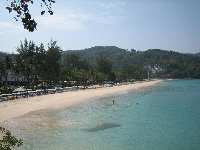
Phuket Beaches
Few places in the world can match Phuket for its array of beautiful beaches, with their white sands and crystal clear waters. From the popular Patong Beach, which daily draws hundreds of visitors to its shores, to the quieter Kata Noi, which is hidden away from the crowds, Phuket has a strip of sand for everyone. For those who want to burn off some energy, activities such as parasailing, jet skiing and snorkelling can be found on many of the more popular beaches. The best beaches in Phuket for snorkelling would be Ao Sane and Paradise Beach. For those who prefer to sit back and enjoy the atmosphere, there are beachside massages, restaurants and cocktail bars around every corner. The best beaches for relaxing would be Mai Khao, Had Sai or Freedom Beach. When the day is done, Phuket offers some of the most beautiful sunsets travellers will ever see, framed by sheer limestone cliffs and the lazy coconut palms that line the beaches.
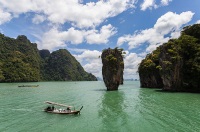
Phang Nga Bay
The holiday spot of Phang Nga Bay is characterised by sheer limestone cliffs that jut vertically out of the emerald green water. The bay contains a fascinating collection of 3,500 mostly uninhabited islands that are unique in that they have central hollows or 'rooms' (actually collapsed cave systems) containing hidden realms of unspoilt fauna and flora. Many of these can only be reached by inflatable kayak, which makes exploring the bay on the water an exciting way to enjoy the spectacular scenery. The largest and most popular Phang Nga Bay islands are James Bond Island and Koh Pannyi, the first named for having been where the movie 'The Man with the Golden Gun' was filmed. Koh Pannyi or Sea Gypsy Island is where a village has been built on stilts in the water, with a giant monolithic rock guarding its rear. Regular boat trips carry holiday tourists from Phuket to Phang Nga Bay, and it can be overcrowded during high season.
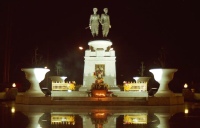
Thalang National Museum
The best place to learn more about Phuket's past and present is the Thalang National Museum, which chronicles the island's daily life as well as its long history. There are exhibits on tin mining, military history, the Sea Gypsy culture and artefacts of the ancient Sukothai kingdom, dating back to the 9th century. One of the most interesting exhibits is the Monument of the Two Heroines, sisters Thao Thep Krasattri and Thao Si Sunthorn, who helped to repel the Burmese invasion in the 18th century.
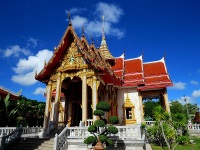
Wat Chalong Buddhist Temple
Wat Chalong is the most famous of the 29 Buddhist temples in Phuket, welcoming thousands of visitors every year. The site is dedicated to two monks who used their knowledge of herbal medicine to assist in the tin miners' rebellion of 1876. The many buildings of the temple complex contain gilt statues, paintings, and relics, including a splinter of bone said to belong to the Buddha. A unique aspect of Wat Chalong is the regular sound of firecrackers, which are set off to show gratitude for answered prayers. Visitors to Buddhist temples should take care not to wear revealing clothing (with knees and shoulders covered), and be prepared to leave their shoes at the door.
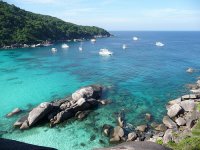
Similan Islands National Park
Even among Thailand's many islands, the Similan Islands have a reputation as one of the top scuba diving destinations in the world. The intense blue waters are framed by white coral sand beaches, and are home to intricate coral reefs and rock formations. The most famous dive site in the Similan Islands is Richelieu Rock, where whale sharks are commonly spotted. The Similan archipelago consists of nine islands: Ko Bon, Ko Bayu, Ko Similan, Ko Payu, Ko Miang, Ko Payan, Ko Payang, and Ko Huyong. Not all are open to visitors, and all are virtually uninhabited. Many charters offer day trips to the Similan Islands from Phuket and Phang Nga, but there are limited accommodation opportunities as well. Travellers should note that the park is closed from mid-May to mid-October every year due to unsafe weather conditions, and that it's illegal to visit during this period; guests who do so put their lives at risk, as there's no emergency support.
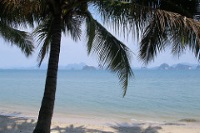
Koh Yao Islands
The Koh Yao Islands are located in Phang Nga Bay, halfway between Phuket and the Krabi mainland. The islands are known as quiet retreats from the bustle of Phuket, and are popular excursions for tourists in the Thai islands. In 2002, Koh Yao Noi received the World Legacy Award for Destination Stewardship from Conservation International and National Geographic Traveler Magazine for the innovative home stay programmes offered by locals. Maintaining their traditional way of life is important to the residents, as is preserving their environment. The top activities on the islands include hiking, kayaking, swimming and snorkelling. Though the islands are both small and have few facilities, Koh Yao Noi has recently added amenities such as restaurants, shops, and internet service. The islands are a quiet and secluded refuge from the hordes of tourists in nearby resorts; visitors are advised to bring cash with them, though there are a few ATMs.
Shopping
While not on the same level as the legendary shopping in Bangkok, Phuket is still a great place to find bargains in Thailand. The island has everything from air-conditioned shopping malls to noisy night bazaars and open-air village food markets.
The best place to find Thai silk and other traditional Thai souvenirs in Phuket is Kamala Beach. Cheap souvenirs such as hats and scarves are available along the beach walkway in high season, and there are a number of shops near the beach restaurants selling sarongs, toys, and hand-carved items. There are even shops along Kamala's main road that will turn out copies of a traveller's favourite suit remarkably quickly. One popular souvenir from Phuket is pearl jewellery, available locally from the Phuket Pearl Factory in Sapam.
There are two main shopping malls in Phuket: Central Festival Phuket and Jungceylon Shopping Center. Central Festival Phuket is dominated by a single Central Department Store selling everything from silk sarongs to designer watches, while Jungceylon Shopping Center has more than 200 stores. Most department stores and shops have fixed prices, while market stalls and street vendors are willing to bargain anywhere from 10 to 40 percent off the original price.
Nightlife
Phuket's nightlife is second only to Bangkok for sheer buzz. The liveliest resort area in Thailand, the larger towns on the island offer plenty of entertainment into the wee hours of 5 or 6am. Many restaurants and markets also stay open until 11pm, enhancing the festive atmosphere.
The epicentre of Phuket's nightlife is Patong Beach, and within the town, Bangla Road is the main concentration of bars and clubs. Options range from seriously dodgy beer bars to upscale cocktail lounges, as well as pumping nightclubs, rowdy karaoke bars, gay bars, jazz clubs, relaxed pubs and go-go bars. At the top end of Bangla Road, visitors can party into the early hours at several side-by-side establishments. Paradise Complex is Patong's gay area, with more than 50 bars, karaoke clubs, restaurants and discos.
Lady bars, or beer bars, are clustered together and staffed with beautiful women tasked with getting patrons to drink as much as possible through drinking games or sheer distraction. In Patong, travellers will find the famous 'ladyboys' (or katoeys) of Thailand. While katoeys working in bars are notoriously friendly, visitors should remember that they are working and will expect drinks, gifts, or money for their time. If the seedy clubbing scene isn't what travellers are looking for, many hotels in Phuket stage Thai dance shows, including elaborate drag cabaret shows. Tourists should take care not to go out alone at night, and to keep an eye on their drinks at all times.
Getting Around
Public transport is quite limited in Phuket. Local buses, in the form of converted pick-up trucks (songthaews), operate along set routes and are a convenient and cost-effective means of getting around. The destination of the songthaew should be written in English on the front of the vehicle. Tuk-tuks are popular, but they aren't metered and it's not uncommon for drivers to overcharge unsuspecting passengers. It's best to negotiate a fare before getting in the vehicle.
Although not as common as songthaews and tuk-tuks, metered taxis are available in Phuket. Drivers are sometimes reluctant to use the meter, and it's best to agree on the fare before embarking on a journey in a taxi. Motorbike taxis are a cheaper means of getting around, but by no means the safest. Car and motorbike hire are available as well.
Phuket Climate and Weather
Phuket has a tropical monsoon climate, with high temperatures and humidity all year round. March to May is the hottest time of year on the island, but even during the rest of the year average daily temperatures range from 75ºF (24ºC) to 89ºF (32ºC). During the summer monsoon season from May to October, the island experiences thundershowers in the late afternoons and early evenings. The best time to visit Phuket is from December to March, when temperatures are slightly cooler.
Thailand travel info
Electricity
The standard voltage is 220 volts, 50Hz. Both flat and round two-pin plugs are used.
Language
Thai is the official language, but English is widely spoken in tourist areas.
Money
The unit of currency is the baht (THB), and currency can be exchanged at the airport, hotels, bureaux de change and banks, which are open Monday to Friday. ATMs are available in most cities and tourist resorts, but there's a surcharge for each withdrawal. Most major credit cards are accepted at hotels and larger businesses and, although Apple Pay is not active in Thailand, Gpay can be used in larger establishments. However, cash is still king at most places in Thailand.
Tipping
Tipping is becoming more common in places frequented by tourists. If a service charge isn't included in a restaurant bill, customers should add 10 to 15 percent as a tip. Porters and hotel staff will expect a tip; taxi drivers generally won't.
Health
There's no risk of malaria in major tourist resorts or in the cities of Bangkok, Chiang Mai, Chiang Rai, Pattaya, Ko Samui, and Ko Phangan, but preventions against malaria are recommended in rural and forested areas that border Myanmar, Cambodia, and Laos. Immunisation against hepatitis A, hepatitis B and typhoid fever is also advised; yellow fever vaccination certificates are required for travellers from infected areas. Rabid dogs are fairly common, so travellers should consider rabies vaccination before visiting. It's best to avoid contact with stray dogs and monkeys, and to seek immediate medical attention if bitten.
There has been an increase in reported cases of dengue fever, particularly in the south, and Japanese encephalitis is a risk, though vaccination isn't normally recommended. Outbreaks of leptospirosis occur during the rainy season and after flooding. Travellers should drink bottled water and avoid ice in drinks, and seek immediate medical attention if they suffer from diarrhoea during their visit. The main risks of travel to Thailand include road traffic and other accidents, contaminated food and water, and sexually transmitted diseases. Medical facilities are good in major cities and popular tourist areas, but good medical insurance is strongly advised.
Safety
Though most visits to Thailand are trouble-free, tourists should avoid all political gatherings and marches, and stay well informed about the political situation in the country before and during their stay.
Like many parts of the world, South East Asia has been a victim of terrorism, so travellers should be vigilant in public places. They should also avoid the border regions and shouldn't camp in undesignated areas in national parks. The security situation in the southern provinces near the Malaysian border is unstable and travel to Pattani, Yala and Narathiwat and Songkhla is to be avoided.
Visitors to major cities are advised to secure their passports and credit cards and not carry too much money or jewellery. In Bangkok, visitors should be aware of scams, often involving gems recommended by kind strangers. In tourist areas, particularly at Full Moon Parties on Ko Phan Ngan, travellers should be careful about accepting drinks from strangers, as there have been reports of drinks being drugged. Incidents of sexual assault do occur and female travellers should be cautious.
The monsoon season in September and October (November to March on Koh Samui) brings about flooding in the north, northeast and central regions, causing mudslides and flash floods; visitors planning to trek in the jungle during this time should check conditions with licensed tour guides before leaving.
Local customs
While Thais are well known for their friendliness, they frown on public displays of affection. Visitors must save their beachwear for the beach and respect the custom of taking off shoes when entering a home. Many shops and restaurants will also expect tourists to remove their footwear.
Foreigners should avoid putting their feet on tables or chairs, or pointing their foot toward anyone. The touching of others' hair or heads (rubbing a child's hair, for example) should also be avoided. Thais rarely shake hands, instead using the wai as a way to say hello, to apologise, or show respect. The wai is a prayer-like gesture, made with raised hands. Thais are generally calm and softly spoken people, and tourists should avoid arguing loudly or raising their voices, even when haggling in markets, as this is considered crude and disrespectful.
The Thai royal family is revered and any image of Buddha, large or small, is considered sacred. Partygoers should note that drugs are illegal throughout the country, and that the possession of small quantities can land them in prison.
Doing business
Business culture in Thailand is considerably more relaxed than other Asian countries within the region. However, Thailand shares its neighbours' work ethic and value systems, as well as their emphasis on hierarchy and building relationships. Senior managers must be consulted on all matters and decisions. Appearance and age are important in Thai business culture, as they illustrate social standing and status. Older individuals are generally afforded a great deal of regard and business people should become properly acquainted with their associates before they start negotiating.
The concept of 'face' and saving face is important so, if foreigners make a mistake, they shouldn't expect it to be pointed out to them, and if a local business associate makes a mistake, it's impolite to draw attention to it or correct them.
English is the language of business, but translators are often needed. Business hours are from 8am to 5pm or 9am to 6pm, with an hour for lunch. Dress styles tend to be quite formal, but due to the humid climate, heavy suits are rare. However, meetings with senior management tend to be slightly more formal and jackets are usually worn. Men generally wear shirts, slacks and a tie, while women wear below-the-knee skirts and blouses. Pantsuits for women are quite rare.
Shaking hands isn't a popular form of greeting and the wai (putting a prayer-like gesture in front of oneself and bowing slightly) is more acceptable. The higher the hands compared to the face when bowing, the more respect is meant by the wai. It's customary to wai first to those older than oneself. When addressing others, Thais use first names rather than surnames, preceded by Kuhn for both men and women. As with many Asian nations, giving gifts to business associates is generally a good idea. When receiving gifts, foreigners shouldn't open them in front of the giver. They should also wait to be introduced to others, as it's an indication of rank. Often the hierarchical structures favour the elders in a group and respect must be given accordingly.
Duty free
Travellers to Thailand do not have to pay duty on 200 cigarettes, 250g tobacco or equivalent amount of cigars or 1 litre of alcohol. Goods to the value of THB 20,000 per person for holders of tourist visas are allowed; family allowances are double the individual allowances. Prohibited items include firearms and ammunition, fireworks, and drugs, and trafficking in drugs carries the maximum penalty. Restrictions apply to meat imported from countries affected by BSE or mad cow and foot-and-mouth diseases. Antiques or objects of art and religious articles may not be exported without a license.
Communications
The international country dialling code for Thailand is +66. The outgoing code is 001, followed by the relevant country code (e.g. 00144 for the United Kingdom). Travellers can purchase local prepaid SIM cards for unlocked phones, or use eSIMs if their cellular providers support it on their networks. WiFi is available in cities and holiday resorts.
Passport & Visa
Travellers entering Thailand must have sufficient funds to cover the length of their stay, and are recommended to hold documentation for return or onward travel. Visitors who are using the 30-day visa exemption must enter Thailand by air or land; it's highly recommended that passports are valid for six months beyond travel.
Entry requirements
US passports must be valid for six months beyond the date of arrival. No visa is required for tourist stays of up to 60 days.
UK passports must be valid for six months beyond the date of arrival and have at least one blank page. Travellers can visit Thailand for a period of 60 days for the purpose of tourism, business engagements and urgent or ad-hoc work. This visa category can be extended for another period not exceeding 30 days. Travellers can also apply in advance for a multiple-entry visa for up to 60 days.
Canadian Passports must be valid for six months beyond the date of arrival. Those travelling to Thailand for tourism with a regular Canadian passport can obtain a 60-day visa exemption on arrival (no visa required), which can be extended at the Immigration Office for another 30 days maximum at the discretion of the immigration officer. Travellers using a Multiple Entry Tourist Visa (METV) can enter Thailand multiple times during the 6-month period of validity, though each visit must be 60 days or less. The METV visa must be obtained before travelling.
Australian passports must be valid for six months beyond the date of arrival. Travellers can get a visa exemption for up to 60 days on arrival for tourism and short-term business travel. An extension of stay is possible for an additional 30 days.
South African passports must be valid for six months beyond the date of arrival. Travellers can get a visa exemption for up to 60 days on arrival for tourism and short-term business travel. An extension of stay is possible for an additional 30 days.
Irish passports must be valid for six months beyond the date of arrival. Travellers can get a visa exemption for up to 60 days on arrival for tourism and short-term business travel. An extension of stay is possible for an additional 30 days.
Passports from New Zealand must be valid for six months beyond the date of arrival. Travellers can get a visa exemption for up to 60 days on arrival for tourism and short-term business travel. An extension of stay is possible for an additional 30 days.
Useful contacts
Thailand Tourist Office: +66 2 250 5500 (Bangkok) or www.tourismthailand.org
191 (Police), 1155 (Tourist Police), 1669 (Ambulance).