

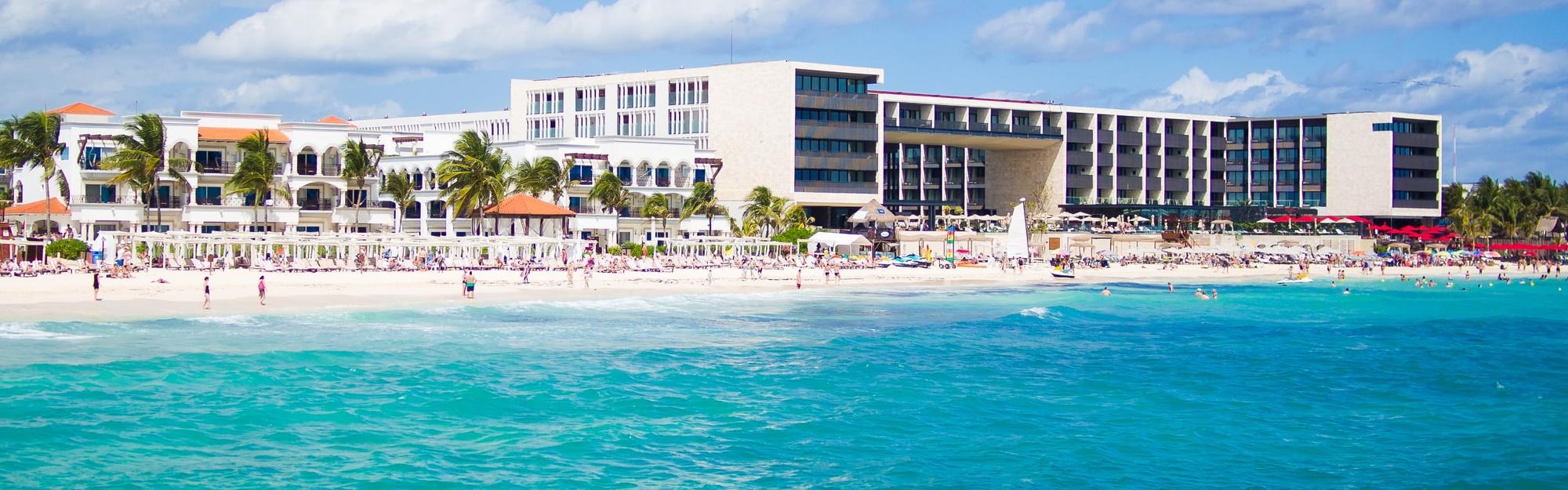

Playa del Carmen Travel Guide
Trendy, sophisticated, and spread along the heavenly coast of the Yucatán Peninsula's Riviera Maya, the Caribbean resort town of Playa del Carmen is one of the most popular and lively destinations in Mexico. It offers the perfect blend of relaxation, adventure, and culture. Whether you want to lounge on sun-kissed beaches, dive into the vibrant marine life, or experience the electrifying nightlife, this city has something for every traveler.
Fifth Avenue (Quinta Avenida) is the city's most famous and vibrant street. Running parallel to the beach, this pedestrian-only boulevard is lined with shops, restaurants, bars, cafés, and lively street performers, making it a must-visit spot for both daytime exploration and nighttime entertainment.
The area boasts some of the most beautiful beaches in Mexico, including Playa Mamitas, a lively beach with crystal-clear waters, beach clubs, and water activities. Playa Paraíso is a pristine, less crowded beach with soft white sand and turquoise waters, while Xpu-Ha Beach is a hidden gem south of Playa, perfect for a tranquil escape. For a more local, family-friendly beach head to Playa Punta Esmeralda.
Beyond the beaches, Playa del Carmen offers a wealth of attractions, including cenotes-natural sinkholes with crystal-clear waters-such as Cenote Azul and Dos Ojos, perfect for swimming and snorkelling. Adventure seekers can explore Xcaret and Xplor Parks, featuring underground rivers, zip-lining, and immersive Mayan cultural experiences. A short ferry ride takes visitors to Cozumel Island, home to world-class snorkeling and diving, while history lovers can visit the ancient Mayan ruins of Tulum and Coba, just an hour's drive away.
For shopping, visitors can explore the resort's main malls, Plaza Pelicano on 10th Avenue and Paseo del Carmen, located near the ferry pier. Souvenirs range from colorful Mexican sarongs and blankets to genuine Cuban cigars.
Playa del Carmen's nightlife is as vibrant as its beaches. Located near the smaller beach settlements, the nightlife scene offers everything from dancing under the stars and rooftop margaritas to live jazz and salsa lessons. Open-air bars operate late into the night, with live music, DJs, and energetic dance floors.
South of town, the expanding Playacar development caters mainly to package tourists, with a beach packed with sunbathers and deckchairs, lined with luxurious hotel complexes and an 18-hole golf course.
For divers, the offshore reef offers spectacular underwater experiences, with dive centers specializing in both reef and cave diving in the limestone caverns along the coast. The nearby wildlife-rich island of Cozumel is less than an hour away by boat and is a paradise for snorkelers and divers alike.
Playa del Carmen offers a variety of accommodations, from luxury resorts and boutique hotels to budget-friendly hostels. Conveniently located, the city is about 45 minutes south of Cancún International Airport, making it easily accessible for travellers looking for a tropical escape.
Mexico travel info
Electricity
The electrical current is 110 to 120 volts, 60Hz. Two-pin flat blade attachment plugs are standard.
Language
Spanish is the official language in Mexico. Some English is spoken in tourist regions.
Money
The local currency is the Mexican peso (MXN), which is divided into 100 centavos. Most international hotels and tourist facilities accept credit and debit cards, though visitors should take care as credit card fraud occurs. ATMs are available in most cities and towns, and are the most convenient way to get money. However, for safety reasons they should only be used during business hours and vigilance is advised. Travellers should carry cash if they're visiting rural areas. US dollars are widely accepted in holiday resort areas; foreign currency can be exchanged at one of many casas de cambio (exchange houses), which have longer hours and offer a quicker service than the banks.
Tipping
Waiters and bar staff should be tipped 10 to 15 percent if a service charge hasn't already been added to the bill. Tips of 15 to 20 percent are the norm at international resorts, including those in Los Cabos.
Health
Malaria and dengue fever occur in some rural areas but not on the Pacific and Gulf coasts; Zika is still a risk in Mexico. Travellers should consider a rabies vaccination as dogs and some wildlife such as bats carry the disease. It's best to follow sensible precautions regarding food and water, such as only eating foods that are cooked and served hot, and sticking to bottled water.
Medical facilities in major cities may be good, but are usually very limited or unavailable in rural areas. Comprehensive travel insurance is recommended. As medicines may be in short supply, travellers should consider taking prescription medications in their original packaging, accompanied by a signed and dated letter from a doctor detailing what the medications are and why they are needed.
Safety
Travellers should be cautious in big cities such as Mexico City, where crime can pose a risk for foreigners. In particular, women on their own should be vigilant and take care of their belongings, especially on public transport. It's best to only use authorised taxi services and to avoid bus travel at night.
Visitors are advised to be wary of people presenting themselves as police officers who attempt to fine or arrest them for no apparent reason, as these situations can lead to theft or assault. If in doubt, travellers should ask for identification.
Most of the violence related to drug cartel wars in Mexico is concentrated along the border between Mexico and the United States, with tourist zones generally unaffected. Hurricanes may affect the coastal areas between June and November.
Local customs
Mexicans are not impatient and do not appreciate impatience in others, so travellers should expect opening hours and public transport times to be flexible and laid back. Locals are also friendly and hospitable people who greatly appreciate courteous behaviour. Travellers should note that it's common for Mexicans to communicate closer than one arm's length from each other, and that it's not an attempt to be forward.
Doing business
Though many Mexican businessmen speak perfect English, Spanish is the official language of business in the country, so learning a few choice words and phrases will go a long way toward developing a relationship with local associates. Business etiquette in Mexico is marked by a combination of formality and friendliness.
It's very rare to hear the word 'no' being used in a direct or confrontational way (bald refusals are seen as rude), and it's best to use titles ('señhor' and 'señhora') until specifically instructed not to. However, foreigners should not shrink away from engaging in personal discussions with their Mexican colleagues. Business meetings must be scheduled in advance, and then confirmed a few days before they are due to take place.
The dress code for the Mexican business world is smart and formal; business hours are generally from 9am to 6pm, Monday to Friday, with a two or three-hour siesta in the early afternoon.
Duty free
Travellers to Mexico who are over 18 years of age do not have to pay duty on 200 cigarettes or 25 cigars or 200g tobacco; 3 litres spirits or 6 litres wine. Other goods to the value of US$500 for those arriving by air, or US$300 for those arriving by land are premitted without incurring duty fees. Prohibited goods include narcotics, firearms and used clothing that is not part of a traveller's personal luggage. The export of archaeological artefacts is strictly forbidden.
Communications
The international access code for Mexico is +52. Travellers can purchase local prepaid SIM cards for unlocked phones or use eSIMs if their cellular providers support it on their networks. Hotels, cafes and restaurants offering free WiFi are widely available.
Passport & Visa
All foreign passengers to Mexico must hold a Mexico Visitor's Permit (FMM), which is issued free of charge, and obtainable from airlines, Mexican Consulates, Mexican international airports, and border crossing points. As part of the Western Hemisphere Travel Initiative (WHTI), all travellers transiting through the United States are required to present a passport or other valid travel documents to enter or re-enter the United States. Foreign passengers to Mexico should ensure that their passports and other travel documents are in good condition, as even slightly torn passports will not be accepted. It is highly recommended that travellers' passports have at least six months' validity remaining after the intended date of departure from their travel destination. Immigration officials often apply different rules to those stated by travel agents and official sources.
Entry requirements
US citizens must have a passport that is valid at the time of entry. A visa is not required for tourism stays; however, travellers must complete a Multiple Immigration Form (FMM or tourist card) and retain it upon entry and exit.
British citizens must have a passport that is valid for the expected duration of their stay in Mexico. A visa is not required for tourism stays up to 180 days; travellers must complete a Multiple Immigration Form (FMM or tourist card) and retain it on entry and exit.
Canadian citizens must have a passport that is valid for the expected duration of their stay in Mexico. A visa is not required for tourism; however, travellers must complete a Multiple Immigration Form (FMM) or tourist card and carry it during entry and exit.
Australian citizens must have a passport that is valid for the expected duration of their stay in Mexico. A visa is not required for tourism stays up to 180 days; travellers must complete a Multiple Immigration Form (FMM) and retain a printed or QR-coded copy on entry and exit.
South African citizens must have a passport that is valid at the time of entry. A visa is required unless they hold a valid visa or permanent residency from the USA, Canada, UK, Japan, or a Schengen country, in which case they may enter visa-free for up to 180 days.
Irish citizens must have a passport that is valid for the expected duration of their stay in Mexico. A visa is not required for tourism stays up to 180 days; travellers must complete a Multiple Immigration Form (FMM) and retain it during entry and exit.
New Zealand citizens must have a passport that is valid for the expected duration of their stay in Mexico. A visa is not required for tourism stays; however, travellers must complete a Multiple Immigration Form (FMM) and carry it upon entry and exit.
Useful contacts
Mexico Tourism Board: +52 55 5278 4200 or www.visitmexico.com
911 (General Emergency Hotline)