

City guides
 Dominican Republic
Santo Domingo Travel Guide
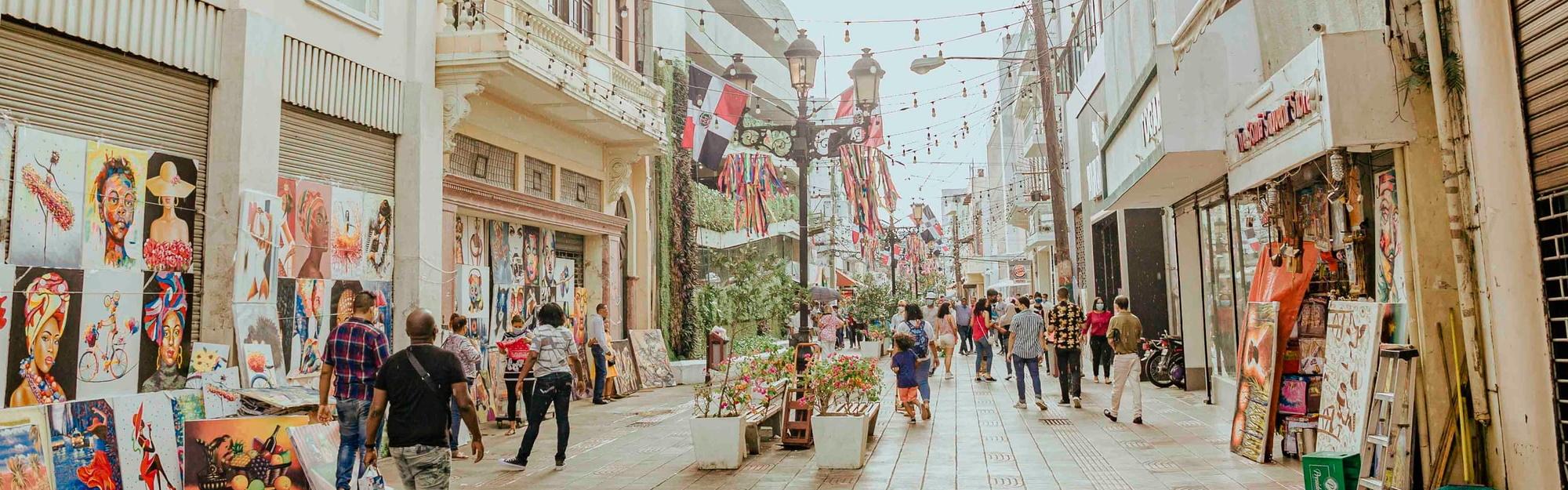
If any city could be the ultimate holiday spot, Santo Domingo is right up there with its mix of sleek city vibes, colonial history and Caribbean flair. Nestled on the southern Caribbean coast, it's blessed with sunshine, ocean breezes, and that vibrant Dominican energy.
Santo Domingo was the first permanent European city in the Americas, hosting the region's first cathedral, hospital, customs house, university and law court. Today, its Colonial City zone is a UNESCO World Heritage Site, where charming cobbled streets and 16th-century buildings house cafés, boutique hotels and restaurants.
However, travellers don't have to stick to the past when visiting this incredible destination, as the modern side of town delivers great shopping, a dazzling food scene, lively nightlife, lush parks and even casinos. Catching a baseball game at Estadio Quisqueya with teams such as Tigres del Licey and Leones del Escogido is a genuinely Dominican tradition, and another must for visitors.
Things to do in Santo Domingo
Santo Domingo offers a rich blend of historical and natural attractions that appeal to travellers of all kinds. Although the city sits on the Caribbean Sea, it isn't a beach destination. Urban beaches are located about 18 miles (30km) away, with Boca Chica being one of the closest. Instead, visitors should explore significant historic landmarks such as the Catedral Primada de América and Fortaleza Ozama, both located in the UNESCO-listed Colonial Zone.
Another must-see is the Columbus Lighthouse (Faro a Colón), a striking monument and museum that's said to contain Christopher Columbus's remains. While it offers an impressive visual and cultural experience, DNA evidence from elsewhere casts doubt on the identity of the remains.
A walk along the Malecón, Santo Domingo's oceanfront boulevard, gives a taste of the city's lively nightlife. With music, bars and local gatherings, it's considered one of the most vibrant evening spots in the capital.
The city is large enough to keep visitors entertained for several days, yet compact enough to allow its cultural highlights to be explored in a single day. For a change of scenery, it's worth heading to Los Tres Ojos National Park. There, visitors can descend into cave chambers to see three underground lakes, along with an optional fourth lagoon accessed by boat. It's a beautiful natural escape that complements the Colonial Zone's historical charm.
Whether visitors are drawn to history, architecture or nature, Santo Domingo has a diverse mix of experiences to enjoy at their own pace.
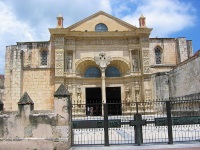
Cathedral of Santa Maria
The Cathedral of Santa María la Menor, also known as the Catedral Primada de América, is the oldest cathedral in the Western Hemisphere. Consecrated in 1541, this remarkable church remains active today. Its striking architecture blends late Gothic and Renaissance styles, showcasing a golden coral limestone facade alongside a beautifully preserved Gothic interior.
Inside its walls, the cathedral has stood witness to centuries of history, including the dramatic capture of the city of Santo Domingo by Sir Francis Drake in 1586. Drake's forces seized the entire city and held it for ransom, marking one of the most turbulent moments in the cathedral's long past.
The cathedral also once housed the remains of Christopher Columbus before their final resting place was moved to the nearby Faro a Colón monument.
Colonial City
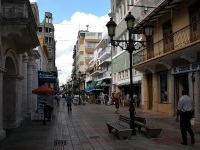
Colonial City, the historic heart of Santo Domingo, covers just about 0.41 square miles (1.06 km²) yet houses dozens of landmark sites within its walls. Visitors will find parks, forts, churches, plazas, statues, palaces, and monuments in close proximity. A walking tour of these fascinating attractions typically takes at least three hours, winding over cobbled streets once traversed by early colonial figures such as Christopher Columbus and later by Sir Francis Drake.
Calle Las Damas, often hailed as the oldest paved street in the Americas, remains a main artery through the historic zone. Among the must-see landmarks are the Casa del Cordón (believed to be one of the oldest European-style buildings in the Americas) and the Alcázar de Colón, the palace where Christopher Columbus's son Diego lived. Constructed between 1511 and 1514, the Alcázar is now a museum rich in period furnishings and art.
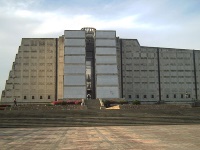
Columbus Lighthouse Monument
The Columbus Lighthouse, or Faro a Colón, is a massive cross-shaped monument on the eastern bank of the Ozama River. Inaugurated in 1992, it commemorates the 500th anniversary of Columbus's arrival and Santo Domingo's status as the oldest European city in the Americas. The structure was designed by Scottish architect Joseph Lea Gleave, who won a 1931 international competition for this design. Though construction was delayed for decades, his original plan was eventually realised in the 1980s. The monument stretches 680 feet and houses what are claimed to be Columbus's remains. At night, lights project a cross into the sky.

National Aquarium
The National Aquarium in Santo Domingo is one of the Caribbean's most comprehensive marine attractions, located about a 10 to 20 minute drive east of the Columbus Lighthouse in Santo Domingo Este. Opened in 1990, it showcases more than 250 species (over 3,000 specimens) across 90 tanks and seven ponds. A highlight is the submerged viewing tunnel, which immerses visitors in a sea environment with sharks, rays, turtles, reef fish, seahorses, eels and more. Visitors can opt for guided or self-guided tours. Set beside the Caribbean Sea with open layout areas and garden terraces, the aquarium offers a lively and educational escape from the city.
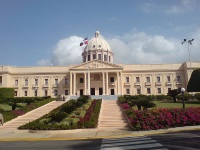
Plaza de la Cultura
Plaza de la Cultura is the cultural heart of Santo Domingo, featuring four major museums and the impressive Teatro Nacional, the country's premier performing arts venue. The neoclassical Palacio de Bellas Artes, home to the National Symphony Orchestra, also stands within the plaza. Nearby, the Palacio Nacional serves as the official residence of the Dominican Republic's president, while Boulevard 27 de Febrero, a pedestrian promenade along Avenida 27 de Febrero, showcases sculptures and artworks by prominent Dominican artists. Together, these sites create a vibrant cultural district in the city centre.
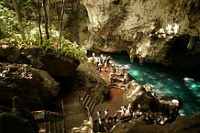
Los Tres Ojos National Park
Located on the east bank of the Ozama River, Los Tres Ojos (The Three Eyes) park offers a surreal experience for visitors. The site features a series of large natural limestone caves containing freshwater lagoons known as 'eyes'. These caves are adorned with impressive stalactites and stalagmites. Although local legend speaks of a bottomless lake, the lagoons are freshwater and relatively shallow. The caves were used by the pre-Columbian Taino Indians for religious ceremonies. Today, Los Tres Ojos is one of the most-visited natural attractions in the Dominican Republic.
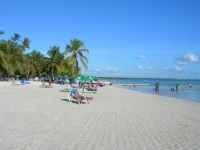
Boca Chica
The small seaside town of Boca Chica lies just east of Santo Domingo along the Avenida de las Americas and is a popular escape from city life. Its calm, clear turquoise waters, which are protected by a coral reef, make for superb swimming and snorkelling. Boca Chica is also known for its vibrant seafood restaurants, where visitors can enjoy fresh local dishes. Along with its pristine white sands and proximity to the capital city, Boca Chica is one of the most popular beaches in the Dominican Republic, especially on weekends and holidays. Boaters can anchor near Boca Chica's two islets, La Piedra and La Matica.
Getting Around
Buses run along major routes throughout the city but are not a popular mode of transport for tourists as the system can be confusing. Taxis operate across the city, although not all taxis are clearly marked and they are not normally metered. Travellers should remember that taxis usually operate according to set fares depending on the distance travelled, and should confirm this with the driver before getting in the vehicle. It's recommended that visitors call a taxi dispatcher to arrange a taxi beforehand rather than hailing a taxi directly from the street.
Shared minivan taxis (publicos) are popular among locals. These follow major routes around the city, but don't have specific stops, rather stopping when a passenger flags them down using hand signals. Although they're relatively cheap, they can be quite uncomfortable due to overcrowding. Visitors can hire cars, though self-driving is not always the best option due to poor roads and erratic driving conditions. Uber is available in Santo Domingo.
Santo Domingo Climate and Weather
Santo Domingo has a warm, tropical climate that stays pretty consistent throughout the year. Daytime temperatures usually sit between 84 and 91°F (29 and 33°C), with cooler evenings dipping to around 66 to 72°F (19 to 22°C).
Hurricane season runs from June through November, with the highest chance of storms between August and October, which is something to keep in mind when planning a trip.
For the best weather, travellers should visit between November and April. It's the drier season, with lower humidity and slightly cooler nights, which is perfect for exploring the city or relaxing outdoors.
Dominican Republic travel info
Electricity
The electrical current is between 110 and 120 volts, 60Hz. American-style two-pin flat blade plugs are standard.
Language
Spanish is the official language, but English is spoken in the main tourist centres.
Money
The currency is the Dominican Republic peso (DOP), which is divided into 100 centavos. Many of the hotels and restaurants in the main tourist destinations display their prices in US dollars as well as in Dominican pesos, as US dollars are widely accepted. Some places will also accept euros.
Major credit cards are accepted everywhere, but a commission is usually charged. It's recommended that travellers use their credit cards at their hotels, as fraud incidents have been reported. The best exchange rates are paid on US dollars in cash, and are best exchanged at exchange bureaux (casas de cambio). Banking hours are Monday to Friday, 8.30am-4.30pm. Some banks also open on Saturdays. ATMs are widespread.
Tipping
Hotels and restaurants generally include a 10 percent service charge as well as tax, but additional tips should be given for good service, as the charge often doesn't go to the staff who provided the service. Waiters usually receive 10 percent extra for good service. For other services, including taxi drivers, tipping is discretionary depending on the service provided.
Health
A yellow fever vaccination is required for travellers over one year old arriving from certain areas of Brazil or transiting through those regions for more than 12 hours, though there's no yellow fever risk in the Dominican Republic itself. Vaccinations for hepatitis A, typhoid, rabies and polio are recommended for those visiting rural areas. Malaria prevention may be advised in specific regions; dengue is present year-round, with higher risk from May to September. Visitors should use mosquito repellent and drink bottled water in undeveloped areas. Medical care is good in cities, but more limited in remote areas.
Safety
Most trips to the Dominican Republic go smoothly, but it's a good idea to stay aware and take simple precautions against minor theft. Serious crimes are uncommon but can happen. Before visiting areas near the Haitian border, it's helpful to check local updates as the situation can sometimes be unsettled. The country is also affected by hurricanes between June and November, especially from August to October. During this season, keeping an eye on the weather and having travel insurance is a sensible precaution.
Local customs
Being polite and showing respect, especially to elders, is important in the Dominican Republic and appreciated by locals. When taking photos of people, it's courteous to ask permission first, and some visitors also like to offer a small gift afterward as a kind gesture. Dominicans often take pride in their appearance and tend to notice how others dress, so dressing neatly and avoiding overly revealing clothing outside of beach areas is a good way to show respect and fit in comfortably.
Doing business
Building strong relationships and trust is an important part of doing business in the Dominican Republic, and knowing the right contacts can be a helpful advantage. People tend to value appearance, so dressing smartly is a good idea. Meetings usually begin formally, with a polite greeting and handshake; being punctual is appreciated, as is showing courtesy throughout. Business cards are commonly exchanged at the start, and it's helpful to have materials available in both English and Spanish. While many professionals speak some English, Spanish remains the main language. Business hours typically run from 8am to 12pm and 2pm to 6pm, Monday to Friday.
Duty free
Travellers to the Dominican Republic over 16 years do not have to pay duty on 200 cigarettes, 1 litre of alcohol and gifts up to a maximum value of $100.
Communications
The Dominican Republic uses the +1 dialling code and travellers should dial 011 plus the country code (such as 011 44 for the UK) to call internationally. However calls to North America may only require +1. WiFi is widely available in hotels, cafés and restaurants, especially in tourist areas.
Passport & Visa
All visitors (except residents and cruise passengers) must present a return or onward ticket on arrival. Passports must be valid for at least six months from the date of entry. Though official requirements are clear, immigration officers may request additional documentation such as proof of funds, accommodation, or onward travel, so it's best to be well prepared.
Entry requirements
US citizens must have a passport that's valid for the period of intended stay in the Dominican Republic. A visa is not required for touristic stays. A tourist card is required, but this fee is typically included in the airline ticket.
British citizens must have a passport that's valid for the period of intended stay in the Dominican Republic. A visa is not required for holders of British passports endorsed 'British Citizen' or 'British Overseas Territories Citizen' travelling as tourists. A tourist card is required on arrival and is generally valid for 30 days, but can be extended.
Canadian citizens must have a passport that's valid for the period of intended stay in the Dominican Republic. A visa is not required for tourist stays. The tourist card fee is usually included in the cost of the airline ticket.
Australian citizens must have a passport that's valid for the period of intended stay in the Dominican Republic. A visa is not required for those travelling as tourists. A tourist card is required and is generally included in the airline fare.
South African citizens must have a passport that's valid for the period of intended stay in the Dominican Republic. A visa is not required for those travelling as tourists. The tourist card fee is generally included in the ticket price.
Irish citizens must have a passport that's valid for the period of intended stay in the Dominican Republic. A visa is not required for those travelling as tourists. A tourist card is required and usually included with the flight.
New Zealand citizens must have a passport that's valid for the period of intended stay in the Dominican Republic. A visa is not required for those travelling as tourists. A tourist card is generally included in the airline fare and valid for 30 days.
Useful contacts
Ministry of Tourism: www.godominicanrepublic.com
911 (General Emergency Helpline)