

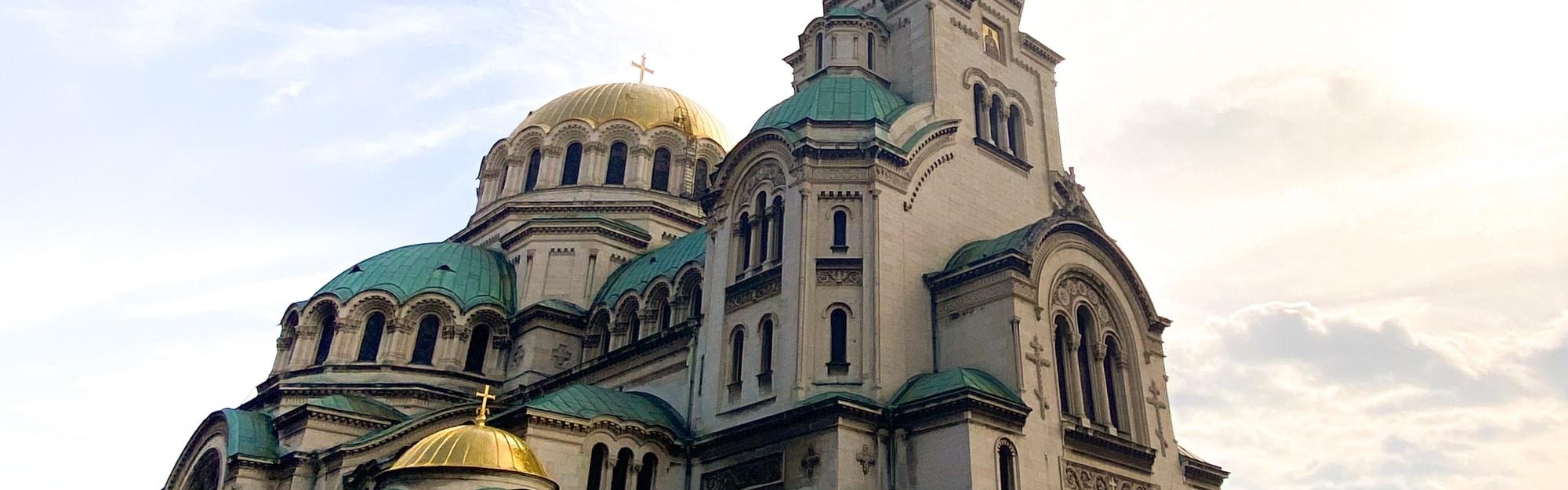

Sofia Travel Guide
Located in the Sofia Valley, Bulgaria's capital city lies at the foot of Mount Vitosha, and is the country's cultural, political, and economic centre. Founded over 7,000 years ago around numerous mineral springs that still operate today, Sofia's fortunes have flourished and declined along with the various civilisations who've made it home.
It's one of Europe's oldest settlements, with numerous, cultural, historical, and archaeological monuments from its rich Thracian, Byzantine, Roman, Slav, and Turkish history remaining among its contemporary edifices. The blend of old and new lends a charming quality to the capital.
Sofia has a laid-back atmosphere, despite its modern, cosmopolitan nature. Mount Vitosha offers myriad recreational opportunities on the city's doorstep, adding to the relaxed mood. Like any distinguished European capital, Sofia also has a wealth of museums and galleries, and boasts plenty of cultural entertainment.
Things to do in Sofia
The old and new collide in Sofia, where the modern world meets ancient cultures. Today, architecture lovers will see a delightful mixture of Thracian, Byzantine, Roman, and Slavic buildings, including the multi-domed Byzantine Alexandar Nesli Memorial Church, the medieval art of the Bryana Church (a UNESCO world heritage site), and the Russian Church of St Nicholas.
Sofia's attractions also include a wealth of museums and galleries, such as the National Historical Museum, the Earth and Men National Museum, the Bulgarian National Gallery of Arts, the Ethnographical Museum, and the Sofia City Art Gallery. Otherwise, visitors should venture to the Sofia Zoological Garden, Sofia City Garden (with its cafes, fountains and playgrounds), and the famous Turkish Mineral Baths.
The city's shopping highlights include Zhenski Pazar or 'women's market', which is open to both men and women, and offers fresh food, flowers and basic goods. The market doesn't carry many souvenirs but is worth visiting for its bustling atmosphere. Tsentralni Hali (Central Food Halls) is another busy market. Housed in a neo-Renaissance building, shoppers will find wine, fresh food, coffee, and other treats.
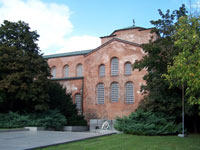
St. Sofia Church
The St Sofia Church, also called the Hagia Sophia Church, is the oldest Eastern Orthodox church in the city, dating from the 4th to 6th century, and is regarded as one of the most significant examples of early Christian architecture in the Balkans. In the 14th century the church gave its name to the city of Sofia, meaning 'holy wisdom'. The church was built on the site of several earlier churches and places of worship, dating back to the days when the site was part of the necropolis of the Roman town of Serdica. As a result, several tombs have been discovered under and around the church, which are incredibly interesting for history buffs.
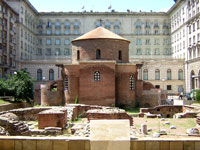
St George Rotunda
The rotunda church of St George is considered to be the oldest building in Sofia, dating back to the 4th century, and is situated amid the remains of the ancient Roman town of Serdica. The St George Rotunda is famous for its exquisite architecture and layers of medieval frescoes that were discovered under a covering of plaster. The church functions as a museum and the magnificent dome is protected by UNESCO. It is located in a square enclosed by the Presidential Buildings and this makes the contrast between the ancient and the modern quite striking. There is a fair amount of information on the history and significance of the site available at the entrance, which is worth reading.
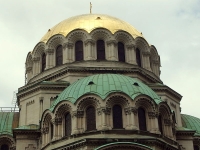
Alexander Nevsky Cathedral
One of the finest examples of 20th-century architecture in Sofia, and one of the most iconic buildings in the city, the magnificent Alexander Nevsky Cathedral was built between 1882 and 1912 to honour the Russian soldiers who died fighting to liberate Bulgaria from Turkish rule in the war of 1878 under Tsar Alexander II. It is one of the biggest cathedrals on the Balkan Peninsula. The famous religious monument is situated in the centre of Sofia, on the tree-lined square of the same name, which also contains the Monument of the Unknown Soldier. The cathedral is an active place of worship, so services and events may disrupt sightseeing, but entry to the main building is free.
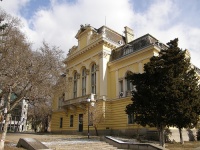
National Ethnographic Museum
The National Ethnographic Museum in downtown Sofia has one of the richest collections of cultural artefacts on the Balkan Peninsula, representing the traditions, arts, crafts and lifestyle of the Bulgarian people from the 17th to the 20th century. The museum contains a wealth of exhibits from around the country, amounting to over 50,000 items including national costumes, jewellery, art works and musical instruments. If visitors are lucky, and the place is not crowded, one of the staff members may give them a personal tour. This is the best possible place to find out about local folklore and to gain an understanding of the traditional clothes, customs and beliefs.
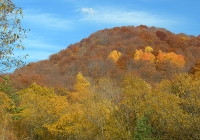
Vitosha Mountain
Rising above the capital city of Sofia, Vitosha Mountain is one of the symbols of the capital and is the most visited mountain in Bulgaria. Starting where the suburbs end, the whole mountain has been designated a national park (the oldest in the Balkans), and is home to deer, bear, wild boar, fox and a variety of rare birds. Vitosha is known for its 'stone rivers', or moraines, piles of huge rounded granite boulders carried and deposited by glaciers thousands of years ago, as well as for its restorative mineral springs. Vitosha is popular during all seasons and the well-known resort of Aleko is the most established winter ski resort in the area.
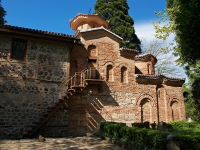
Boyana Church
Located on the outskirts of Sofia, the Boyana Church complex is a UNESCO World Heritage Site, and one of Bulgaria's most important tourist attractions. The first of the three buildings that make up the Boyana Church complex was built in the 10th century, but it is the second building (constructed in the 13th century) that is the obvious tourist draw card. Containing frescoes painted in 1259, the second Boyana Church building is nothing less than the site of the most important collection of medieval eastern European art in the world. The paintings, which conform to a Byzantine aesthetic, are almost perfectly preserved and offer visitors a rare insight into the long, proud history of Bulgarian art and culture.
Getting Around
The centre of Sofia is easily accessible by public transport, which includes trams, buses and trolleybuses. Buses run from 5am until midnight and trams run until 1am. Single-trip tickets can be purchased before boarding as well as on the vehicle.
Renting a car is impractical, given the volume of traffic and limited number of parking spaces in and around Sofia. Taxis are cheap and easily available, though. Tariffs are usually shown on the vehicle window. If they're not and there's no meter, passengers should negotiate a fare before setting off. Visitors can also make use of taxi apps called TaxiMaxim, TaxiStar and YellowTaxi; many tourist attractions are set close together, making Sofia a walkable city for sightseers.
Sofia Climate and Weather
Sofia's climate is one of its best attributes. Situated on an open plain only 1,804 feet (550m) above sea level and ringed in by the Balkan and Vitosha Mountains, summer days in the city are warm and sunny, with temperatures occasionally inching above 86ºF (30ºC). Winters are cold and snowy, when temperatures usually drop to around 38°F (3°C).
Summer is the peak tourist season but winter also attracts many visitors to the ski slopes. Spring and autumn are pleasantly mild seasons and both are known for their beautiful colours. Sofia is, indeed, a year-round tourist destination.
Bulgaria travel info
Electricity
Electrical current is 230 volts, 50Hz. European two-pin plugs and schuko plugs are in use.
Language
Bulgarian is the official language, which uses the Cyrillic alphabet, but English, German and French are spoken in resorts, hotels, and restaurants.
Money
The official currency is the Lev (BGN), which is divided into 100 stotinki. Bulgaria has strict currency regulations. Travellers who enter Bulgaria from non-EU countries must declare amounts over EUR10,000 to customs officials. Foreign currency may be exchanged in banks, hotels, or at one of the numerous bureaux de change. Bulgaria is mostly a cash economy, though credit and debit card use is increasing. There are ATMs in the main cities and at Black Sea resorts.
Tipping
Tips of 10 percent of the bill are customary for most services, including restaurants, while hotel porters and taxi drivers expect visitors to round up the bill for good service.
Health
Bulgaria poses few health risks and there are no vaccinations required for entry. Vaccinations for hepatitis A and hepatitis B are always recommended for travellers, though. Similarly, a rabies vaccination is recommended for travellers who will be spending a lot of time outdoors or who will be exposed to animals.
Travellers should note that medical treatment can be expensive and payment is expected immediately. Facilities in local hospitals are basic and specialised treatment or equipment may not be freely available. Medical insurance, with provision for emergency evacuation, is therefore vital. Travellers from the UK should also hold a Global Health Insurance Card (GHIC), which replaced the European Health Insurance Card (EHIC) for UK citizens. The GHIC allows UK citizens access to state healthcare during visits to the EU. The GHIC is not valid in Norway, Iceland, Liechtenstein or Switzerland, nor is it an alternative to travel insurance.
Safety
Most visits to Bulgaria are trouble-free. Violent crime is rare, but criminal groups target casinos and nightclubs and groups of young pickpockets are active in city centres and the Black Sea holiday resorts. Car theft is also relatively common.
Local customs
Foreigners should be aware that traditionally a shake of the head means 'yes' and a nod means 'no', although allowances are often made for visitors. It's useful to clarify the answer verbally to avoid confusion. Family values are extremely important in Bulgaria, so treating seniors with deference is important. Visitors should remember that covering their faces with garments such as burkas is illegal in public places, including governmental buildings, streets, parks, and on public transport. Though not illegal, homosexuality is less tolerated than in the UK, and the LGBT community keeps a low profile. Visitors should avoid taking photos of potentially sensitive areas such as military bases; authorities treat all drug-related offenses very seriously.
Doing business
Relationship building is important in Bulgaria, and initial meetings may be used as an introduction, after which more business-related meetings can be planned. Face-to-face meetings are therefore preferred over communication by email, fax or phone. The use of English in business is increasing, however the services of a translator might be required, and presentations should include the use of visuals where possible. Introductions include firm handshakes, and the exchange of business cards. Dress should be conservative business attire and punctuality is expected. Business hours are generally 9am to 6pm, Monday to Friday.
Duty free
Travellers from non-EU member states, aged 17 and older, do not need to pay customs duty on 200 cigarettes or 50 cigars, or 250g of tobacco; 1 litre of spirits and 2 litres of wine. Visitors arriving with goods purchased within the EU who are older than 17 do not need to pay customs duty on 800 cigarettes or 200 cigars, or 1 kilogram of tobacco; 10 litres of spirits and 90 litres of wine, though no more than 60 litres of sparkling wine.
Communications
The country dialling code for Bulgaria is +359. Travellers can purchase local SIM cards for their phones; free WiFi is available in major cities such as Sofia, Varna, Nessebar and Plovdiv.
Passport & Visa
Visitors must have proof of sufficient funds or onward or return tickets in addition to other documents needed for the next destination. Immigration and entry regulations are very strictly enforced. Passports of all visitors should be valid for at least three months after leaving Bulgaria. It's recommended that passports be valid for three months after the intended period of travel. Visa requirements vary from country to country.
Entry requirements
Citizens of the US do not need a visa to visit Bulgaria for a period of up to 90 days. Passports must be valid for at least three months beyond period of intended stay.
British Citizens do not need a visa to visit Bulgaria for a period of up to 90 days. A passport valid for at least three months beyond period of intended stay is required.
Canadians do not need a visa to visit Bulgaria for a period of up to 90 days. A passport valid for at least three months beyond period of intended stay is required.
Australians do not need a visa to visit Bulgaria for a period of up to 90 days. A passport valid for at least three months beyond period of intended stay is required.
South Africans need a visa to enter Bulgaria, except for stays of up to 90 days for holders of a Schengen visa. A passport valid for at least three months beyond period of intended stay is required.
Irish nationals do not need a visa to visit Bulgaria. A passport valid for the period of intended stay is required.
New Zealanders do not require a visa for a maximum stay of 90 days. A passport valid for at least three months beyond period of intended stay is required.
Useful contacts
Bulgarian Tourism Office, Sofia: +359 2 987 9778 or www.bulgariatravel.org.
112 (Pan-European General Emergency Helpline).