


Southern Bucovina Travel Guide
Tucked into the north-eastern corner of Romania, Bucovina lies between the Carpathian foothills and the Romanian plains. Here the region's hero, Stephen the Great, fought back the Turks in the 14th and 15th centuries and then built churches and monasteries throughout the region to celebrate his victories. There are 48 monasteries in total, complete with fortified walls to protect them against invaders. These unique monasteries and Byzantine churches with their exceptional exterior frescoes are some of the most fascinating sights in Romania. Seven of the painted monasteries have been included on the UNESCO World Heritage List.
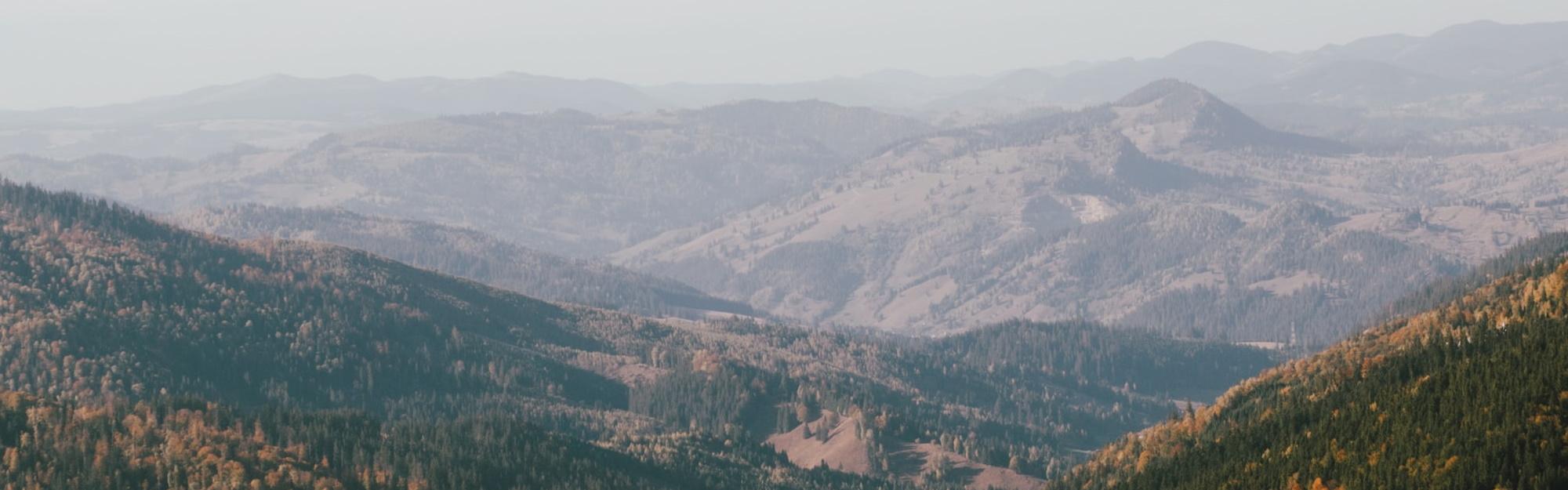
The area is worth visiting, not only for its wealth of religious art and the beautiful monasteries, but also for the breathtaking natural beauty of the region, with its rolling hills, teeming forests and lush valleys. The countryside is scattered with picturesque villages and lovely rural scenes. Local folk go about their daily business driving horse-drawn carts on cobbled streets and haggling at bustling food markets. This fascinating region of Romania is a stark contrast to the frenetic pace and way of life shaped by the modern face of city living.
The largest town in the area, and previous capital of Moldavia, is Suceava, the gateway to the painted monasteries of Southern Bucovina. The town has various sites of interest, including old medieval churches, the Bucovina History Museum, and its main tourist site, the Neamt Citadel, a fortress built to hold off the Ottoman Sultan Mehmet II in 1476.
The Painted Monasteries
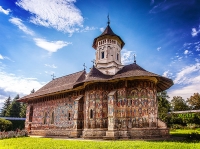
The 15th century painted monasteries of Southern Bucovina have been declared UNESCO World Heritage Monuments, and represent some of the greatest artistic monuments in Europe â€' certainly a must for serious history buffs. Among the most picturesque treasures in Romania, most of the churches are fortified with strong defensive surrounding walls, which once provided protection against Turkish invaders. The exterior walls of the monasteries are richly decorated with vivid frescoes depicting dramatic Biblical scenes, intended to teach Christianity to the illiterate. The artwork has, amazingly, survived harsh exposure to the elements for over 450 years and the intense colours have been well preserved. The five main painted monasteries near Suceava are Humor, Voronet, Moldovita, Sucevita and Arbore.
Romania travel info
Electricity
The electrical current is 230 volts, 50Hz. Two-pin European-style plugs are standard.
Language
Romanian is the official language, but English will be understood in Bucharest and other tourist areas.
Money
The Leu (RON) is the official currency, which is divided into 100 bani. Money can be exchanged at banks, international airports, hotels, or authorised exchange offices (casa de schimb or birou de schimb valutar). ATMs are everywhere and give 24-hour withdrawals; international credit cards are widely accepted in hotels, restaurants and shops in cities and large towns.
Tipping
Tipping is becoming increasingly common in Romania, and is now expected in all restaurants and bars. A service charge is often included in restaurant bills but a further 5 to 10 percent tip is expected. Though it is not always necessary to tip them, taxi drivers can be rewarded for good service.
Health
Medical facilities in Bucharest are good, but poor in the smaller towns and basic medical supplies are often in short supply. There is a reciprocal health agreement with most EU countries, whose citizens are entitled to free or low-cost emergency medical treatment on presentation of a European Health Insurance Card (EHIC), but travel health insurance is strongly advised. After Brexit, the Global Health Insurance Card (GHIC) replaced the European Health Insurance Card (EHIC) for UK citizens. The GHIC allows UK citizens access to state healthcare during visits to the EU. The GHIC is not valid in Norway, Iceland, Liechtenstein or Switzerland, nor is it an alternative to travel insurance. There have been a number of Hepatitis A cases in Romania and visitors are advised to seek medical advice about inoculations before travelling. Tap water is safe to drink, although bottled water is widely available. Stray dogs might carry rabies in remote regions and should be avoided.
Safety
Visitors should take normal safety precautions in Romania, such as keeping valuables safe and being aware of pickpockets and scam artists in major cities. Corruption is less rife these days, but visitors should be cautious of policemen demanding fines for spurious offences, or asking to see documents as a way of stealing cash. If approached in this way, visitors should offer to go with them to the nearest police station before handing over any money or documents. Travellers should not leave valuables, including passports, in hotel rooms, or near the window of a hotel room when they are not there.
Local customs
It is illegal to change money on the streets. Homosexuality, although legal, is frowned upon. A small and still largely closeted gay scene exists in the Romania's largest cities, particularly in Bucharest, which has a few gay clubs. Photography at airports is prohibited.
Doing business
Business can be quite bureaucratic and old-fashioned. The country adheres to an imbedded hierarchical structure and often it is the eldest who receive the most respect in business and social meetings. It is important to address each person according to their title followed by their surname; 'Domnule' for Mr. and 'Doamna' for Mrs. Romanians prefer a face-to-face approach and like to strengthen personal relationships. Appointments should be made in advance and confirmed. Although the visitor is expected to be punctual the host may be late to arrive. Meetings are often quite formal and a general 'Western' set of old-world manners applies. Business suits are appropriate for meetings. Romanians dislike an overt display of achievement or exaggerated conversation. Business hours are generally 9pm to 5pm Monday to Friday with an hour taken at lunch.
Duty free
Travellers visiting Romania from outside the EU do not have to pay duty on 200 cigarettes, 50 cigars or 250g of tobacco. Two litres of spirits, 16 litres of beer, 4 litres wine, and gifts to the value of US$430 are also duty free. Those arriving from inside the EU do not have to pay duty on 800 cigarettes, 200 cigars or 1 kg of tobacco, 10 litres of spirits, 110 litres of beer, and 90 litres of wine.
Communications
The direct dialling country code for Romania is +40, and the outgoing code is 00, followed by the relevant country code (e.g. 0044 for the UK). Free wifi is available at cafes, hotels and restaurants. A local SIM card can be purchased as a cheaper alternative to using international roaming for calls.
Passport & Visa
Visitors must hold all documents required for further travel, onward or return tickets. It is highly recommended that travellers' passports have at least six months validity' remaining after their intended date of departure from their travel destination. Immigration officials often apply different rules to those stated by travel agents and official sources.
Entry requirements
United States nationals require a passport valid for three months beyond period of intended stay. No visa is required for stays of up to 90 days within a 180-day period.
UK nationals require a passport valid for three months beyond period of intended stay. No visa is required for stays of up to 90 days within a 180-day period.
Canadian nationals require a passport valid for three months beyond period of intended stay, but no visa for stays of up to 90 days within a 180-day period.
Australian nationals require a passport valid for three months beyond period of intended stay, but no visa for stays of up to 90 days within a 180-day period.
South Africans require a passport valid for three months beyond period of intended stay and a visa to enter Romania. Holders of a valid Schengen visa, or holders of a short stay visa issued by Bulgaria, Croatia, or Cyprus do not require a visa to enter Romania for a stay of up 90 days within a 180-day period. South African temporary passports are not accepted by the Romanian government.
Irish nationals require a passport valid for period of intended stay, but no visa is required.
New Zealand nationals require a passport valid for three months beyond period of intended stay, but no visa for stays of up to 90 days within a 180-day period.
Useful contacts
Romanian Tourist Office, Bucharest: www.romaniatourism.com
Emergencies: 112.