

Swiss Alps Travel Guide
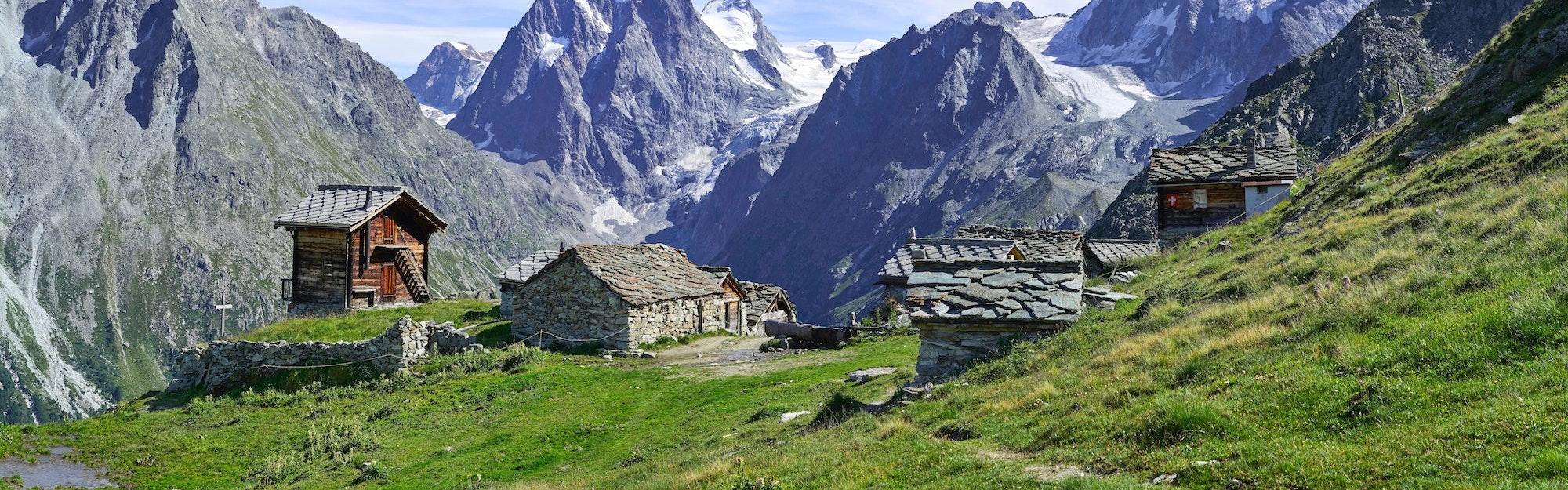
The Alps contain some of Switzerland's most dramatic landscapes, in a country already well endowed with spectacular scenery and fabulous alpine vistas. Situated at the heart of the Alps, Switzerland shares the mountain range with France, Italy and Austria, and provides winter and summer time enjoyment for skiers, snowboarders, walkers and climbers.
Switzerland has the distinction of being home to the first ever ski resort, and since then, over 200 first-class resorts have attracted thousands of Swiss and international downhill and cross-country skiers and snowboarders. The tradition of skiing goes back two centuries. Today, with more than 1,700 mountain railways and ski lifts, renowned ski schools and instructors, the best ski equipment in the world, and outstanding slopes and facilities catering for all levels of ability, it fully deserves its moniker of 'Europe's winter playground'.
Things to do in Swiss Alps
The main attraction in the Swiss Alps is the great selection of skiing that the area boasts. The ideal resort for beginners or families is Grindelwald in the Jungfrau region, while intermediates and snowboarders should head for the twin resorts of Davos and Klosters, which have miles of excellent ski terrain and are acclaimed to be among of the top snowboarding destinations worldwide. Expert skiers can enjoy the challenge of 7,200 ft (2,700m) vertical drops on the Klein Matterhorn at Zermatt, and the ski valley of Verbier is ideal for shoulder-season skiing as its location provides early snow that lingers late into the spring. The stylish resort of St Moritz offers the most energetic and varied nightlife of all the Swiss resorts. The ideal ski season runs from January to late March, but is most crowded during the Christmas holidays and the month of February.
Climbers and walkers go to the Alps between June and September, when the weather is warmer and more settled. There are more than 40,390 miles (65,000km) of well-marked and maintained hiking trails as well as longer treks across the country that will reveal miles and miles of unspoilt beauty. Grindelwald has long been the capital of summer hiking in the Bernese Alps, and more recently added a network of groomed trails for winter hikers. Climbers have long been lured by the challenges of the Matterhorn and there are some memorable hikes up to the cliffs below the summit. The Swiss Alpine Club (SAC) is the best source of information on mountaineering.
The most accessible and visited alpine area is the magnificent Bernese Oberland region in the centre of the country, with its classic Swiss scenery of picturesque peaks, quaint wooden chalets and charming mountain villages, green pastures, lakes and the tinkle of cow bells. This is a fabulous area for walking and provides exceptional winter sports.
Crans-Montana
Claiming to occupy the sunniest plateau in the Swiss Alps, the twin villages of Crans and Montana are perched 4920 feet (1,500m) above the Rhone Valley. Crans-Montana provides the best of both a mountain village and modern Swiss ski resort, offering an Alpine shopping paradise, and easy access to nearby attractions such as the museums of Sierre, the underground lake near St-Leonard, and the glacier at Plaine Morte. The resort has a glitzy reputation and enjoys a fashionable nightlife. Crans-Montana offers many summer activities, including water skiing, swimming, mountain climbing, hiking, and a championship golf course.
Leysin
Leysin has a reputation as one of the most family-friendly ski resorts in Switzerland, offering children's activities year-round at more affordable rates than its fashionable neighbours in the Rhone Valley. There are a number of off-piste diversions, including excursions to Lake Geneva, the museums and castles in Aigle, and the igloos in Teepee Village. The mountain provides a spectacular setting for hiking, mountain biking, horseback riding and rock climbing in summer. There are a number of good restaurants, including the glass revolving Le Kuklos, which has a panoramic view of the region, and a few bars in town. While the village is removed from the larger skiing areas, skiing in Leysin's 37 miles (60km) of pistes provides challenges ranging from nursery areas to two black runs for experts, and 24 miles (39km) of cross-country trails. There's a ski school that arranges heli-skiing trips, and the glacier at Les Diablerets is included in the ski pass. Leysin is a major snowboarding destination, with a snowboard park and half pipe that have hosted many professional competitions.
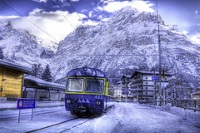
Grindelwald
The holiday destination of Grindelwald is a picturesque, traditional mountain settlement at the foot of the Eiger Mountain, surrounded by spectacular alpine landscapes. Popular as both a summer and winter holiday spot, it offers miles of slopes and hiking trails across the Alps, and for non-skiers there are a huge variety of winter activities, from tobogganing to groomed winter hiking tracks. For skiers there are three distinct areas to choose from, with slopes for beginners, intermediates and the challenges of the Eiger glacier for the experienced. There are also lift links to Wengen and Murren, making this one of the best holiday resorts from which to explore the Jungfrau region. Skiing in Grindelwald is best suited to intermediates, and there are plenty of long, gentle runs to keep them busy. There are plenty of options for true beginners as well at the Bodmi Nursery slopes. While advanced skiers won't find much, Grindelwald boasts the famous Lauberhorn World Cup downhill run, as well as the near-vertical Kanonenrohr. The resort is part of the Jungfrau region, and shares mountain space with Wengen. There are roughly 12 miles (20km) of cross-country tracks.
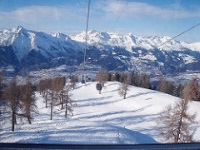
Veysonnaz
With panoramic views of the Rhone Valley, Veysonnaz forms a part of the Four Valleys ski area together with Nendaz, Verbier, Thyon and La Tzoumaz. A more affordable alternative to fashionable resorts such as Verbier, the pretty town of Veysonnaz has managed to retain its Alpine charm with traditional architecture and events such as the June Cow Processions. There are a range of activities for non-skiers in both summer and winter, including attractions such as the pyramids of Euseigne and the Grande Dixence dam. The town itself has a number of restaurants and bars, as well as a few shops and a recreation centre. The Four Valleys ski area has over 250 miles (400km) of runs, which provide ample off piste opportunities for experts, including the Tortin snow bowl. There are also runs for intermediates and beginners, and the runs in general range from 1,640 feet (500m) to 9,842 feet (3,000m) in elevation, though heli-skiing is available to the Pigne d'Arolla at 12,467 feet (3,800m).
Swiss Alps Climate and Weather
The Swiss Alps experiences a largely varied climate, depending on the elevation and altitude of different regions, especially due to the glaciers. The Alps are split into five climate zones, each with their own distinct character: the Neve zone is located in the region above 9,842 feet (3,000m) and is the coldest; the alpine zone lies between the height of 6,561 and 9,842 feet (2,000 and 3,000 m) and is slightly warmer than the Neve zone.
Below this is the subalpine zone, which is warmer; below this is the arable zone, which is even warmer and is a popular farming area; and below this is the lowlands, where many villages are located. In the resort area of St Moritz, daytime temperatures during the summer months average between 46ºF and 52ºF (8ºC and 11ºC), while the average temperature during the winter is 25ºF (-7ºC) during the day.
Switzerland travel info
Electricity
The electrical current in Switzerland is 230 volts, 50Hz. Plugs are of the linear, rounded three-pin type, but rounded two-pin plugs will fit the outlet.
Language
The four official languages are Swiss German, French, Italian and Romansh. Most people know at least three languages, including English.
Money
The official currency is the Swiss franc (CHF), which is divided into 100 rappen (German) or centimes (French). Although Switzerland isn't part of the EU, some local prices may be indicated in euros and some merchants may accept euros. Credit cards are widely accepted and ATMs are widespread; many are equipped with the Cirrus or Maestro system. Digital wallets such as Apple Pay and Google Pay are popular. Banks offer the best exchange rates, but travellers can exchange money at major hotels, main train stations and airports. Banks are open Monday to Friday.
Tipping
A 10 percent service charge is normally included in all hotel, taxi, bar and restaurant bills, and further tipping isn't necessary. However, tipping is still appreciated, particularly for good service, and it's often seen as a gesture of gratitude rather than an obligation.
Health
Swiss medical facilities and health care are among the best in the world, but are very expensive, meaning health insurance is recommended. EU travellers should get a European Health Insurance Card (EHIC) before visiting, or a Global Health Insurance Card (GHIC) if they're UK residents, so that they're covered for necessary state healthcare while there.
Safety
Switzerland has a low crime rate compared to other European countries and is generally a safe destination to visit. However, there have been increased reports of petty theft, especially in larger cities, at Geneva airport and on trains to and from Geneva. Travellers should take sensible precautions to avoid mugging, bag-snatching and pickpocketing, and be particularly alert at airports, railway stations and in crowded areas.
Local customs
Privacy and discretion are highly valued in Switzerland and strangers generally don't speak to each other. Locals are naturally reserved and conservative for the most part, with the preference being for rules to govern their lives. Littering is a serious social crime, and visitors should also try to throw their recyclables in the proper receptacle. Different regions may have different customs in areas such as introductions, with German-speaking Swiss shaking hands, and French-speaking locals perhaps kissing on the cheek three times (generally left, right, left). Though many Swiss speak English, it's considered polite to ask before attempting conversation.
Doing business
The Swiss business world reflects the local mastery at building well-oiled machines. Efficiency and organisation are prioritised, and the culture is based predominantly on merit. The country's formal, no-nonsense approach offers little room for humour or lack of preparation in meetings and, though the Swiss are slightly less pedantic than their German or French counterparts, they value appearance and punctuality very much.
Dress codes are quite formal and conservative, particularly in the banking sector, where dark suits are the norm. Work and pleasure are entirely separate, with Swiss businesspeople even shying away from calling their colleagues by first names until they've established a level of trust. When invited to a Swiss business associate's home, a small gift such as flowers or a box of chocolates is appropriate.
Those in senior positions garner a great deal of respect, but decision-making processes are often quite democratic. Switzerland is home to over 1000 multinationals and has become something of a melting pot of business customs, regional influences and etiquette. English is the corporate language, especially for multinationals, though regional languages, such as French, German and Italian, are sometimes preferred in their respective areas.
Swiss-German business meetings are rarely over food and are often as brief as possible, with little small talk. However, Swiss-French and Swiss-Italians often meet over lunches and talk isn't restricted to business. Handshakes are common for addressing both men and women. Business hours are from 8am to 5pm on weekdays with a lunch break from 12pm to 2pm. The two-hour lunch break is in line with the high value Switzerland places on work-life balance, though multinational companies might have an hour-long lunch.
Duty free
Travellers to Switzerland over 17 years don't have to pay duty on 200 cigarettes or 50 cigars or 250g tobacco; 2 litres alcohol up to 15 percent and 1 litre alcohol over 15 percent. The maximum allowance of wine is 20 litres, but duty will be payable on this quantity. VAT is liable if the total value of all goods exceeds CHF 300. Restricted items include meat and meat products from selected countries. Prohibited items are absinth and its imitations, and anaesthetics.
Communications
The international country dialling code for Switzerland is +41. Travellers can purchase local prepaid SIM cards for unlocked phones or use eSIMs if their cellular providers support it on their networks. WiFi is widespread.
Passport & Visa
The borderless region known as the Schengen area includes the following countries: Austria, Belgium, Czech Republic, Denmark, Estonia, Finland, France, Germany, Greece, Hungary, Iceland, Italy, Latvia, Liechtenstein, Lithuania, Luxembourg, Malta, The Netherlands, Norway, Poland, Portugal, Slovakia, Slovenia, Spain, Sweden, and as of December 2008, Switzerland. All these countries issue a standard Schengen visa that has a multiple entry option that allows the holder to travel freely within the borders of all. It is highly recommended that travellers' passports have at least six months' validity remaining after the intended date of departure from their travel destination. Immigration officials often apply different rules to those stated by travel agents and official sources.
Entry requirements
US passport holders require a passport that's valid for at least six months after their planned departure date. A visa isn't necessary for stays of up to 90 days within a 180 day period.
UK passport holders require a passport that's valid for at least six months after their planned departure date. A visa isn't necessary for stays of up to 90 days within a 180 day period.
Canadian passport holders require a passport that's valid for at least six months after their planned departure date. A visa isn't necessary for stays of up to 90 days within a 180 day period.
Australian passport holders require a passport that's valid for at least six months after their planned departure date. A visa isn't necessary for stays of up to 90 days within a 180 day period.
South African passport holders require a passport that's valid for at least six months after their planned departure date, and a Schengen visa.
Irish nationals require a passport that's valid for the period of the intended stay, but no visa is necessary.
New Zealand passport holders require a passport that's valid for at least six months after their planned departure date. A visa isn't necessary for stays of up to 90 days within a 180 day period.
Useful contacts
Swiss Tourist Office, Zurich: +41 44 215 4000 or www.myswitzerland.com
118 (fire and rescue), 117 (police), 144 (ambulance).