


The Great Rift Valley Travel Guide
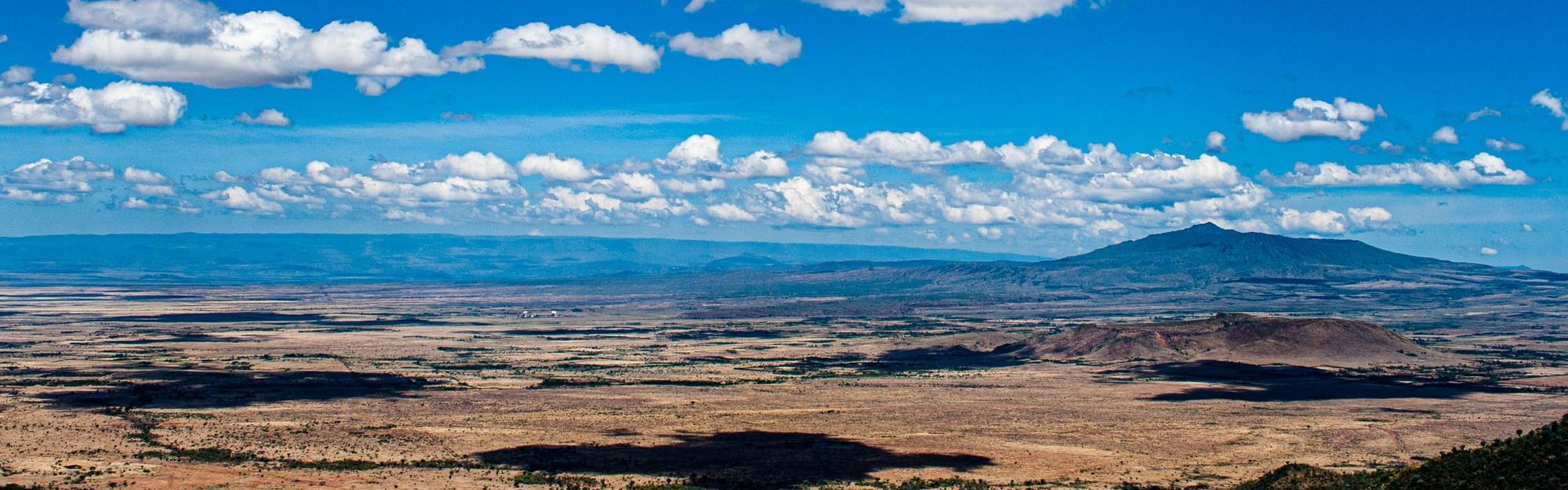
Millions of years ago, the earth's crust was weakened and tore apart, creating a split that's thousands of kilometres long and up to 62 miles (100km) wide in places down the continent of Africa. Volcanic eruptions on either side caused the floor to sink into a flat plain, creating the Great Rift Valley.
Blessed with stunning panoramas and beautiful escarpments, the wide valley is one of Kenya's characteristic features and divides the country in half from north to south. It is scattered with a few volcanoes and several lakes and is inhabited by grazing animals, Maasai herders and small-town dwellers.
The string of alkaline lakes known for their stunning scenery and abundant bird life include Lakes Naivasha, Elementaita, Nakuru, Bogoria and Baringo. The uniqueness lies in their high concentration of sodium carbonate from the surrounding volcanic rocks. This creates an ideal breeding ground for algae and a thriving environment for fish, which in turn attracts millions of birds to feed on the abundant food supply. Each of the lakes has a different water composition ranging from freshwater to very saline and brackish, with different birdlife attracted to each.
Things to do in The Great Rift Valley
The Great Rift Valley is a remarkable geological feature and a very popular tourism region in Kenya. Its main attractions are the wonderful national parks and safari opportunities enabled by the wealth of wildlife. It's a particularly good area for birdwatchers due to the string of alkaline lakes that attract flamingos, pelicans, and many other species to the scenic valley.
The freshwater ecosystems at Lake Naivasha and Baringo, the nature reserve at Lake Bogoria, and the Nakuru National Park are a source of endless fascination, teeming with an incredible diversity of birds and large concentrations of animals. At these destinations, visitors can go on water safaris and get up close to the wildlife of the lakes.
Hell's Gate National Park boasts noticeably different landscapes to the parks centred on the lake system and is the place to go if travellers want to learn about the geological formation of the region and the local mythology that surrounds the rock features and hot springs. Hell's Gate is also special because visitors are allowed to walk or cycle among the wildlife.
Other worthwhile things to see in the Great Rift Valley include the Elsamere Conservation Centre, which showcases the life of Joy Adamson and the lioness Elsa of Born Free fame, and any number of wonderful lookout points from which to admire the valley and take photographs.
Lake Naivasha and Elsamere
Lake Naivasha is a shimmering waterscape of floating hyacinth surrounded by mountains. Kingfishers dart into the waters from their papyrus perches and ugly Marabou storks plod along the shoreline. The trees are home to Colobus monkeys and at night the earth shudders with the movement of grazing hippos.
The southern shore of the lake is lined with hotels, campsites and guesthouses, prettily situated either on the shore or higher up on the slopes of the mountain. Boat trips are a popular way to explore the lake and also the private Crescent Island Game Sanctuary.
Along the southern shore is the former home of naturalist and painter Joy Adamson, which is now the Elsamere Conservation Centre. It incorporates a guesthouse and a small museum; visitors are invited to join the guests daily at 4pm for a sumptuous tea on the lawns of the beautifully peaceful lakeside setting.
Hell's Gate National Park
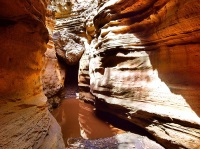
Named for the pair of massive red cliffs of the Njorowa Gorge that encloses a geothermic area of hot springs and steam vents, Hell's Gate is one of the two parks in Kenya that allows visitors to explore on foot, making it ideal for hiking, cycling, camping and rock climbing. It's famous for its natural steaming geysers, and the towering cliffs provide an eagle and vulture breeding ground.
The wide plains are home to numerous animals, such as zebra, buffalo, eland, gazelle, giraffes, warthog and baboon. It's best for visitors to hire a guide when reaching the gorge to help them along the hike route. The guides will help them traverse the route through the canyon and explain the interesting geological origins and features of the landscape, as well as explaining the local mythology and Masai names given to the features.
Lake Nakuru National Park
Although tiny, this park has a high concentration of game with everything wildlife enthusiasts could wish for, except elephants. Lake Nakuru is one of Kenya's most important rhino sanctuaries. There are also several prides of lions and it's the best place to spot leopards.
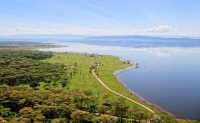
The surface of the shallow alkaline lake covers about a third of the park and the saline concentration supports a blue-green algae that attracts thousands of flamingos. Waterbuck and large flocks of pelicans are also attracted to the rich food source in the lake, as are the rare Rothschild Giraffes. The park has several high points with good lookouts and waterfalls; monkeys and baboons frequent the rocky cliffs.
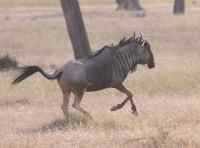
Great Wildebeest Migration
One of Africa's greatest natural spectacles is the annual wildebeest migration between Kenya's Masai Mara and Tanzania's Serengeti national parks that happens sometime between June to October each year. Up to two million wildebeest and hundreds of thousands of zebras and Thomson's gazelles make this journey, seeking greener grasses.
Predators stalk the enormous, ever-moving herds, from lions in the grasslands to crocodiles during the dramatic, frenetic river crossings. The river crossings at the Grumeti River and Mara River are the most popular part of the migration to witness and there are many great camps set up near the rivers in the Mara.
A thrilling way to experience the migration is on a riding safari, when travellers' horses can actually wander among the animals, or in a hot air balloon, which gives them breathtaking views.
Kenya travel info
Electricity
The electrical current is 240 volts, 50Hz. UK-style square three-pin plugs are used.
Language
English is the official language but Swahili is the national language, with 42 ethnic languages spoken.
Money
The unit of currency is the Kenyan shilling (KES), which is divided into 100 cents. It is not advisable to take Kenyan Shillings out of the country, as they are difficult to exchange elsewhere. Foreign currency can be changed at banks, bureaux de change and hotels. It's easiest to exchange US dollars, pounds sterling or euros. International credit cards are accepted in the larger hotels and stores, and some camps and lodges. ATMs are widely available in Nairobi and other major towns.
Tipping
Tipping is not customary in Kenya, though a 10 percent service charge may be added to the bill in more upmarket restaurants. Small change in local currency may be offered to taxi drivers, porters and waiters; safari drivers, guides and cooks often rely heavily on tips to get by, but these are discretionary.
Health
Travellers should get the latest medical advice on vaccinations and malaria prevention at least three weeks prior to departure. A malaria risk exists all year round in Kenya, but more so around Mombasa and the lower coastal areas than in Nairobi and on the high central plateau. Immunisation against yellow fever, polio and typhoid are usually recommended. A yellow fever certificate is required by anyone arriving from an infected area. Other risks include diarrheal diseases. Protection against bites from sandflies, mosquitoes, and tsetse flies is the best prevention against malaria and dengue fever, as well as other insect-borne diseases, including Rift Valley fever, sleeping sickness, leishmaniasis and Chikungunya fever. Water is of variable quality and visitors are advised to drink bottled water. There are good medical facilities in Nairobi and Mombasa but travel insurance is always advised.
Safety
There is a threat from Somali terrorist groups in Kenya and visitors should be vigilant in public places and tourist sites. Several bombings have targeted Mombasa, Nairobi and other cities in recent years, most blamed on the Al Qaeda-linked Al-Shabaab group. Several governments have instituted travel warnings and alerts for parts of Kenya and travellers are advised to read up on the situation and which areas should be avoided before visiting the country.
Visitors should be alert to the threat of robberies and muggings at all times in Nairobi, but particularly at night. They should also be vigilant in Mombasa.
Banditry occurs in the northern areas and there have been armed attacks in the resort areas of northern Kenya near the border of Somalia. Several governments have advised against all but essential travel to coastal areas within 93 miles (150km) of the Somalian border, and inland areas within 37 miles (60km) of the border.
Piracy has also been a concern off the coast of Kenya. There have previously been incidents of attacks and hijackings of private vessels, though there have been no recent reports. Visitors should also take sensible precautions when driving. In particular, landmines have been used in attacks around Moyale, close to the main A2 road south. Vehicles crossing the border at this point should stay on the A2.
Local customs
Taking of photographs of official buildings is not advised and could lead to detention; photography is prohibited at airports. Coastal towns are predominantly Muslim and religious customs and sensitivities should be respected, particularly during Ramadan. Dress should be conservative away from the beaches and resorts, particularly for women. Homosexuality is against the law. Smoking in public places is illegal, other than in designated smoking areas, and violators will be fined or imprisoned.
Doing business
Business in Kenya tends to be conducted formally and conservatively, with the appropriate attire of a jacket and tie. Patience, cultural sensitivity, tolerance for uncertainty and the ability to build personal relationships with business associates are all central to successfully doing business in the country.
Ethnic division and corruption undermine the Kenyan economy, but they are realities in the business world of Kenya. Despite red tape and numerous pitfalls, Kenya is a land of business opportunity and the IT and telecoms sectors are rapidly expanding.
The concept of harambee is important in local business culture, and involves a sense of community, responsibility and mutual assistance. Deference to seniority is important, as is social standing, while using official titles is key during introductions and greetings.
Terse statements should be avoided and controlling one's emotions is vitally important. While punctuality is key and meetings should begin on time, they often don't end on time. When introducing a new deal, it's important to illustrate respect for tradition and history. Deals generally only close when it is clear that all the possible information has been considered and deliberated upon.
Interpersonal relationships add to business success, and understanding Kenyan culture and history is a great way of building business contacts. Building a solid business relationship is prioritised over meeting deadlines and closing deals.
English is the language of business. Business hours run from 9am to 5pm on weekdays and dress style should be formal with suits or smart-casual wear. Gifts are important and generally expected. Taking time to greet everyone and enquire about the health of their family will ensure a smooth business meeting.
Respect for elders is important too, and if foreigners are invited to dinner, they should never begin eating until the eldest member has started. Also, foreigners should refrain from leaving food on their plate. In introductions, clasping an elder or key business associate's wrist with the other hand while shaking hands conveys respect.
Duty free
Travellers to Kenya over 18 years do not have to pay duty on 250g tobacco products; 1 litre of spirits; and 500ml perfume. Prohibited items include fruit, imitation firearms, and children's toys pistols. No plants may be brought into the country without a Plant Import Permit (PIP).
Communications
The international access code for Kenya is +254. Area codes are also in use. Purchasing a local SIM card is simple and most hotels, restaurants and cafes in tourist areas offer free WiFi access.
Passport & Visa
All foreign passengers to Kenya must hold proof of sufficient funds to cover their stay in the country, return or onward tickets, and the necessary travel documentation for their next destination. Most foreign nationals require a visa, and some foreign nationals can obtain visas on arrival in Kenya, provided that their passport is in good condition, and they have at least one blank page in their passport for the visa endorsement. The visa fee is payable in USD, GBP or EUR, cash only. On-arrival visas are valid for three months. It is also possible to obtain an e-visa prior to departure for Kenya. A valid, 90 day, multiple entry or re-entry "East African Tourist Visa" issued by Rwanda or Uganda will suffice, provided the passanger in posession of the document has previously entered the country that first issued the visa. A yellow fever vaccination certificate is required to enter Kenya if arriving within six days of leaving or transiting through an infected area. It is highly recommended that travellers' passport have at least six months' validity remaining after the intended date of departure from their travel destination. Immigration officials often apply different rules to those stated by travel agents and official sources.
Entry requirements
US citizens must have a passport that is valid for at least six months beyond the date of their arrival in Kenya. A visa is not required, but travellers must obtain an Electronic Travel Authorization (eTA) online before departure.
UK citizens must have a passport that is valid for at least six months beyond the date of their arrival in Kenya, with at least two blank pages. A visa is not required, but an eTA must be obtained online before travel.
Canadian citizens must have a passport that is valid for at least six months beyond the date of their arrival in Kenya. A visa is not required, but travellers must apply for an eTA online before arrival.
Australian citizens must have a passport that is valid for at least six months beyond the date of their arrival in Kenya. A visa is not required, but an eTA must be obtained online prior to travel.
South African citizens must have a passport that is valid for at least six months beyond the date of their arrival in Kenya. A visa is not required, but travellers must still apply for an eTA online before travel. South African citizens are exempt from the eTA fee.
Irish citizens must have a passport that is valid for at least six months beyond the date of their arrival in Kenya. A visa is not required, but an eTA must be obtained online before departure.
New Zealand citizens must have a passport that is valid for at least six months beyond the date of their arrival in Kenya. A visa is not required, but an eTA must be obtained online before travel.
Useful contacts
Kenyan Tourist Board: +254 (0)20 271 1262 or www.magicalkenya.com
999 (General Emergencies)