


The Islands Travel Guide
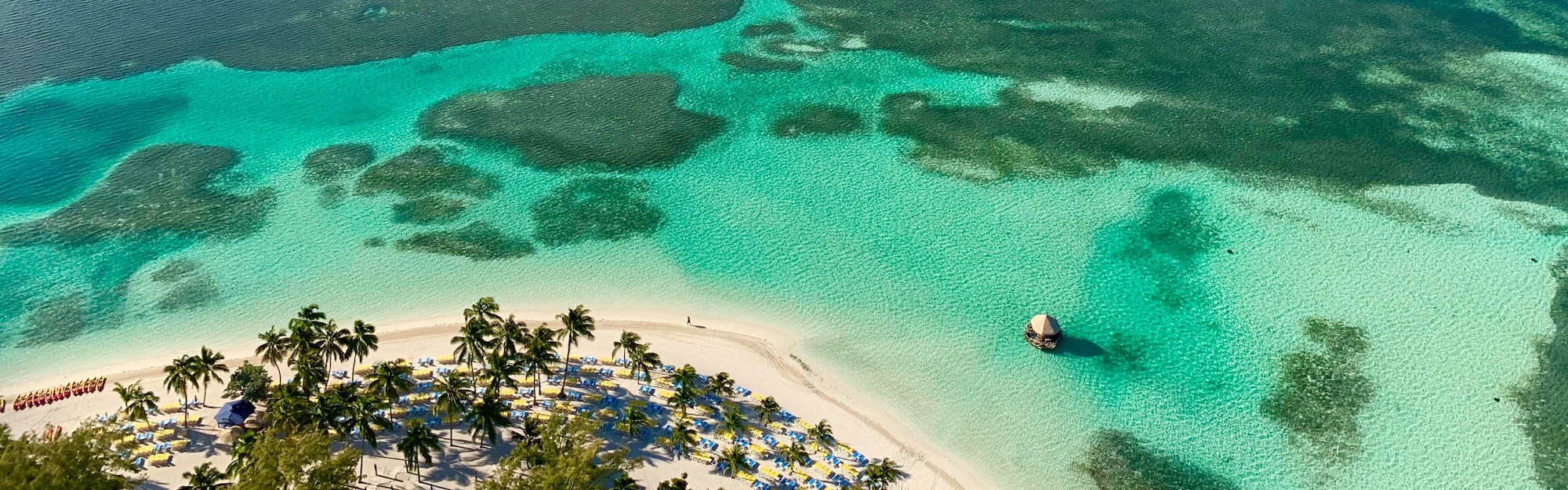
With a subtropical climate, pristine beaches, and top-class tourism infrastructure, it's no surprise that the islands and cays of the Bahamas archipelago are some of the world's top tourist destinations. The Bahamas is comprised of an astonishing amount of islands of varying sizes and each one is sure to enthral travellers.
Andros Island is the largest of the Bahamian islands, and sits next to the third biggest barrier reef in the world, making it a haven for snorkelling and scuba diving. New Providence offers energy and culture in the form of the capital city, Nassau, and provides easy ferry and car access to the expanse of upscale resorts at neighbouring Paradise Island.
The northernmost islands of Bimini are the closest to the US, and their wealth of marine life draws serious fishermen after the catch of a lifetime. Eleuthera Island is named after the Greek word for freedom by English pilgrims seeking religious autonomy, and is largely considered to be one of the most beautiful islands in the Caribbean, filled with lush vegetation and pink sand beaches.
Things to do in The Islands
The islands of the Bahamas are alive with marine life, culture, and beauty. The only difficult decision is which island visitors should choose! Apart from the tourist stalwarts mentioned below, the Bahamas boasts many other island gems.
The Ragged Island chain is an enduring favourite with fishermen in search of prey such as barracuda, tuna, snapper and king fish, as well as travellers seeking unspoiled, empty coastlines. The little Rum Cay, in the south of the archipelago, offers pristine coral reefs, good surf and even some historical ruins.
San Salvador is known for its Christopher Columbus memorials and shipwrecks, while Inagua is a flamingo hotspot home to more than 80,000 of the bright and beautiful birds. Cat Island remains a virtually untouched slice of Bahamian paradise.
Many travellers choose to explore the islands by chartered boat or cruise ship. Others settle at a resort on one of the popular, more developed islands and take excursions to nearby cays from their home base. The resorts and cruise liners offer many excursions and activities to patrons as part of package deals, but it is easy to travel more independently and organise trips to various islands on a whim.
Bimini Islands
The Bimini group of islands in the Bahamas is 50 miles (80km) east of Miami and spans an area no larger than 10 square miles (26 sq km). The main island, North Bimini, is barely seven miles long (11km) and no more than 1,200ft (366m) across at its widest point. The islands are best known for the excellent fishing opportunities, with visitors from around the world coming here to test their skills in the hunt for tuna, sailfish, mako shark, barracuda, and, above all, blue marlin. Almost all the action on the Bimini Islands happens in Alice Town, a laidback town on the main island of North Bimini where fishermen gather to swap stories.
Berry Islands
The Berry Islands are among the least busy in the Bahamas, and the perfect destination for those looking for the ultimate escape. In part because of the difficulty involved in getting to the islands and their lack of infrastructure, the resorts in this archipelago are extremely exclusive, catering mostly to wealthy travellers, big game fishermen, and yachters. The largest island is the Great Harbour Cay, home to a multimillion-dollar resort that once hosted the likes of Cary Grant and Brigitte Bardot. The beaches in the Berry Islands are known as the best shell-collecting spots in the Bahamas, while the game fishing is some of the best in the world.
Paradise Island
Connected to New Providence Island by a bridge, Paradise Island, formerly known as Hog Island, is one of the most popular destinations in the Bahamas. The island used to be privately owned until it was bought by developers in 1959 and turned into a resort haven. Since then, Paradise Island's owners have changed several times, including a stint of ownership by Donald Trump. It offers a variety of beaches to suit almost any taste, while most of the island's hotels and resorts can be found along Cable Beach, Paradise Beach, or Cabbage Beach. The miles of white sand host outstanding watersport facilities, including swimming, snorkelling, diving, jet skiing, sailing, and more.
Grand Bahama Island
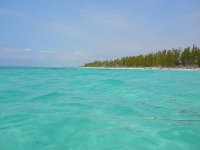
Approximately fifty miles (80km) from Miami, Grand Bahama is an idyllic island of white beaches and aquamarine seas beneath which vivid coral reefs teem with life. Most visitors to Grand Bahama stay in Freeport, a few miles inland, or at the seaside suburb of Lucaya on the south coast of the island. Here travellers can sail, play golf or simply relax by the pool at one of the many all-inclusive resorts. In Freeport there are plenty of boutiques and bazaars to tempt shoppers, and evenings can be spent at one of the many restaurants. Following on from this, travellers with cash left in their wallets can head to one of the island's casinos.
Andros Island
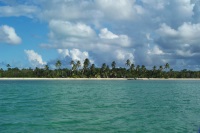
Andros is the largest island in the Bahamas and is a favourite for scuba divers and fishermen. The island is largely undeveloped, so the atmosphere is very casual and hotels tend to be small and unpretentious. Much of the island is covered with palm savannahs, primeval forest, and huge mangrove wetlands, which make it a wildlife fanatic's paradise. However, it is the underwater life that really makes Andros unique: it has the world's third largest barrier reef running along its east coast for 167 miles (269km). Andros' most famous attractions are the Blue Holes, a network of water-filled caves, both inland and in the ocean, that draw scuba divers from all over the world.
Exumas Islands
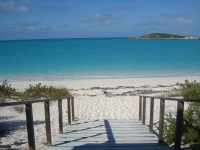
The Exumas Islands include a myriad of islands and cays that stretch for hundreds of miles. Although historically the home of the Lucayan people, who were captured and sold into slavery in the 16th century, the islands were uninhabited for roughly a century until the arrival of British loyalists from America in the late 1700s. Owing to the islands' long stint free from human habitation, they were often used as hideaways by pirates. The largest islands, Great Exuma and Little Exuma, are now home to a small community of several hundred island inhabitants, who farm the land and welcome tourists.
Long Island
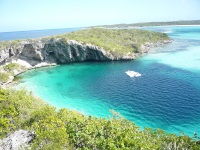
Long Island, often said to be the most scenic of all the Bahamian islands, is 80 miles (129km) long and four miles (6km) across at its widest point. Like most Bahamian islands, Long Island provides opportunities for visitors to swim, sail, snorkel, scuba dive, free dive, and engage in any number of watersports activities or seaside relaxations. One of the main events on the Bahamas yachting calendar is the Long Island Regatta, which takes place in the town of Salt Pond each May, drawing visitors from all around the world to one of the most beautiful and unspoilt islands in the Bahamas.
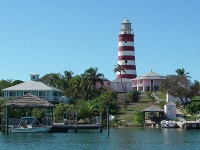
Abaco Islands
The tiny Abaco Islands cover 649 square miles (1,681 sq km) and form the most northerly part of the Bahamas. Located only 200 miles (322km) from Miami, they are a popular holiday destination, and therefore fairly well developed for tourism. The two main islands, Great Abaco and neighbouring Little Abaco, are separated from each other by a narrow strait. They are often tagged the 'Loyalist Isles' because of the English supporters who fled there to avoid persecution after the American Revolution. As for modern settlements, visitors will find themselves in quaint cottages by the sea or in beautiful guesthouses near the marinas, as opposed to the mega-resorts seen elsewhere in the Caribbean.
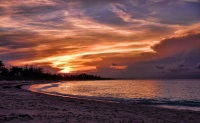
Eleuthera Island
Only 14 of Bahama's Out Islands are inhabited, leaving the rest largely free from resorts, cruise ships, and crowds. Eleuthera, which stretches for almost 100 miles (161km) but is at most two miles (3km) wide, is the most popular of the group. Eleuthera (and nearby Harbour Island, which is just a short water-taxi ride from the main island) has long been the holiday haunts of the fashionable set, sporting luxury hotels and fine restaurants that cater for trendy and wealthy visitors. Some of the more famous visitors in the past have included Prince Charles and Princess Diana, Robert de Niro, and the industrialists Arthur Vining Davis, Henry J. Kaiser, and Juan Trippe.
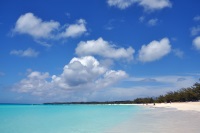
Half Moon Cay
This island is a private paradise reserved for passengers who are tendered ashore by cruise ships. Those who have paid for the pleasure will not be disappointed. Half Moon Cay (pronounced kee) is an island, about 100 miles (161km) south of Nassau, which has been sensitively developed to preserve its natural assets and ecosystem, while ensuring it provides a fantastic day ashore for cruise passengers. The main attraction is a surreal two-mile (3km) crescent of beach that gives the island its name. Visitors wanting to cure their 'sea legs' can take one of the peaceful walks along marked trails with descriptive signs pointing out the local vegetation, plants and birds.
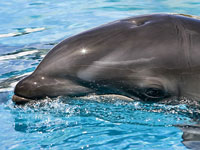
Dolphin Encounters
Dolphin Encounters affords visitors to Salt Cay a particularly special experience: a chance to swim with the local bottlenose dolphins, get a kiss, or just watch from the side. There are also opportunities to interact with sea lions, who were brought to the island from Louisiana after their previous home was destroyed by Hurricane Katrina. Dolphin Encounters is based on Blue Lagoon Island (Salt Cay), roughly three miles (4.8km) northeast of Paradise Island. To start off a visit to Dolphin Encounters, visitors are taken on a 20-minute ride on a catamaran from Paradise Island to Blue Lagoon Island, and while on the catamaran visitors are given the chance to see the dolphins' natural habitat.
Mayaguana Island
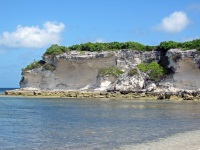
As one of the most isolated islands in the Bahamas, Mayaguana is also among the least developed (relying on a weekly mail boat for outside communication) and least visited by tourists. With modern amenities few and far between, the island appeals to adventure travellers looking to experience the pristine wildlife of the area, including iguanas and bright pink flocks of flamingos. Scuba diving in Mayaguana is world-class, especially in Abraham's Bay, and bonefishing is another popular activity. Some go to Mayaguana for duck hunting season, while others may visit for the challenging mountain biking routes on Mayaguana.
Bahamas travel info
Electricity
Electrical current in the Bahamas is 120 volts, 60Hz. Two-pin, flat-blade plugs and flat-blade plugs with round grounding are standard.
Language
English is the official language of the Bahamas.
Money
The official currency is the Bahamian Dollar (BSD), which is divided into 100 cents. The Bahamian Dollar is equal in value to the US Dollar and both currencies are accepted throughout the islands. Currency can be exchanged at banks, bureaux de change and many hotels. There are ATMs in the main tourist centres and credit and debit cards are widely accepted in all the big resorts. Banks' opening hours may vary, but tend to be from 9.30am to 3pm (Monday to Thursday) and 9.30am to 04.30 pm (Fridays).
Tipping
Many hotel and restaurant bills in the Bahamas automatically include a service charge of about 15 percent; if this is not included a 15 percent tip is expected for most services, including taxi journeys. Hotel bellboys and porters usually receive about BSD 2 per bag.
Health
Many routine vaccinations are considered cautionary measures, as food and water sources are typically safe and well managed in the Bahamas. Visitors should steer clear of fruit or vegetables unless peeled or cooked, and note that some types of fish, including tropical reef fish, are poisonous to eat even when cooked. Visitors should also use mosquito repellent to avoid bites. Medical facilities are good in Nassau and Freeport, but expensive, and usually require payment in cash on treatment; as a result, comprehensive travel insurance is advised. Visitors will need a vaccination certificate for yellow fever if they've arrived from or transited through a country where yellow fever occurs.
Safety
Most visits to the Bahamas are trouble-free, though care should be taken in the major cities of Nassau and Freeport. Visitors should take sensible precautions and not carry large amounts of cash or jewellery on their person or wander away from the main tourist areas, especially after dark. In light of several fatal accidents and serious injuries that have occurred using rented watersports equipment, it is advisable that only those experienced on jet skis consider renting them on New Providence and Paradise Island. The watersports industry in the Bahamas is poorly regulated and visitors should only rent equipment from reputable operators and make sure that they have received adequate training before going out onto the water. Hurricane season is from June to the end of November and visitors should monitor weather forecasts before making travel plans.
Local customs
A vital part of Bahamian custom is their dialect of English, which is characterful and descriptive, and, while it may take some time to come to grips with, it will only add more colour to travellers' experiences of the Bahamas. Handshakes are the norm for greeting. Visitors should also act in a humble and accepting manner while in the Bahamas, as the locals will treat them in this way; however, Bahamians also have a wicked sense of humour and they have great fun teasing others as a sign of affection. Visitors should note that some of the islands and resorts are very upmarket and require a certain standard of dress. Beachwear should be confined to the beach and smart-casual dress is usually expected in the evenings.
Doing business
Nassau is the business centre of the Bahamas, whose economy is heavily dependent on tourism and offshore banking. Business protocol is fairly relaxed, although appropriate business attire is expected. Meetings are usually held in conference rooms, they begin punctually, and business cards are customarily exchanged and should be treated respectfully by being placed in a card case. Handshakes on introduction are the norm between both men and women, and women are treated as equals in the business environment. Moreover, colleagues and business acquaintances should be addressed by their professional or academic title and surname. It's important to be punctual for meetings and not to hurry others in an effort to end meetings more quickly, as this is perceived as rude. Office hours are generally 9am to 5pm, Monday to Friday.
Duty free
Travellers to the Bahamas over 18 years do not have to pay duty on 200 cigarettes, or 50 cigars; 1 litre spirits and 1 litre wine (all imported beer is subject to duties); and other goods to the value of US$100. Prohibited items include firearms and ammunition without a police permit. Pets and dogs from countries with rabies infections are strictly prohibited from entering the country.
Communications
The international access code for the Bahamas is +1, in common with the US, Canada, and most of the Caribbean, followed by 242. Visitors with unlocked phones can use local SIM cards; most hotels and many bars and cafes have free WiFi.
Passport & Visa
All visitors must be in possession of a return or onward ticket, plus proof of funds, and a passport valid for period of intended travel. As part of the Western Hemisphere Travel Initiative (WHTI), all travellers travelling between the United States and Canada, Mexico, Bermuda, and the Caribbean region are required to present a passport or other valid travel document to enter or re-enter the United States. It is recommended that passports are valid for six months beyond travel to any country.
Entry requirements
United States passport holders must have a passport that is valid for the period of their intended stay. A visa is not required for visits of up to 90 days, but it's possible to get extensions up to eight months.
Visitors from the United Kingdom must have a passport that is valid for six months beyond their date of departure. They can remain in the Bahamas for up to 30 days without a visa, but it's possible to get extensions up to eight months.
Canadian nationals must hold a passport that is valid for six months beyond their departure date. A visa is not required for stays of up to eight months.
Australian passports and other documents must be valid for six months beyond the period of intended stay. Australians can stay in the Bahamas without a visa for a period of up to three months.
South African passports must be valid for six months beyond the period of intended stay. Nationals of South Africa do not need a visa for a maximum of three months.
Irish nationals must hold a passport that's valid for six months beyond their departure date. They don't require a visa to enter the Bahamas for less than 30 days.
New Zealanders require a passport that's valid for six months beyond the duration of their stay, but don't require a visa for a maximum of three months.
Useful contacts
Bahamas Ministry of Tourism, Nassau: +1 800 224 2627, or www.bahamas.com.
919 (Police, Fire, and National Emergency Medical Services)