


Uppsala Travel Guide
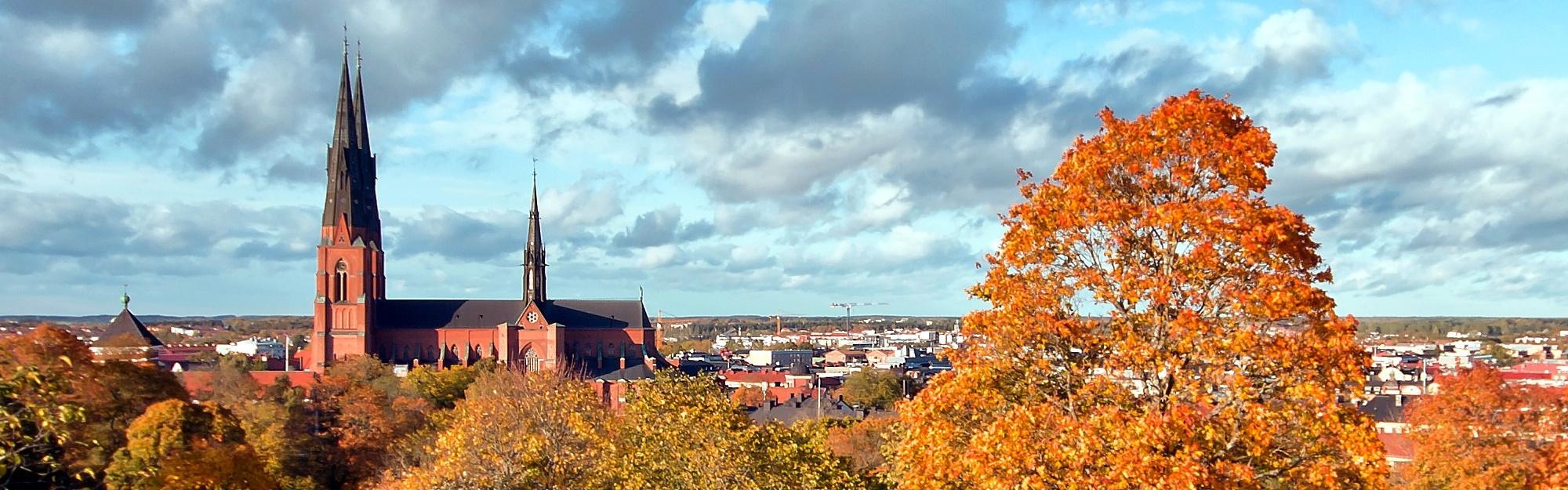
Relaxed, walkable and blissfully green, Uppsala is the spiritual heart of Sweden and a tonic for the frantic pace of modern life. Those who visit will delight in its charming, historical streets, and its unforgettable academic spirit.
This small, ancient city lies just north of Stockholm and is dominated by the Uppsala University, which provides the town with an energetic nightlife and cultural institutions such as the Museum Gustavianum. The exuberant population throws itself into festivals and parties alike, and Uppsala has many bars and clubs, as well as a variety of cafes and restaurants.
However, there's far more to this destination, as its history stretches back to the Bronze Age. The original settlement was founded on the west bank of the Fyris River, with the more modern and commercial city taking shape across the water to the east.
Uppsala's long past means it has many historical sites and beautiful buildings, including the Uppsala Cathedral, which is Scandinavia's largest church, and the Gustavianum, which contains the Museum of Nordic Antiquities, the Victoria Museum, and the University's cultural history collections. Another site of architectural interest is Uppsala Castle. Perched on a hill overlooking the city, this iconic landmark offers a glimpse into Sweden's royal history, and has stood for centuries as a symbol of power, learning and transformation. It's also home to several more museums.
Uppsala has a number of botanical gardens and parks, including the tranquil Linnaean Gardens, where the legacy of Carl Linnaeus, the father of modern taxonomy, still flourishes. Pedestrian walkways such as Svartbacksgatan are pleasant to stroll along, amid shops and cafes.
Most of Uppsala's attractions are within walking distance of the city centre, though there are several interesting places to visit further out, including Hammarby Estate and the beachside town of Alvkarleby. Three miles (5km) north of the city is Gamla Uppsala, the remains of an ancient town of great importance, which is accessible by bus.
Things to do in Uppsala
A vibrant university city, Uppsala is a fun destination with history and culture aplenty. The city's most renowned attraction is the Uppsala Domkyrka, the largest cathedral in Scandinavia, which contains a wealth of history. The destination also boasts many museums, with the Museum Gustavianum a favourite among travellers.
For book lovers, the university library, Carolina Rediviva, is a wonderful treat, as well, and there are many pleasant green lungs in Uppsala, including the Botanical Gardens, the Linnaeus Garden, and the Stadstradgarden. A short excursion up to the ancient Gamla Uppsala is an absolute must.
For those planning some serious sightseeing, the Uppsala Card gives travellers free admission to museums and some other attractions, with discounts on others. The card allows free travel on public transport in the city and discounts in some shops and restaurants.
Buses and trains to Uppsala arrive at the station in the centre of town, within easy walking distance of most of the popular restaurants and attractions in the city. Driving can be confusing with many rather narrow and winding streets; the city is very bicycle and pedestrian-friendly, so it's a good idea to park the car while sightseeing.
Gamla Uppsala
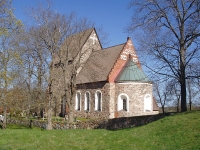
Three miles (5km) north of Uppsala, Gamla Uppsala was once an important town, the seat of Swedish royalty and the site of many historic funerals. It was an important religious and cultural centre as early as the 3rd century AD, and ancient sources identify the site as the power centre of the legendary Yngling dynasty of Swedish royalty. The Uppsala temple oversaw rites and sacrifices to the Norse gods in the pre-Christian era, and it was said that Odin himself resided there.
However, as Christianity overtook Europe, the ancient temple was burned and the stone church of Gamla Uppsala was built in the 12th century. The church still stands today, along with a grave field of about 250 burial mounds. Once, between 2,000 and 3,000 ancient burial mounds could be found at Gamla Uppsala but farmlands have encroached on the archaeological treasures. Gamla Uppsala also has a small museum detailing the rich history of the town, and a few historic old buildings.
Today, Gamla Uppsala has a population of under 20,000 and is a picturesque little town, well worth a visit for its historical atmosphere and beautiful surroundings. Visitors can spend the day on a guided tour (available during the summer months). The main attractions include Gamla Uppsala Museum, Gamla Uppsala Church and the open-air museum behind it, and Odinsborg restauarant.
Uppsala Cathedral
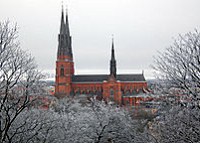
The Uppsala Cathedral dominates the city skyline as the tallest church in Scandinavia at 390 feet (119m). Also called the Uppsala Domkyrka, it was built in the 14th century for royal coronations and is now the seat of the Archbishop for the Lutheran Church of Sweden.
A number of Swedish kings and other prominent citizens are interred inside. The exterior of the cathedral is made of red brick, with a French Gothic interior featuring murals of St Erik, the patron saint of Sweden. In the summer months there are often lunch-time concerts on the tower balcony. Those interested in the cathedral's history should consider hiring a guide, as there's a wealth of history on display in the church.
There's also a small museum housing ecclesiastical relics and a graveyard with elaborately-carved tombstones. The cathedral has a small gift shop and cafe. Considered by many to be the top attraction in Uppsala, and much-loved by the locals, the cathedral is a hub of activity in the community, frequently hosting events and plenty of live music.
Linnaeus Garden and Museum
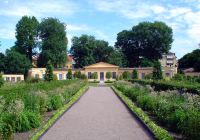
The Linnaeus Garden was founded in 1655 as the first botanical garden in Sweden. It wasn't until the 18th century that Carl Linnaeus, a prominent Swedish botanist, zoologist, physician, and father of modern taxonomy and ecology, redesigned the garden and began cultivating plants under his own system. It now contains roughly 1,300 plant species and is maintained by Uppsala University. Within the garden is the Linnaeus museum, which was the scientist's home for 35 years. The garden is a living complement to Linnaeus' work; he designed the plot to demonstrate his theories to his students, choosing each plant for a purpose. Although the garden fell into a state of disrepair for more than a century, it was faithfully restored in 1917 using the detailed plant lists and garden maps of Linnaeus himself. Although in many ways the garden is an academic exercise, fascinating for people interested in subjects such as phenology, it is also a beautiful botanical space in its own right and can be enjoyed for its aesthetic quality alone. Guided tours of the garden are available but must be arranged in advance by phone or email. There is a restaurant in the garden for refreshments.
Sweden travel info
Electricity
The electrical current is 230 volts, 50Hz. Standard European two-pin plugs are used.
Language
Swedish is the main language, though the Sami population in the north speaks Sami. Most Swedes speak and understand English; some are proficient in other European languages such as German, French and Spanish.
Money
The Swedish monetary unit is the krona or crown (SEK), which is divided into 100 ore. Banks exchange money during business hours from Monday to Friday; visitors can also change money at airports, ferry terminals, post offices, and Forex exchange offices, which are open daily. There are numerous ATMs throughout the country, most of which accept MasterCard and Visa. Most major credit cards are accepted throughout Sweden, and mobile payment apps are very popular.
Tipping
Tips are always welcome but aren't expected; tipping customers generally add 10 percent of the final bill. It's common to round up to the nearest number when eating out or paying taxi fare.
Health
No health risks are associated with travel to Sweden and medical care in the country is excellent. Reciprocal health agreements exist with other European Union countries, though the Global Health Insurance Card (GHIC) replaced the European Health Insurance Card (EHIC) for UK citizens after Brexit. The GHIC allows UK citizens access to state healthcare during visits to the EU. All non-EU travellers should ensure they have comprehensive travel insurance.
Safety
Sweden is an extremely safe country to visit. There's some petty crime in the cities where tourists congregate, but crime is generally at much lower levels than elsewhere in Europe. Most visits to Sweden are trouble free.
Travellers who visit for adventure or artic tourism should never do so alone, and they should buy travel insurance that includes helicopter rescue and medical evacuation. They should also avoid venturing off marked trails, and ensure that they're properly equipped and well informed about the weather and other conditions that may pose a hazard. It's best to inform a family member or friend of their itinerary, and to have detailed information on each activity before setting out.
Local customs
Sweden is very liberal and secular, and equality is an important part of the culture. Boastfulness and open conflict are usually avoided, as is discussing work as an entry into a conversation.
Chivalry is often considered an outdated concept in Sweden, which is one of the most gender equal countries in the world. Gestures such as opening doors for women are not considered necessary.
Smoking isn't allowed in indoor establishments such as restaurants and bars; swedes have a reputation for being meticulously tidy, so it's polite to remove shoes when entering a Swedish home.
Doing business
Sweden is no stranger to corporate culture and is home to many global companies such as Skype and Spotify, not to mention popular automotive company, Volvo. Scandinavians, and Swedes in particular, value the inherent equality and dignity of all people; this is reflected in business, where consensus and compromise is valued in the decision-making process.
Decisions often take a long time to be made, as all opinions are considered. It's best to avoid overt displays of wealth or status; business practice and personal conduct should always be rational, calm and disciplined. Swedes often come across as overly reserved, but business meetings are efficient.
The business world in Sweden draws a strict line between work and social gatherings, so foreigners shouldn't expect many post-work social events or dinner invitations. The best way to circumvent the reserved nature of most Swedes in the business environment is at the twice-daily fika, or coffee break, when the general rules regarding business behaviour are relaxed a little.
Punctuality is vital and it's a point of pride for many Scandinavians, illustrating mutual respect. It's important to schedule an appointment in advance and have it confirmed shortly before any engagement. Handshakes for men and women are common after introduction and first names are often used instead of surnames.
Dress codes are conservative and smart, but suits are not always necessary. Business people in Sweden should endeavour to show honesty, transparency, professionalism and mutual respect in all business dealings. Sweden is one of the least corrupt countries in the world, making it a pleasure to do business here.
Business hours run from 8am to 5pm from Monday to Friday. The language of business is Swedish, but English is generally spoken throughout the country and many multinationals will use it as the language of business when necessary.
Duty free
Passenger who are 18 years of age or older and from non-EU countries do not have to pay duty on the following items: 200 cigarettes, or 100 cheroots, or 50 cigars, or 250g tobacco, or a proportional mix of these; one litre of spirits with alcohol content higher than 22 percent, or two litres of fortified or sparkling wine, and two litres of non-sparkling wine and beer are allowed duty free; other goods to the value of SEK 1,700 are also allowed. Prohibited items include drugs, other than those for medical or scientific purposes, and firearms and ammunition if they're brought in without a permit.
Communications
The country code for Sweden is +46. Travellers can purchase local prepaid SIM cards for unlocked phones or use eSIMs if their cellular providers support it on their networks. Public WiFi is widespread.
Passport & Visa
All visitors are required to have tickets and documentation for return or onward travel. The borderless region known as the Schengen area includes the following countries: Austria, Belgium, Czech Republic, Denmark, Estonia, Finland, France, Germany, Greece, Hungary, Iceland, Italy, Latvia, Lithuania, Luxembourg, Malta, The Netherlands, Norway, Poland, Portugal, Slovakia, Slovenia, Spain, and Sweden. All of these countries issue a standard Schengen visa that has a multiple entry option that allows the holder to travel freely within the borders of all. It's highly recommended that travellers' passports have at least six months' validity remaining after the intended date of departure from their travel destination. Immigration officials often apply different rules to those stated by travel agents and official sources.
Entry requirements
US citizens require a passport that's valid for three months beyond the period of intended stay. No visa is required for stays of up to 90 days within a 180 day period.
UK citizens require a passport that's valid for three months beyond the period of intended stay. No visa is required for stays of up to 90 days within a 180 day period.
Canadian citizens require a passport that's valid for three months beyond the period of intended stay. No visa is required for stays of up to 90 days within a 180 day period.
Australian citizens require a passport that's valid for three months beyond the period of intended stay. No visa is required for stays of up to 90 days within a 180 day period.
South Africans require a passport valid for three months beyond period of intended stay as well as a visa for entry to Sweden.
Irish nationals require a valid passport, but no visa is necessary.
New Zealand citizens require a passport that's valid for three months beyond the period of intended stay. No visa is required for stays of up to 90 days within a 180 day period.
Useful contacts
Swedish Tourist Office: www.visitsweden.com
112 (General).