

City guides
 Australia
Queensland
Australia
Queensland
Whitsunday Islands Travel Guide
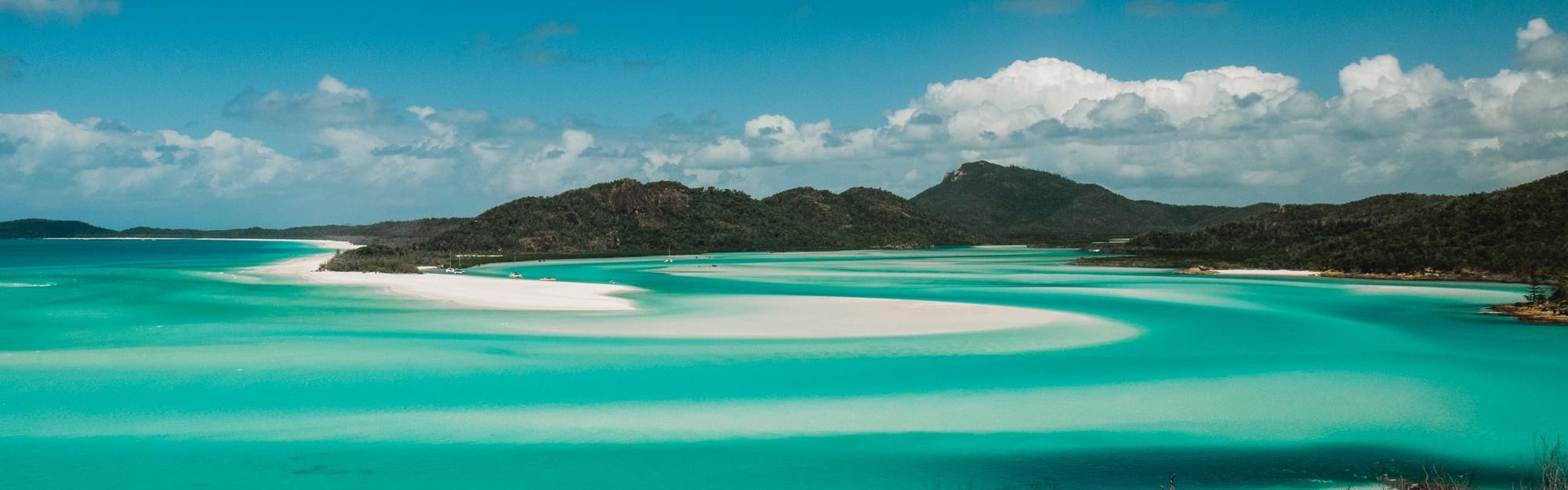
The Whitsunday Islands were discovered by Captain James Cook in 1770, and are a stunning archipelago of around 74 tropical islands and atolls off Queensland's Airlie Beach. Named after Whit Sunday, the seventh day after Easter, Cook was immediately captivated by their beauty and christened the islands on the spot.
A haven for water lovers, the Whitsundays are set in the crystal-clear azure waters of the Coral Sea, right in the heart of the Great Barrier Reef, promising endless opportunities for adventure. These include everything from world-class scuba diving and snorkelling to sailing, fishing, and simply lounging on the sun-drenched beaches. About 70 percent of the region is protected as a national or marine park, ensuring the natural beauty remains unspoilt.
The resort islands of Hamilton, Hayman, Daydream, South Molle, and Lindeman are among the most sought-after, offering an array of luxurious accommodations and easy access to the islands' breathtaking landscapes. Whether visitors are seeking a family getaway, a peaceful escape from the hustle and bustle, or a romantic honeymoon, the Whitsundays cater to all.
Things to do in Whitsunday Islands
The Whitsunday Islands are an archipelago of around 74 stunning tropical islands off the northeastern coast of Queensland, nestled in the heart of the Great Barrier Reef. Located about 95 miles (150km) north of Mackay and 190 miles (300km) south of Townsville, these islands are a must-see destination for anyone visiting Australia. With crystal-clear waters, pristine beaches, and vibrant marine life, the Whitsundays attract holidaymakers year-round, offering a perfect blend of relaxation and adventure.
The mainland town of Airlie Beach serves as the gateway to the islands, and has plenty of tour offices organising trips to explore the Whitsundays and the Great Barrier Reef. Hamilton Island, the largest and most developed island, is often the starting point for reef tours, sailing adventures, and island hopping. One of the crown jewels of the Whitsundays is Whitehaven Beach, renowned for its pure silica sand and crystal-clear waters, often rated as one of the most beautiful beaches in the world.
Other highlights include the town of Bowen, famous for its striking coastline, and the charming Daydream Island, a serene getaway perfect for relaxation. Visitors flock to the islands to indulge in world-class scuba diving, snorkelling, and sailing, while those seeking an extra thrill can take to the skies with helicopter or seaplane rides for breathtaking aerial views of the islands and reef below.
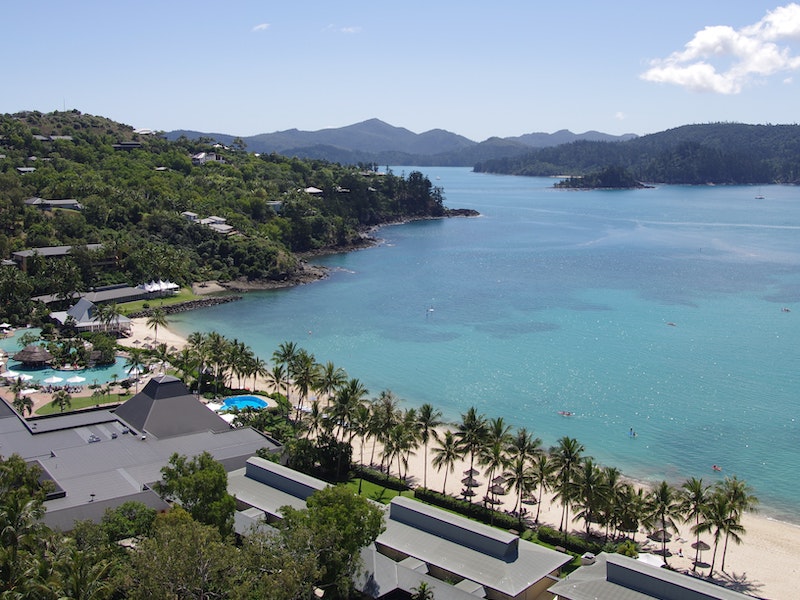
Hamilton Island
Hamilton Island is the most developed and populated of the Whitsundays, and is a jewel in the heart of the Great Barrier Reef. With its pristine beaches, lush tropical landscapes, and breathtaking panoramic views, it's no wonder the island boasts some of Australia's most valuable real estate. Visitors can indulge in world-class accommodation, fine dining, and a wide range of activities, from sailing and snorkelling to exploring the island on foot or by golf buggy. The Great Barrier Reef is just a short boat ride away, offering unforgettable excursions into one of the world's natural wonders. Whether for a day trip or an overnight stay, Hamilton Island combines luxury, adventure, and natural beauty in one unforgettable destination. Peak season runs from September to January, so travellers seeking a more serene experience may prefer the quieter months.
Whitehaven Beach
Whitsunday Island, the largest in the Whitsundays, is home to the world-famous Whitehaven Beach, a 2.8-mile (4.5km) stretch of dazzling white silica sand. Protected within Whitsunday Island National Park, the beach remains pristine and unspoilt, accessible only by boat or seaplane. Visitors can hike the wooden trail to Tongue Point for breathtaking panoramic views of the swirling sands and turquoise waters; a perfect postcard moment. Daily tours from nearby islands and the mainland make it easy to experience this tropical paradise. With its pure sand, crystal-clear waters, and unforgettable scenery, Whitehaven Beach is a must-visit for anyone exploring the Whitsundays.

Airlie Beach
Airlie Beach is the gateway to the Whitsunday Islands and the Great Barrier Reef, offering the perfect blend of adventure and tropical relaxation. Visitors can snorkel, fish, take crocodile safaris on the nearby Proserpine River, or enjoy scenic flights over Whitehaven Beach. By night, the town buzzes with lively bars, beer gardens, and live music. During stinger season (November to May), swimmers can cool off safely in the large oceanfront lagoon. With its laid-back charm, breathtaking views, and vibrant nightlife, Airlie Beach captures the spirit of Queensland's tropical coast.
Australia travel info
Electricity
Australia uses 230V, 50Hz electricity and Type I plugs with three flat pins. Most visitors will need an adapter.
Language
English is the national language of Australia.
Money
Australia uses the Australian dollar (AUD), which is divided into 100 cents. Credit and debit cards are widely accepted, and ATMs can be found easily throughout the country. Visitors can exchange most major foreign currencies at banks or currency exchange offices. Mobile payment options such as Apple Pay and Google Pay are also commonly accepted in many shops, restaurants and on public transport in major cities, making it easy to pay without cash. Banks are generally open from 9.30am to 4pm, Monday to Friday, although some branches may offer extended hours or open on Saturday mornings.
Tipping
Most service providers in Australia don't expect a tip, so travellers shouldn't feel pressured to give one. However, a tip of around 10 percent is common in restaurants for good service, and taxi passengers usually round up the fare to the nearest dollar or more.
Health
Travellers over the age of one who have recently stayed overnight in a country with yellow fever may need to show a vaccination certificate when arriving in Australia. For most visitors, no special vaccinations are usually needed, though some routine shots or travel vaccines such as hepatitis A and B might be recommended depending on the trip. It's advisable to use insect repellent, especially in areas where mosquito-borne illnesses can be a concern. Visitors should also take care in the sun, as Australia has strong UV rays. Medical care in Australia is very good but can be expensive, so having travel insurance is important. UK residents have access to free emergency hospital treatment under a reciprocal agreement, provided they can show proof of residency.
Safety
Australia is generally considered a safe country with a low crime rate. However, tourists may still be targeted by petty criminals, especially in busy areas such as the Gold Coast. Visitors are advised to keep a close eye on their belongings and travel documents.
Between November and April, tropical cyclones can occur in some parts of Australia, particularly in Western Australia, Queensland, and the Northern Territory. During the summer months (November to March), there's also a high risk of bushfires, especially in regions such as Victoria, Tasmania, New South Wales, and the Australian Capital Territory.
In summer, the coastal waters of northern Australia and Queensland can contain dangerous jellyfish known as box jellyfish. Their sting can be extremely painful and potentially deadly. Visitors should always pay attention to beach safety signs and follow the advice of local lifeguards to avoid injury.
Local customs
Australians tend to have a relaxed and informal attitude in both social and many business situations, though expectations can vary by industry. Sport is a major part of Australian life, with cricket, rugby and Australian Rules Football being especially popular and widely followed.
Doing business
Australian business culture is a mix of professionalism, informality and equality. While it reflects British, American and local influences, the overall approach is pragmatic and collaborative. Management tends to be consultative, and respect is earned through competence rather than job titles.
Formality is minimal, as first names are used quickly, and eye contact is valued as a sign of trustworthiness. Punctuality is important, and meetings are usually booked in advance and confirmed closer to the date. The style of communication is direct and honest, with a preference for realistic promises over self-promotion.
Business attire in formal industries remains conservative, though expectations may vary across sectors. Men typically wear suits and ties; women usually choose tailored outfits. English is the language of business, and standard working hours are from 8.30am or 9am to 5pm or 5.30pm, Monday to Friday.
A respectful, down-to-earth approach is key to doing business successfully in Australia.
Duty free
Travellers to Australia aged 18 years or over do not have to pay customs duty on 2.25 litres of alcoholic beverages; and 25 cigarettes or 25g of cigars or other tobacco products. All alcohol and tobacco products in travellers' baggage are included in this concession, regardless of where they were purchased. Gifts and other general goods are included in the AUD 900 duty-free allowance. Fresh produce and many animal or plant products are restricted or prohibited and must be declared upon arrival.
Communications
The international dialling code for Australia is +61. Hotels, cafes and restaurants offering free WiFi are widely available; purchasing a local prepaid SIM card can be a cheaper option than paying international roaming costs, which can be quite high.
Passport & Visa
Travellers to Australia need a valid passport and either a visa or an Electronic Travel Authority (ETA). An ETA is a type of visa electronically linked to the traveller's passport, with no physical stamp or label.
ETAs are issued for tourism or short business visits, and usually allow a stay of up to three months at a time and are valid for up to 12 months. During this period, travellers can enter Australia multiple times, as long as each visit does not exceed three months.
ETAs can be applied for online through the official Australian government website or the Australian ETA app.
Australia does not require passports to be valid for six months after departure, but it's advisable to have at least six months' validity, as some airlines or transit countries may require this.
Entry requirements
US nationals must have a valid passport on arrival. A pre-obtained Electronic Travel Authority (ETA) is required for tourism or business visits of up to 90 days.
UK nationals must have a passport valid for the intended period of stay. A visa is required; most travellers are eligible to apply for an eVisitor visa or an ETA for short stays of up to three months.
Canadian nationals require a passport valid on the day of entry into Australia. An Electronic Travel Authority (ETA) must be arranged in advance for stays of up to 90 days.
South African nationals must have a valid passport and are required to obtain a visa prior to travel. Passport validity requirements are not clearly defined by official Australian sources; six months' validity may be advisable.
Irish nationals must hold a valid passport and are required to obtain a visa before entering Australia. While a visa or ETA may be available, official guidance does not confirm ETA eligibility. A minimum of six months' passport validity is recommended.
New Zealand nationals require a valid passport to enter Australia. A Special Category Visa (SCV) is typically granted on arrival after completing a passenger card, provided the traveller meets eligibility criteria.
Useful contacts
Australian Tourist Commission, Sydney: +61 (0)2 9360 1111 or www.australia.com
Emergencies: 000 (112 on cellphones)