


Zagreb Travel Guide
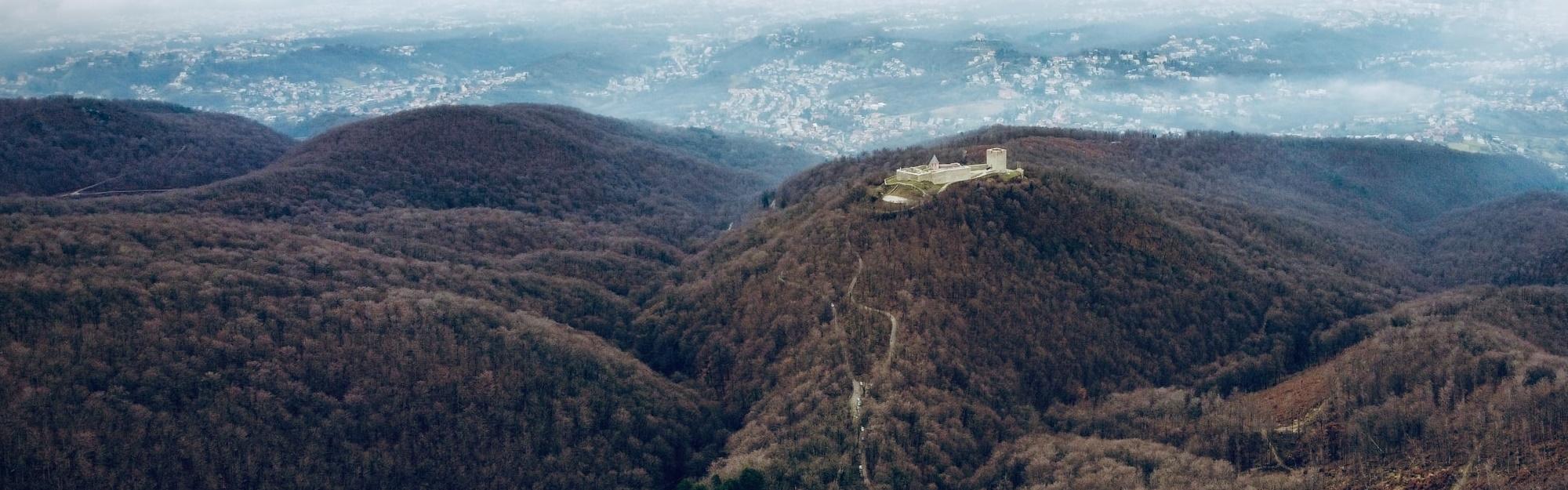
The capital of Croatia, Zagreb is the country's economic centre and gateway to Western Europe. The picturesque city is situated on the slopes of Medvednica Mountain, along the banks of the Sava River in the north of Croatia.
The core of Zagreb consists of Gornji Grad (Upper Town) and Donji Grad (Lower Town). Gradec and Kaptol form the most distinct areas of the well-preserved medieval city, while the residential area covers the southern slopes of the Medvednica Mountains.
Besides being a commercial hub, Zagreb is a popular tourist hotspot and an established international conference destination. Not only does it have a history dating back nearly a thousand years, but it also enjoys the efficient infrastructure expected from a modern European capital. But tourist attractions in Zagreb are largely from the past, ranging from the Palaeolithic Veternica Cave through to the vestiges of Roman culture and a fascinating medieval old town.
Alongside the city's abundant monuments, museums and galleries, visitors will also find that Zagreb has its fair share of high-end shops, top-quality restaurants, and modern sport and recreation facilities. An extensive transport infrastructure allows travellers to get around with ease. The city is also well situated as a springboard for exploring the picturesque medieval towns of northern Croatia, such as Samobor, Vrbovec and Karlovac. There are plenty of great hiking opportunities on nearby Medvednica Mountain, which casts its 3,280-foot (1,000m) shadow over Zagreb.
Things to do in Zagreb
While a stroll along the aged cobbled streets is an experience in itself, most of Zagreb's attractions are found in the centre of its old town. One of the most prominent attractions in Zagreb is the Croatian History Museum, housed in an 18th-century Baroque palace called Vojkovic-Orsic-Rauch.
There is a sequence of town squares at the end of Praska Street in the old town, with each boasting its own unique character and fascinating past. For those intrigued by ancient history, the nearby Roman town of Andautonia is well worth a visit. For a walk through centuries of Zagreb's proud but turbulent history, travellers should visit the Mirogoj Cemetery where many prominent Croatians of all faiths are buried.
Another popular attraction is the quirky Museum of Broken Relationships, which displays mementos from failed relationships from all over the world. Each item is displayed with a story, some funny, some sad, some touching. It certainly is not a typical museum experience but people flock to see these ordinary objects and read the personal anecdotes that make them significant.
For a break from the bustle of the city, adventurers can go hiking or biking on Medvednica Mountain. Its great looming silhouette promises beautiful scenery and well-maintained trails, affording impressive views of the city below from several high vantage points.
Croatian History Museum
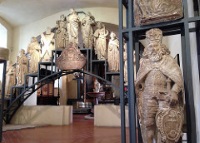
The Vojkovic-Orsic-Rauch houses the Croatian History Museum and is itself a part of that history. Situated in the historical town centre, the beautiful Baroque palace was built at the end of the 18th century and was formerly the private residence of three successive baronial families. In the late 1930s, the palace became the residence of Zagreb's mayors, before being designated as a repository for the historical relics of the city. It currently houses more than 140,000 antiquities in various collections, from stone monuments, military uniforms and fine art to religious artefacts, venerated icons and noble heraldry. The exhibitions in this museum are temporary, meaning it's possible to visit the museum many times and always see new things.
Croatian National Theatre
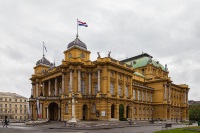
The building housing the Croatian National Theatre (or HNK Zagreb) is as much a national treasure as the world-class theatre, opera, music and ballet productions that take place on its stage. Construction began on the theatre building in 1894, with Croatian artist Vlaho Bukovac painting the ceremonial curtain and Viennese artist Alexander Goltz decorating the ceiling of the auditorium. At the entrance to the theatre, visitors can see the large ornate fountain called 'The Well of Life', which was designed by Croatian artist Ivan Meštrovic in 1905. The Croatian National Theatre has hosted famous artists and performers from all over the world, and culture enthusiasts shouldn't miss a show.
Trakoscan Castle
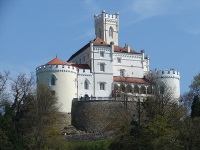
Trakoscan is a legendary 13th-century Gothic castle that was home to various influential families for centuries. It eventually fell into abandoned disrepair in the second half of the 18th century, when it belonged to the Draskovic family.
In the 1950s, the castle was taken over by the state and turned into a living museum that reconstructs life in a medieval castle. Visitors can explore four levels, including the dungeon, and finish their tour with a stroll through the surrounding parklands.
Trakoscan Castle is a spectacular journey for the imagination as it feels so authentic. Guests can wander with freedom through the stone corridors, up and down the winding staircases, and into the various rooms. It is also a great attraction for the younger children as the castle, lake, and forest settings transport the little ones to a fairytale world.
The castle features original artefacts from its history, including furniture and weaponry, and displays are informative and well laid out. Visitors can stop for a break at the restaurant by the lake.
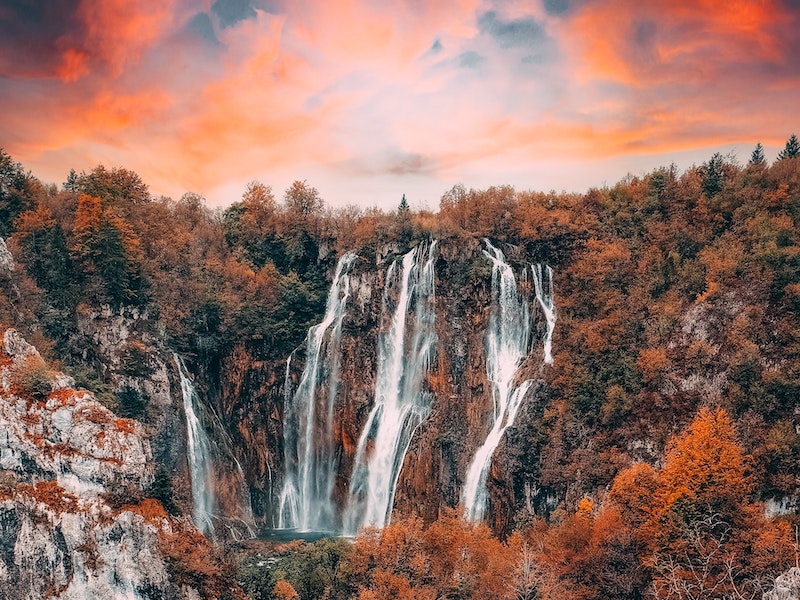
Plitvice Lakes National Park
Plitvice Lakes National Park is the breathtaking setting for extraordinary walking holidays, and lies just an hour inland. The lakes have been declared a UNESCO World Heritage Site and the national park enclosing them is the oldest in Southeast Europe. Every year thousands flock to the unbelievable beauty of these 16 green and turquoise lakes, which are linked by waterfalls and surrounded by forest. Wooden walkways meander around and across the water, formed by mineral deposits that create terraces within the constantly changing limestone landscape. Visitors can cover the 11 miles (18km) of walkways on foot, but buses and ferries do service certain sections. The surrounding forests boast an extremely diverse variety of flora and fauna.
Rijeka
Rijeka is the commercial capital of the idyllic Adriatic Coast. More than simply a gateway to the beautiful coastal island resorts, this cultural city is a tourist's delight in itself, with its charming historic buildings and street cafes. It hosts an annual carnival with lively music and dancing that provides a glimpse into ancient Slavic folklore and mythology. Revellers don masks to scare away evil forces and there are numerous events, concerts and parades. There's also the remarkable Trsat Castle, which is reached by some formidable stone steps but is well worth the climb.
Krk Island
The largest island in the Croation Archipelago, Krk is a haven of sparkling beaches and lovely holiday towns. It enjoys a laid-back Mediterranean atmosphere, with Krk Town being the main tourist hub with its many restaurants, shops and bars found in the Old Town area. Nicknamed the 'Golden Island', getting to Krk from the mainland is made easy by an imposing 4,500 foot (1,4km) bridge.
The best beaches are found in Baska, with more than 30 of them connected by a promenade. Other beach towns on Krk include Njivice and the sandy coastline of Klimno Bay. Vrbnik is home to vineyards that produce some of the best white wines in Croatia, while the folk festival in Dobrinj draws crowds from far and wide.
Krk Island is popular for weekend excursions from the mainland and visitors can easily spend a week exploring the winding streets and hidden corners of the destination. A haven for watersports, bird watching and hiking, there is lots to see and do on Krk for just about anyone.
Getting Around
Walking is a good option for getting around the city as Zagreb is compact with all the main sights in close proximity to the major hotels. Those who need to travel further afield can make use of the highly efficient tram system, which has frequent services throughout the city connecting bus and train stations and the main square, Trg Bana Josipa Jelacica. Four tram routes also operate throughout the night with each ticket providing 90 minutes of travel.
Public buses offer another viable transport alternative and are useful for airport runs. There are plenty of taxis in Zagreb too, particularly close to major hotels and the airport. Fares are negotiable and it's always best to agree on a price before setting off if the taxi is not metered. Many tourists opt to rent cars as it offers them greater freedom when it comes to exploring the outlying areas. The city is fairly easy to negotiate by car and Croatia's roads are well maintained.
Zagreb Climate and Weather
The climate varies quite substantially between the Croatian coastal regions and the interior. The climate of Zagreb is continental, with four separate seasons. Summers (June to August) are hot and dry, and winters (November to February) are cold.
The average temperature in winter is 34F (1C) and the average temperature in summer is 70F (21C), although it can get much hotter. In fact, the interior can feel much hotter than the coast due to the lack of cool sea breezes. The end of May, particularly, gets very warm, with temperatures rising to 86F (30C) and up. Snowfall is common in the winter months, from December to March, and rain and fog are common in autumn (September to November).
The most popular time to visit Zagreb is in the peak summer months, when tourists are flocking to Croatia for the sun and sea on the coast. Possibly the best time to visit the city, however, is in spring (March to April) when the weather is slightly less hot and the city is less crowded and usually less expensive.
Croatia travel info
Electricity
Electrical current is 230 volts, 50Hz. European-style, round, two-pin plugs are standard.
Language
The official language is Croatian.
Money
The official unit of currency is the euro, which was introduced on 1 January 2023. ATMs are plentiful throughout the country and banks, authorised bureaux de change, post offices and most hotels exchange foreign currency. Banks open Monday to Saturday and some banks also open on Sundays in the main cities. Major credit cards are widely accepted at the main hotels and restaurants, and may be used to draw cash from ATMs, which are widely available throughout the country.
Tipping
A tip of 10 percent will be appreciated in tourist or upmarket restaurants, though it's common to simply round up the bill if the service has been good in other establishments. Tour guides expect to be tipped.
Health
The medical facilities and care in Croatia are fairly good, with free emergency medical care available to EU citizens with a European Health Insurance Card (EHIC). After Brexit, the Global Health Insurance Card (GHIC) replaced the European Health Insurance Card (EHIC) for UK citizens. The GHIC allows UK citizens access to state healthcare during visits to the EU. The GHIC is not valid in Norway, Iceland, Liechtenstein or Switzerland, nor is it an alternative to travel insurance. Non-EU nationals are advised to take out comprehensive travel insurance, and those who need particular medications should take the supply needed for the duration of their stay with them, plus a doctor's letter to get the items through customs.
Safety
Most visits to Croatia are trouble free. Crime levels are low and violent crime is rare but, as petty theft occurs in busy tourist areas, it's worth keeping a careful eye on valuables. Visitors should be vigilant when attending soccer matches and sports rallies, which sometimes lead to rowdy behaviour and violent incidents. Croatia is a popular party destination but partying carries safety, legal and financial risks. Nightclub fires, balcony collapses, and crowd crushes can occur; accidents resulting in serious injuries have taken place on party boats.
Local customs
It's prohibited or considered inappropriate to walk around cities and some town centres shirtless or in swimming costumes. In some places, such as parts of Dubrovnik, there is signage indicating that people are required to cover up and that fines will be imposed on those who don't comply. Even when there is no such signage, travellers are advised to be sensitive to local conventions and sensibilities.
Doing business
Business in Croatia tends to be quite formal. Punctuality is key, dress should be smart and handshakes are the preferred form of greeting. Titles and surnames are usually used unless otherwise indicated and business cards are often exchanged at the beginning of a meeting. English and German are widely spoken but any attempt at speaking some Croatian will be appreciated. Women frequently hold high positions in business and are well respected.
Building a good working relationship is important and it's useful to work with a reliable local partner. Although Croatia appears typically European in its dealings, business can take some time to conclude. Business hours are usually 8am to 4pm, Monday to Friday.
Duty free
Non-EU travellers to Croatia can enter the country with the following items without incurring customs duty: 200 cigarettes or 50 cigars or 250g of tobacco; 4 litres of wine, 1 litre of spirits and up to 16 litres of beer; and other goods up to the value of HRK 3,200 if arriving by air or HRK 2,200 if arriving by other means of transport.
Communications
The international access code for Croatia is +385 and WiFi availability is good.
Passport & Visa
All foreign passengers to Croatia must hold return or onward tickets and the necessary travel documentation for their next destination, as well as proof of sufficient funds (at least EUR 70 per day of stay, at least EUR 30 per day of stay if holding a confirmed invitation or a tourist voucher). It is highly recommended that travellers' passport have at least six months' validity remaining after the intended date of departure from their travel destination. Immigration officials often apply different rules to those stated by travel agents and official sources.
Entry requirements
US citizens must present a passport valid for three months beyond period of intended stay, and visas are not required for stays of up to 90 days.
UK nationals must have a passport valid for three months beyond the period of intended stay, and a visa is not required for up to 90 days.
Canadian citizens must have a passport valid for three months beyond period of intended stay in Croatia, and no visa is required for stays of up to 90 days.
Australian citizens must have a passport valid for three months beyond the period of intended stay in Croatia, and no visa is required for stays of up to 90 days.
South African nationals must have a passport valid for three months beyond the period of intended stay in Croatia and a visa is required. Travellers can enter with a 'C' or 'D' visa issued by another Schengen Member State for a maximum of 90 days in a period of 180 days.
Irish nationals must have a passport valid for the period of intended stay in Croatia, and no visa is required.
New Zealand citizens must have a passport valid for three months beyond the period of intended stay in Croatia, and no visa is required for stays of up to 90 days.
Useful contacts
Croatian National Tourist Board, Zagreb: +385 (0)1 469 9333 or www.croatia.hr
112 (General Emergency Helpline)