

Country guides
 Australasia
Remote yet welcoming, vast yet accessible, Australia is a destination that pairs world-class experiences with an unmistakably relaxed spirit. Cities such as Sydney and Melbourne promise cultural depth and cosmopolitan energy, while the natural landscapes speak for themselves, offering everything from coral reefs and ancient rainforests to desert heartlands and endless coastlines. Adventure here does not come with attitude. It comes with sunscreen, a sense of humour and a genuine invitation to join in.
Much of the country's charm lies in its people, and Australians are known for their openness, straight talk and a warmth that's difficult to manufacture. This authenticity leaves a lasting impression, whether visitors are chatting with a local barista, hiking with an Indigenous guide or sharing stories over a beachside barbecue.
Best time to visit Australia
Australia's mild, temperate climate means there's rarely a bad time to visit. Even in mid-winter (June), temperatures often reach a comfortable 68°F (20°C). That said, summer (December to March) is when the country truly comes alive, with long, sunny days, a packed calendar of events and festivals, and an unmistakably festive energy in the air.
What to see in Australia
-The Sydney Opera House is an iconic triumph of architectural design, and hosts a world-class programme of shows and events.
-The Australian Museum is a fascinating place to visit, with engaging exhibits that cater wonderfully to kids.
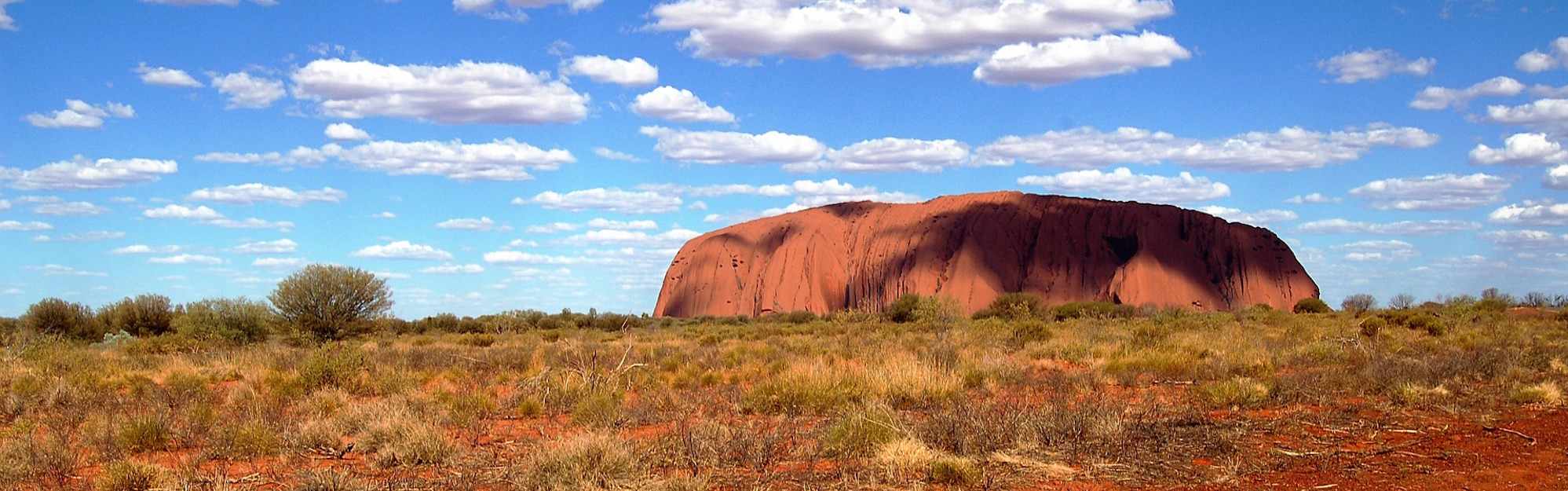
-Embark on the adventure of a lifetime and travel into the Outback to see Uluru (formerly known as Ayers Rock), a giant monolithic formation considered sacred by Australia's Aboriginal peoples.
-Tasmania's Museum of Old and New Art (MONA), opened by millionaire private collector David Walsh, is a striking and unconventional museum that continues to turn heads in the art world.
What to do in Australia
-Explore the Great Barrier Reef with snorkel gear in hand and experience it up close. This vibrant underwater world, the largest living structure on Earth, is a sight visitors won't soon forget.
-Swim, learn to surf, or simply relax on Queensland's Gold Coast, home to some of the finest beaches in the world.
-Watch a cricket match at one of the country's legendary stadiums; the Melbourne Cricket Ground comes highly recommended.
-Take an early morning hot-air balloon ride over the Australian Outback and marvel at the vast, severe beauty stretching in every direction, with no sign of human settlement.
Getting to Australia
Relatively affordable flights to Australia, often with one or more stopovers, are available from both the United Kingdom and the United States. The most common international entry points are Sydney Airport and Melbourne Airport, though other cities such as Brisbane, Perth and Adelaide also receive international arrivals depending on the airline and route.
Read
Voss by Patrick White, Oscar and Lucinda by Peter Carey, In a Sunburned Country by Bill Bryson, and Red Dog by Louis de Bernières.
Listen
Kylie Minogue, Tame Impala, AC/DC, Crowded House, INXS and Sia.
Watch
Shine (1996), The Castle (1997), The Adventures of Priscilla, Queen of the Desert (1994), Australia (2008), and Rabbit-Proof Fence (2002).
Drink
Local beer such as Victoria Bitter, Tooheys and XXXX (said 'four ex').
Eat
Vegemite on toast and barbeque.
What to buy
Great souvenirs to buy in Australia include boomerangs, beer cosys, wine and Aboriginal folk-art.
What to pack
Be sure to pack a swimming costume, plenty of sunscreen, lightweight clothing (if travelling in summer), and at least one pair of good walking shoes, as it's worth exploring the country's wonderful natural landscapes.
What's on in Australia
The Sydney Film Festival, one of the longest-running and most revered film festivals on the planet, takes place each year in June. Australia Day (26th of January) is celebrated with tremendous gusto right across the country.
Did you know?
-Australia is one of the least densely populated countries on earth, with about three people for every square kilometre.
-Australia's first police force was composed of the most well-behaved convicts.
-More than 85 percent of Australians live within 31 miles (50km) of the coast.
A final word
With cosmopolitan cities spread across the vast unforgiving bush and a lively and welcoming population, Australia is a fascinating travel destination for just about anyone.
Things to do in Australia
Australia spans thousands of miles from coast to coast, offering an astonishing variety of landscapes and experiences. As both a country and a continent, it features everything from tropical rainforests and vast deserts to stunning coastlines and vibrant modern cities. Western Australia alone is home to over 8,000 species of wildflowers, while the nation boasts around 2,000 national parks, 20 UNESCO World Heritage sites, and more than 7,000 beaches. Whether travellers are drawn to nature, adventure, or culture, Australia delivers something unforgettable for everyone.
The diversity of experiences available means that every journey across Australia is unique. In the north, visitors can immerse themselves in ancient Aboriginal cultures and the striking beauty of the rugged Outback. The Great Barrier Reef promises unparalleled opportunities to snorkel among vibrant coral gardens, while Sydney's iconic Bondi Beach invites relaxation and surf culture. History enthusiasts can wander the cobblestone streets of the Rocks district, the site of Australia's first European settlement, or venture into the nearby Blue Mountains for breathtaking hikes through eucalyptus forests and dramatic cliffs. Meanwhile, the renowned vineyards of the Hunter Valley provide a perfect setting for wine lovers to unwind and sample world-class varieties.
For those eager to explore Australia's famed natural beauty and wildlife, travelling on foot whenever possible is highly rewarding. The east coast's well-connected towns and scenic routes make bus or car travel convenient and enjoyable, while longer distances, such as cross-country adventures, are best covered by plane or through guided outback safaris, offering a deeper glimpse into Australia's remote wilderness.
With so much to see and do, crafting the perfect itinerary can be a delightful challenge, but it's this richness of choice that makes Australia such a captivating destination for all kinds of travellers.
Australia travel info
Electricity
Australia uses 230V, 50Hz electricity and Type I plugs with three flat pins. Most visitors will need an adapter.
Language
English is the national language of Australia.
Money
Australia uses the Australian dollar (AUD), which is divided into 100 cents. Credit and debit cards are widely accepted, and ATMs can be found easily throughout the country. Visitors can exchange most major foreign currencies at banks or currency exchange offices. Mobile payment options such as Apple Pay and Google Pay are also commonly accepted in many shops, restaurants and on public transport in major cities, making it easy to pay without cash. Banks are generally open from 9.30am to 4pm, Monday to Friday, although some branches may offer extended hours or open on Saturday mornings.
Tipping
Most service providers in Australia don't expect a tip, so travellers shouldn't feel pressured to give one. However, a tip of around 10 percent is common in restaurants for good service, and taxi passengers usually round up the fare to the nearest dollar or more.
Health
Travellers over the age of one who have recently stayed overnight in a country with yellow fever may need to show a vaccination certificate when arriving in Australia. For most visitors, no special vaccinations are usually needed, though some routine shots or travel vaccines such as hepatitis A and B might be recommended depending on the trip. It's advisable to use insect repellent, especially in areas where mosquito-borne illnesses can be a concern. Visitors should also take care in the sun, as Australia has strong UV rays. Medical care in Australia is very good but can be expensive, so having travel insurance is important. UK residents have access to free emergency hospital treatment under a reciprocal agreement, provided they can show proof of residency.
Safety
Australia is generally considered a safe country with a low crime rate. However, tourists may still be targeted by petty criminals, especially in busy areas such as the Gold Coast. Visitors are advised to keep a close eye on their belongings and travel documents.
Between November and April, tropical cyclones can occur in some parts of Australia, particularly in Western Australia, Queensland, and the Northern Territory. During the summer months (November to March), there's also a high risk of bushfires, especially in regions such as Victoria, Tasmania, New South Wales, and the Australian Capital Territory.
In summer, the coastal waters of northern Australia and Queensland can contain dangerous jellyfish known as box jellyfish. Their sting can be extremely painful and potentially deadly. Visitors should always pay attention to beach safety signs and follow the advice of local lifeguards to avoid injury.
Local customs
Australians tend to have a relaxed and informal attitude in both social and many business situations, though expectations can vary by industry. Sport is a major part of Australian life, with cricket, rugby and Australian Rules Football being especially popular and widely followed.
Doing business
Australian business culture is a mix of professionalism, informality and equality. While it reflects British, American and local influences, the overall approach is pragmatic and collaborative. Management tends to be consultative, and respect is earned through competence rather than job titles.
Formality is minimal, as first names are used quickly, and eye contact is valued as a sign of trustworthiness. Punctuality is important, and meetings are usually booked in advance and confirmed closer to the date. The style of communication is direct and honest, with a preference for realistic promises over self-promotion.
Business attire in formal industries remains conservative, though expectations may vary across sectors. Men typically wear suits and ties; women usually choose tailored outfits. English is the language of business, and standard working hours are from 8.30am or 9am to 5pm or 5.30pm, Monday to Friday.
A respectful, down-to-earth approach is key to doing business successfully in Australia.
Duty free
Travellers to Australia aged 18 years or over do not have to pay customs duty on 2.25 litres of alcoholic beverages; and 25 cigarettes or 25g of cigars or other tobacco products. All alcohol and tobacco products in travellers' baggage are included in this concession, regardless of where they were purchased. Gifts and other general goods are included in the AUD 900 duty-free allowance. Fresh produce and many animal or plant products are restricted or prohibited and must be declared upon arrival.
Communications
The international dialling code for Australia is +61. Hotels, cafes and restaurants offering free WiFi are widely available; purchasing a local prepaid SIM card can be a cheaper option than paying international roaming costs, which can be quite high.
Passport & Visa
Travellers to Australia need a valid passport and either a visa or an Electronic Travel Authority (ETA). An ETA is a type of visa electronically linked to the traveller's passport, with no physical stamp or label.
ETAs are issued for tourism or short business visits, and usually allow a stay of up to three months at a time and are valid for up to 12 months. During this period, travellers can enter Australia multiple times, as long as each visit does not exceed three months.
ETAs can be applied for online through the official Australian government website or the Australian ETA app.
Australia does not require passports to be valid for six months after departure, but it's advisable to have at least six months' validity, as some airlines or transit countries may require this.
Entry requirements
US nationals must have a valid passport on arrival. A pre-obtained Electronic Travel Authority (ETA) is required for tourism or business visits of up to 90 days.
UK nationals must have a passport valid for the intended period of stay. A visa is required; most travellers are eligible to apply for an eVisitor visa or an ETA for short stays of up to three months.
Canadian nationals require a passport valid on the day of entry into Australia. An Electronic Travel Authority (ETA) must be arranged in advance for stays of up to 90 days.
South African nationals must have a valid passport and are required to obtain a visa prior to travel. Passport validity requirements are not clearly defined by official Australian sources; six months' validity may be advisable.
Irish nationals must hold a valid passport and are required to obtain a visa before entering Australia. While a visa or ETA may be available, official guidance does not confirm ETA eligibility. A minimum of six months' passport validity is recommended.
New Zealand nationals require a valid passport to enter Australia. A Special Category Visa (SCV) is typically granted on arrival after completing a passenger card, provided the traveller meets eligibility criteria.
Useful contacts
Australian Tourist Commission, Sydney: +61 (0)2 9360 1111 or www.australia.com
Emergencies: 000 (112 on cellphones)Climate in Australia
Australia has a mostly sunny climate, and many parts of the country, especially inland and in the west, get more than 3,000 hours of sunshine each year. Because of its size, the climate varies widely from one region to another, ranging from tropical in the north to temperate in the south.
Summer runs from December to March and brings hot weather across much of the country. The northern regions, including places such as Darwin and Cairns, are especially warm and humid at this time of year, with heavy rain during the tropical wet season. In the south, cities such as Sydney and Adelaide have warm to hot summers, with occasional heatwaves and generally mild nights.
Winter, from June to August, is mild by global standards. The average temperature across the country is around 56°F (13°C), but conditions depend a lot on where you are. Northern Australia stays warm and dry, while southern areas can be cooler and sometimes wet. That said, even in winter, many parts of the country still enjoy plenty of sunshine.