

Country guides
 Europe
Often described as the 'Land of a Thousand Lakes,' Finland is a breathtaking Eden in Northern Europe where natural wonders abound. Visitors can escape to an unforgettable wilderness of vast forests, serene islands and wild arctic mystery for the holiday of a lifetime, though the fun doesn't stop there in this incredible destination. Lively, sophisticated cities are on offer as well, meaning cultured, tech-savvy wanderers will have lots to occupy their time. Snow-covered castles and reindeer herds in winter, music festivals and lake cruises in summer: there's nothing like Finland for the serious globetrotter.
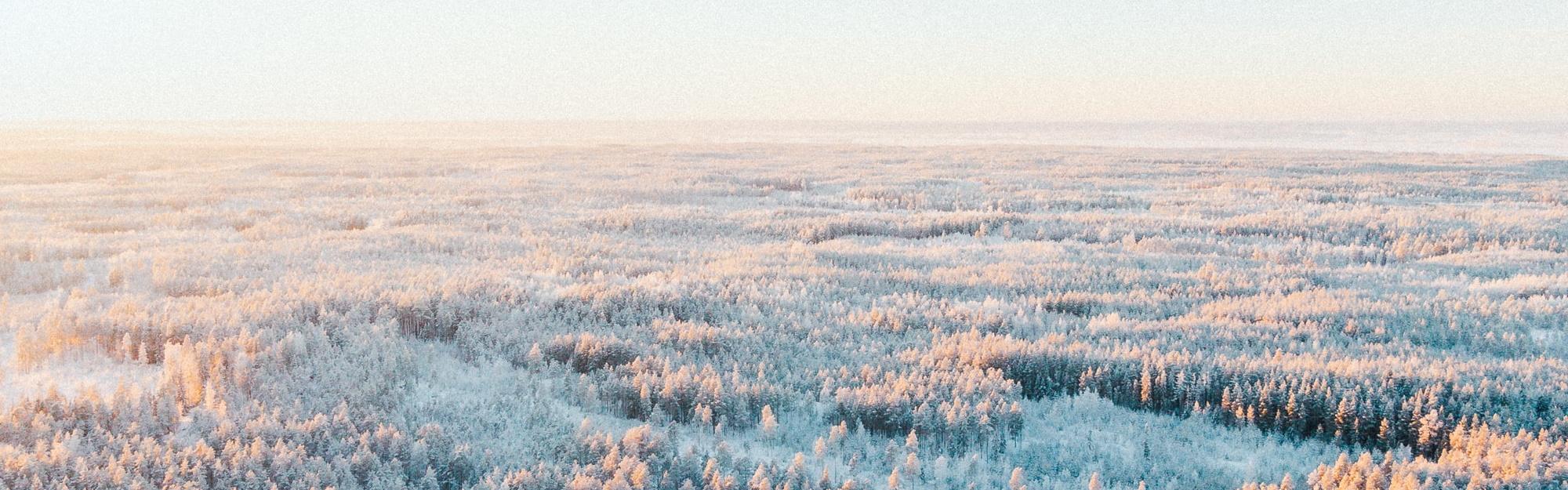
The country's stunning natural scenery is one of its most significant draws, and visitors can look forward to dense forests, over 188, 000 lakes and a spectacular archipelago along the southwestern coast. Winter months welcome the Northern Lights, whose magical display of colours is visible from various locations in Lapland; summer's midnight sun makes hiking, swimming and exploring well into the wee hours possible.
Those who long for Arctic adventures can stay in glass igloos or ice hotels, and there are many opportunities to try winter activities such dog sledding and snowshoeing. Reindeer safaris in Lapland are truly singular experiences.
The capital, Helsinki, is a hub of architecture and modern design, where travellers can visit some of the country's best landmarks. These include the UNESCO-listed Suomenlinna Fortress, which is an outstanding example of 18th-century military architecture, and the striking Temppeliaukio Church, which was carved directly into solid rock. Helsinki is also recognised as one of the world's smartest cities, and has extensive smart-city initiatives such as cutting-edge public transportation systems, smart infrastructure and digital services.
The cultural scene features world-class museums, and unique events such as the Midnight Sun Film Festival, during which films are shown around the clock over 24 hours of uninterrupted sunlight. Travellers should absolutely visit the city's Design District, which features distinctive boutiques, innovative design studios and galleries, and eye-catching public art installations.
Sauna bathing is highly recommended as a way to understand locals. The custom has been around for centuries and is used for relaxation, and as a means of mingling in a space where social status is set aside. Many Finnish saunas are in beautiful, natural settings. It's also worth checking out the country's traditional folk festivals such as Juhannus (Midsummer), which features bonfires along with traditional music and dancing.
Things to do in Finland
From the pulsating cultural scene in the capital, Helsinki, to the striking natural beauty of the jagged and icy countryside, Finland remains one of the more unexplored places in Europe. Its cities and towns offer many unique cultural and historical attractions, while its natural surroundings serve as a playground for both winter and summer activities, giving visitors much to choose from in this wonderland of contrasts.
Helsinki is the main point of entry for most visitors to Finland. This is where sightseers will find the country's finest museums, art galleries, restaurants and shopping. It's easy to spend a week exploring the city and enjoying the cultural attractions. Some of the most important sights include Finlandia Hall, the architecture around Senate Square, Suomenlinna, and the underground Rock Church.
Those with an interest in history or art will also want to allow some time to wander through the Finnish National Museum or the Finnish National Museum of Art. Nearby, the Open-Air Folk Museum on the island of Seurasaari reveals an in depth historical perspective on Finland through old houses and timber buildings.
From Helsinki there are a number of great day trips. Northeast of the city is the historic town of Provoo, which can be reached by road or by boat. To the north of Helsinki lies the medieval castle at Hameenlinna. To the west lies Turku, the ancient capital of Finland. Those looking to venture further afield will find a countryside of forests and lakes.
Finland travel info
Electricity
Electrical current is 230 volts, 50Hz. Standard European two-pin plugs are in use.
Language
Finnish and Swedish share status as Finlands official languages. Sami is spoken by an isolated population group in Lapland. English is taught at schools and is widely understood.
Money
The official currency of Finland is the euro (EUR), which is divided into 100 cents. Banks, ATMs and bureaux de change are available in all cities and airports; banks are closed on weekends. Card and digital payments have become the norm, with a substantial majority of transactions being conducted electronically. Travellers can rely quite easily on credit and debit cards, as well as digital wallets such as Apple Pay and Google Pay.
Tipping
Tips are not expected in Finland as a service charge is generally added to restaurant, bar and hotel bills. However, customers often choose to round up the bill when paying in cash. Taxi drivers also appreciate any small change or coins that are added to round up the fare.
Health
There are no major health risks associated with travel to Finland. EU nationals should ensure they have a European Health Insurance Card (EHIC), which entitles citizens to emergency medical treatment on the same terms as Finnish citizens. Comprehensive travel insurance is advised. After Brexit, the Global Health Insurance Card (GHIC) replaced the European Health Insurance Card (EHIC) for UK citizens. The GHIC allows UK citizens access to state healthcare during visits to the EU. The GHIC is not valid in Norway, Iceland, Liechtenstein or Switzerland, nor is it an alternative to travel insurance.
Safety
Crime levels are low in Finland and visitors can be assured of a trouble-free vacation. Drug offences and drinking and driving are dealt with very harshly. The main danger in the country is driving during the winter months, when icy roads are a hazard and cars must be fitted with snow tyres.
Local customs
The sauna is a Finnish way of life, so they are extremely popular. Words are taken seriously in Finland and people are held to what they say, so visitors should be sure of what they're saying before they speak.
Doing business
Business is conducted formally in Finland. A formal, understated sense of dress is important and being late is considered rude. Appointments should always be made and confirmed; meetings are often strictly business and are rarely over lunch. Finns do not require a strong relationship prior to doing business, with deals often taking place over the phone, fax, and via e-mail. However, the sauna is an important part of the culture and it is not unusual for business to be discussed in this environment if negotiations ever take place on a more sociable level.
Finns are very direct and prefer getting straight to the point; a verbal agreement may hold. Business cards are exchanged at meetings and should have, on the alternate side, details in Finnish. Business hours are generally 8am to 4pm Monday to Friday.
Duty free
Travellers arriving from the EU can enter Finland without restrictions on the quantity of purchases, provided they have been bought in the EU for personal consumption or as gift items. No restrictions are placed on meat and dairy products; some restrictions may apply to selected tobacco products. Travellers over 20 years arriving from non-EU countries are allowed to bring in the following items without incurring customs duty: 200 cigarettes, or 100 cigarillos, or 50 cigars, or 250g of tobacco. They can also bring in one litre of spirits with maximum 22 percent alcohol content, or two litres of alcoholic beverages not exceeding 22 percent alcohol content, as well as four litres of wine and 16 litres of beer.
Communications
The international country dialling code for Finland is +358. Free WiFi is available in hotels, cafes, restaurants, and similar establishments in all major towns and cities. There are free WiFi hotspots with high speed internet in Helsinki.
Passport & Visa
The borderless region known as the Schengen Area includes the following countries: Austria, Belgium, Czech Republic, Denmark, Estonia, Finland, France, Germany, Greece, Hungary, Iceland, Italy, Latvia, Lithuania, Luxembourg, Malta, The Netherlands, Norway, Poland, Portugal, Slovakia, Slovenia, Spain, Sweden and Switzerland. All these countries issue a standard Schengen visa that has a multiple entry option, and which allows the holder to travel freely within the borders of all the aforementioned countries. It is highly recommended that travellers' passports have at least six months' validity remaining after the intended date of departure from their travel destination. Immigration officials often apply different rules to those stated by travel agents and official sources.
Entry requirements
US citizens must have a passport that is valid for six months beyond the period of intended stay in Finland. A visa is not required for a stay of up to 90 days in a 180 day period.
UK citizens must have a passport that is valid for three months beyond the period of intended stay in Finland. A visa is not required for a stay of up to 90 days in a 180 day period.
Canadian citizens must have a passport that is valid for three months beyond the period of intended stay in Finland. A visa is not required for a stay of up to 90 days in a 180 day period.
Australian citizens must have a passport that is valid for three months beyond the period of intended stay in Finland. A visa is not required for a stay of up to 90 days in a 180 day period.
South African citizens must have a passport that is valid for three months beyond the intended period of stay and a valid Schengen visa to enter Finland.
Irish citizens must have a passport that is valid on arrival. No visa is required.
New Zealand citizens must have a passport that is valid for three months beyond the period of intended stay in Finland. A visa is not required for a stay of up to 90 days in a 180 day period.
Useful contacts
Helsinki Tourist Information, Helsinki: +358 (0)10 3101 3300 or www.visitfinland.com
112 (General)Climate in Finland
Considering how far north Finland is, the country has a milder climate than one might expect. In general, Finland has an extreme swing between summer and winter, with bitterly cold winters when temperatures drop to -4ºF (-20ºC) in many areas, particularly in northern Lapland. Summer, by contrast, can be surprisingly warm with temperatures rising to 68ºF (20ºC) or more. Temperatures as high as 86ºF (30ºC) are possible in the south and east of the country.
The capital, Helsinki, remains fairly temperate, varying between an average of 63ºF (17ºC) in July to 23ºF (-5ºC) in February. February is the coldest month in Finland and July is the warmest. Snow usually covers the ground in southern Finland from December to April, and northern Finland is snowbound from October to April.
In the far north, the sun does not set for about 73 days during summer, while in winter the sun remains below the horizon for a 51-day stretch. The winter night sky (especially in the northern areas of Finland) is often lit up with the seemingly magical light displays of the Northern Lights. If travellers want the mildest weather, the best time to visit Finland is between May and September. However, when they should go is largely dependent on what they want out of their holiday.