

Country guides
 Asia
Asia
Colourful and exotic, the vast archipelago of Indonesia encompasses more than 17,000 islands spread across 3,000 miles (5,000km) of ocean in Southeast Asia, including popular tourist destinations such as Bali, Sumatra and Java, as well as roughly 6,000 other relatively unknown but inhabited islands.
The mysterious islands of Indonesia each hold their own charms: the resorts of Bail offer nightclubs and beaches; the sprawling metropolis of Jakarta is a melting pot of Indonesian language, food, and architecture; the jungles of Sumatra are home to elephants, tigers, orangutans and other wild creatures; and the palaces and monuments of Yogyakarta offer a glimpse into an ancient civilisation.
Ongoing unrest in Indonesia has had a negative impact on tourism in recent years, but many adventurous travellers still dream of a holiday in the country.
Best time to visit Indonesia
Although the weather is pleasant for most of the year, the best time to visit Indonesia is in the dry season, between May and September. Monsoons can make more remote areas all but inaccessible in the wet months, but tourist hotspots such as Bali, Java and Sumatra are always enjoyable. The least ideal time to visit Indonesia is the period immediately following Ramadan, when the resorts are crowded and prices are high.
What to see in Indonesia
-Visit Borobudur, the largest Buddhist temple in the world.
-Get a feel for traditional Indonesian architecture at Indonesia Miniature Park.
-Hike to the colour-changing lakes of Mount Kelimutu on Flores.
-See the fierce stone carvings in Batubulan.
What to do in Indonesia
-Swim with dolphins off the coast of Lovina.
-Party in the busy nightclubs of Bali.
-Go whitewater rafting in Sidemen Valley.
-Spot long-tailed Macaques in the Sacred Monkey Forest of Padangtegal.
Getting to Indonesia
There are no direct cheap flights to Indonesia from the UK or the US, but connecting flights are available to Bali, landing at Denpasar International Airport.
Read
Map of the Invisible World by Tash Aw, Twilight in Jakarta by Mochtar Lubis, and A House in Bali by Colin McPhee.
Listen
Langgam Jawa and Balinese Gamelan.
Watch
Eat, Pray, Love (2010) and The Year of Living Dangerously (1982).
Drink
Brem bali (Balinese rice wine).
Eat
Nasi goreng (fried rice).
What to buy
Batik or songket fabric.
What to pack
Travellers should be sure to pack layers for a holiday in Indonesia: the cities and jungles can be swelteringly hot, while higher elevations will require a warm coat in the cooler months.
What's on in Indonesia
Get a taste of local arts and culture at the Bali Arts Festival, held each June and July. Bau Nyale is a summer seaworm festival with a surprisingly romantic origin. The Jakarta International Java Jazz Festival brings together artists from around the world each March.
Did you know?
-Indonesia is one of the world's largest producers of nutmeg.
-Of the more than 17,000 Indonesian islands only about 6,000 are inhabited by people.
-There are more than 300 ethnic groups in Indonesia.
A final word
A combination of sunny beaches, dense jungle, colourful traditions and rich history combine in Indonesia to form an ideal holiday destination.
Things to do in Indonesia
When it comes to attractions, Indonesia is as varied as its 17,000 islands, and visitors will be swamped with an endless list of things to see and do. There are cultural, historical, religious and natural attractions aplenty, and as such it may be wise to select one or two islands to explore in order to avoid suffering from a sightseeing overload.
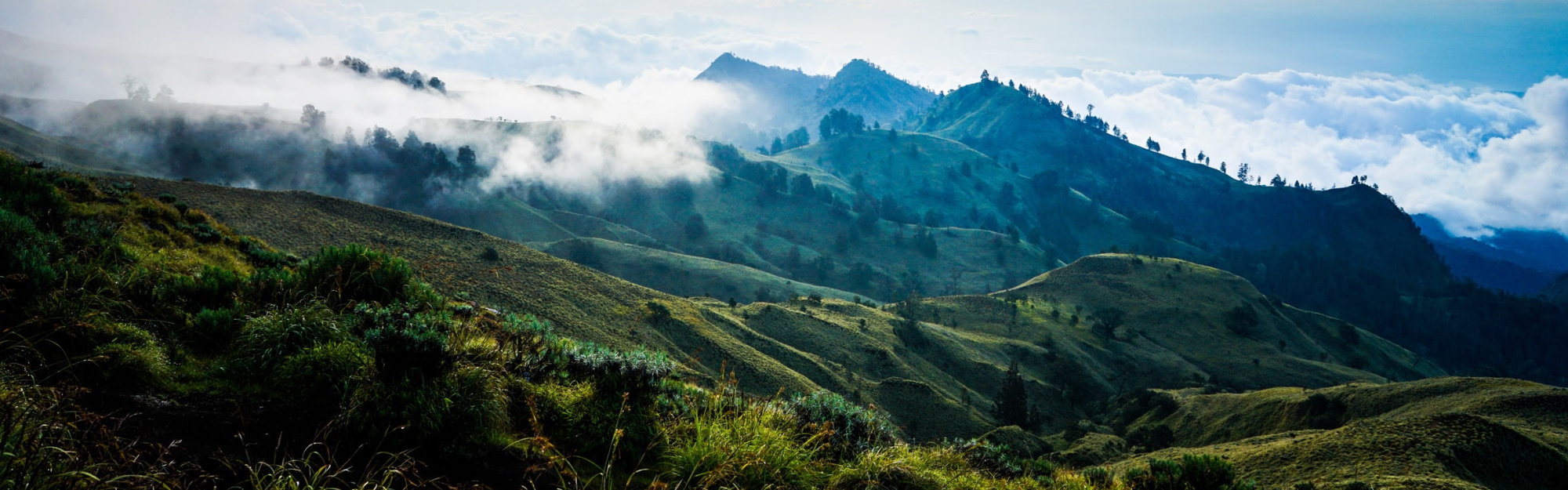
A popular place to tackle first is Java, a touristic favourite not least because of the incredible volcanic scenery in its Bromo-Tengger-Semeru National Park. The island is also home to the grungy metropolis of Jakarta and the historic Yogyakarta. On Java, travellers can find anything from glitzy nightclubs to ancient ruins to traditional puppet theatre. If the laid-back aesthetic of "Eat Pray Love" is what you are after, head straight to Bali. This hugely popular island has been luring in visitors for years thanks to its white sandy beaches, endless surfing spots and inland cultural attractions.
For a wider range of natural attractions, one can get lost on the mammoth island of Sumatra, which offers visitors traditional towns, such as Bukit Lawang and Bukittinggi, and stunning landscapes. Bigger yet is Borneo, which shares its jungle treks with visitors and native orangutans alike and is a delight to explore.
A lumbering ferry line connects all the main islands and attractions and is an adventure itself. The best time is visit is between May and September, during the dry season, which also makes transport easier.
Indonesia travel info
Electricity
Electrical current is 230 volts, 50Hz. A variety of plugs are in use, including the European two-pin.
Language
Bahasa Indonesia is the official language, but many dialects are spoken. English is widely understood in Jakarta and tourist resorts.
Money
The Indonesian currency is the Rupiah (IDR). Foreign currency can easily be exchanged at banks, hotels and money changers in major tourist destinations; the US dollar is the most accepted currency. Travellers should ensure that foreign bills are in good condition, as creased and torn notes may be refused. The best exchange rates in Indonesia are generally found in major centres such as Jakarta and Bali. Visa and Mastercard are accepted at more expensive hotels and restaurants, though smaller businesses may not have card facilities (especially in remote areas). ATMs are available in main centres. Small change is often unavailable so travellers should keep small denomination notes and coins for items such as bus fares, temple donations and soft drinks.
Tipping
Most midrange and all top-end hotels and restaurants add 21 percent to the bill for tax and service (called 'plus plus'). Where it is not included, a tip of 10 percent of the bill is appreciated. Tipping taxi drivers, masseurs and porters is not mandatory but, if travellers do choose to, a gratuity of IDR 5,000 to IDR 10,000 is appreciated.
Health
There are a number of health risks associated with travel to Indonesia and medical advice should be taken at least three weeks before departing. Yellow fever vaccinations are required for those coming from yellow fever areas. Vaccinations for hepatitis A and hepatitis B are recommended, and a typhoid vaccination may be recommended for those spending time in rural areas. Malaria is a year-round risk in much of Indonesia, but not in Jakarta or the tourist resorts of Java and Bali. The dengue fever mosquito is found throughout Indonesia and visitors should be aware of a significant increase in reported cases of dengue fever throughout the country during the rainy season. Outbreaks of chikungunya fever, also from mosquitoes, have occurred regularly in Indonesia in recent years. It is recommended that pregnant women, or women planning on becoming pregnant, should postpone their trip wherever possible, as Indonesia has recently been classed as a moderate risk zone for the Zika virus.
Travellers' diarrhoea is a major risk; visitors should only drink sealed bottled water and avoid dairy products, uncooked meat, salads and unpeeled fruit. Poor sanitation and eating contaminated food can increase the risk of cholera, typhoid and other diseases. The standard of local medical care is poor and very expensive. It is essential to take out comprehensive medical and travel insurance.
Safety
There is a risk of terrorism directed against foreigners throughout the country. It is recommended that visitors contact their foreign office for the latest travel advice before travelling to Indonesia. The security situation remains unsettled in central Sulawesi and foreigners are advised to avoid parts of Maluku, particularly Ambon. Visitors are also advised to be cautious if travelling to Aceh. Religious violence and unstable politics are an ongoing problem in Indonesia and travellers should keep an eye on current affairs.
Indonesia has a high crime rate and theft and petty crime is common in tourist areas and on public transport. Credit card fraud is on the increase. Flooding and landslides occur frequently during the rainy season between December and March. The country is also located on the volatile seismic strip named the "Ring of Fire", and as a result is often subject to earthquakes, volcano eruptions and occasionally tsunamis. Not all Indonesian airlines are considered safe and travellers should do some research into reputable airlines before booking.
Local customs
Indonesian people are generally friendly and polite and, while they understand that Western culture is different from their own, it will be appreciated if their customs are respected. Their religious customs should also be respected, particularly during the holy month of Ramadan, when eating, drinking and smoking during daylight hours should be discreet, in accordance with the Muslim culture. Visitors should always be polite and avoid public displays of affection. It is considered impolite to use the left hand for passing or accepting things. Appropriate dress is important in places of worship and women should dress conservatively, covering the shoulders and legs. The concept of 'saving face' is very important and public displays of anger, ridicule and blame are considered extremely vulgar and bad mannered. Gambling is illegal. The Indonesian government also adopts a zero tolerance approach to those engaged in illegal activities, such as dealing or consuming drugs while in the country, or the killing or illegal trading of endangered animals. Offenders have been given lengthy prison sentences, and have even been sentenced to death.
Doing business
Due to the hot and tropical climate, formal business attire in a light, cool material is the best option. Indonesia is largely Muslim so dress should be conservative, especially for women. Business cards are often exchanged and it is important to present and receive them with a slight bow and in both hands, or the right hand only, as the left is considered unclean. Some Indonesian names can be long and hard to pronounce and making an effort to get it right when greeting someone will be appreciated. It is best to use formal titles such as Doctor, or 'Bapak' for Mr and 'Ibu' for Madam. Business hours vary; government offices are usually open from 7am to 3pm and small businesses from 8am or 9am to 4pm or 5pm.
Duty free
Travellers to Indonesia who are over 18 years of age do not have to pay duty on 25 cigars or 200 cigarettes or 100g tobacco; alcohol up to 1 litre; perfume for personal use; and personal goods to the value of US$250 per passenger or US$1,000 per family. Travellers not entering on a tourist visa will have to pay duties for photo and film cameras unless these have been registered in their passport by Indonesian Customs. Electronic equipment may not be imported to the country. Prohibited items include Chinese medicines and prints, narcotics, firearms and ammunition, pornography, cordless telephones, fresh fruit or goods to be used for commercial gain.
Communications
The international access code for Indonesia is +62. The outgoing code is 00 followed by the relevant country code (e.g. 0044 for the UK). Buying a local SIM card is a good option as international roaming fees can be expensive. Free WiFi is available in most cafes, restaurants and hotels in main cities, towns and tourist areas.
Passport & Visa
Passengers to Indonesia of most nationalities can obtain a 30-day visa on arrival, provided that they arrive at a major Indonesian airport, their passport contains at least one unused visa page for the visa-on-arrival sticker, they are holding return or onward tickets, and the necessary travel documentation for their next destination, and they can show proof of sufficient funds to cover their stay in Indonesia (at least USD 1,000 or a valid credit card). The cost of a 30-day visa is USD 35. Those nationalities not permitted to purchase a visa on arrival must obtain a visa prior to their arrival in the country.
One visa extension, of a further 30 days, is possible, via an application made to the Immigration Office. Travellers should note that the day of arrival in Indonesia is counted as the first day of stay, and that fines will be levied against tourists who exceed their permitted period of stay. A yellow fever vaccination certificate is required.
It is highly recommended that traveller's passports have at least six months' validity remaining after the intended date of departure from their travel destination. Immigration officials often apply different rules to those stated by travel agents and official sources.
Entry requirements
US citizens must have a passport that is valid for at least six months from the date of their arrival in Indonesia. No visa is required for tourist stays of up to 30 days. Travellers may also apply for a Visa on Arrival or e-Visa for extended or multiple-entry stays.
UK citizens must have a passport that is valid for at least six months from the date of their arrival in Indonesia. No visa is required for tourist stays of up to 30 days. Travellers may apply for a Visa on Arrival or e-Visa if a longer stay or extension is needed. If travellers are applying for a visa in advance, it must be used within 90 days of issuance.
Canadian citizens must have a passport that is valid for at least six months from the date of their arrival in Indonesia. No visa is required for tourist stays of up to 30 days. A Visa on Arrival or e-Visa is available for longer stays. If travellers are applying for a visa in advance, it must be used within 90 days of issuance.
Australian citizens must have a passport that is valid for at least six months from the date of their arrival in Indonesia. No visa is required for tourist stays of up to 30 days. Visa on Arrival and e-Visa options are available and may be extended once for an additional 30 days. If travellers are applying for a visa in advance, it must be used within 90 days of issuance.
South African citizens must have a passport that is valid for at least six months from the date of their arrival in Indonesia. No visa is required for tourist stays of up to 30 days. Travellers may apply for a Visa on Arrival or e-Visa for longer stays.
Irish citizens must have a passport that is valid for at least six months from the date of their arrival in Indonesia. No visa is required for tourist stays of up to 30 days. Visa on Arrival and e-Visa options are available for longer stays.
New Zealand citizens must have a passport that is valid for at least six months from the date of their arrival in Indonesia. No visa is required for tourist stays of up to 30 days. Visa on Arrival and e-Visa options are available for extended stays. APEC Business Travel Card holders may enter visa-free for stays of up to 60 days.
Useful contacts
Indonesian Tourism Authority: www.indonesia-tourism.com
110 (Police); 113 (Fire); 118 (Ambulance)Climate in Indonesia
The Indonesian climate is almost entirely tropical. The warm waters of the ocean surrounding the archipelago ensure fairly uniform temperatures on land and there is little seasonal variation. There is also little difference in daylight hours from season to season. Indonesia experiences hot, humid weather throughout the year, especially in coastal areas. The inland highlands are somewhat cooler.
The climate of Indonesia is dominated by heavy monsoon rains, which occur between November and March and often cause damage and make local travel difficult (the rainy season is also the worst time for some mosquito-borne diseases). The best time to travel to Indonesia is during the dry season, between May and September. The rainy season varies in impact from island to island and, although some areas experience extreme conditions and flooding, others are less dire and can safely be visited during this time.
The busiest and most expensive times to visit Indonesia are in the holiday periods: at the end of Ramadan, when domestic tourists fill resorts and prices escalate; at Christmas; and mid-June to mid-July, when graduating high-school students arrive in hordes, mainly in Java and Bali.