

Country guides
 Africa
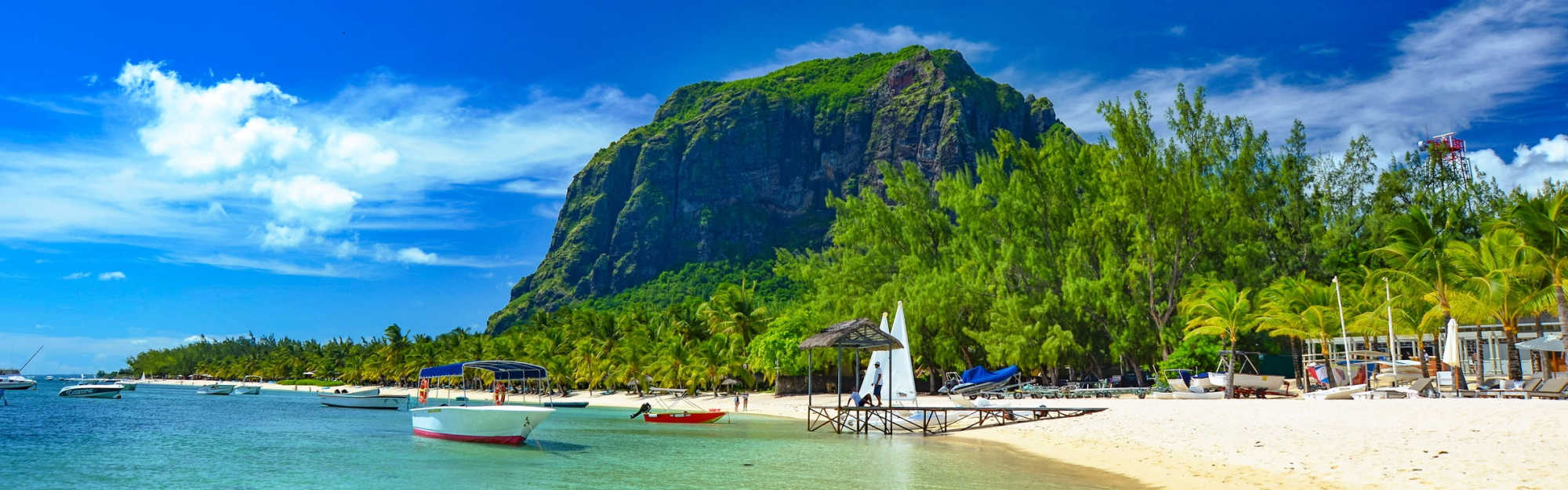
Often called Paradise Island, Mauritius is a glorious tropical destination of mighty waterfalls, powder-white beaches and extraordinary sapphire waters. Arabs, Africans, Indians, the Chinese and an assortment of European countries have all imprinted on the island over the centuries, adding layers to the culture that adventurers will love exploring.
Most visitors to Mauritius choose package-tour holidays and stay at one of the island's magnificent resorts. The capital, Port Louis, is the tourist hub of the island, but there are literally hundreds of excellent beach resorts lining the Mauritian coast. Most of the resorts sport luxury amenities such as golf courses and spas, and watersports such as diving, snorkelling, windsurfing, sailing, and fishing.
The one drawback to a holiday in Mauritius is the long flight time for British and American visitors. However, those who do brave the journey will be richly rewarded by one of the world's true island wonderlands, a place that somehow manages to be both comfortable and exotic, luxurious and pleasantly 'off the beaten track'.
Best time to visit Mauritius
The climate in Mauritius is hot and tropical, tempered by cooling trade winds. Winters are warm and dry, and summers are hot and humid, but the merciful sea breezes keep things from ever getting too unbearable. Mauritius can be visited at any time of year, though travellers should bear in mind that it rains heavily from January to March, and that this is also cyclone season. The peak tourist season in Mauritius is from October to April so, if travellers are planning on visiting during this period, they should be sure to book accommodation well in advance.
What to see in Mauritius
-The Ile aux Aigrettes Nature Reserve is a premier eco-tourism site, offering guided jungle tours of an island rich in endemic fauna and flora.
-Relax on Mauritius' legendary beaches, including Flic en Flac, Grand Baie (great for watersports), and Trou-aux-Biches (for diving and snorkelling).
-A visit to Grand Bay, the centre of tourist activity in Mauritius, is a must for visitors to the island.
What to do in Mauritius
-Get involved in some watersports such as surfing, sailing, fishing, diving, or parasailing.
-Search the nooks and crannies of the open-air Flacq Market for great bargains and souvenirs.
-Take a jungle hike to a refreshing waterfall in Black River Gorges National Park.
Getting to Mauritius
Mauritius is perceived to be difficult to reach for British and American tourists, though in reality this is not the case. Direct flights to Mauritius are available from a number of UK airports, with the flight taking a manageable 10 hours. American tourists will have to book a connecting flight, meaning they might be in transit for a full 24 hours.
Read
Georges by Alexandre Dumas and The Mauritius Command by Patrick O'Brian.
Watch
Ready (2011)
Eat
Creole rougailles, spicy biryanis or tandoori curry dishes are common mains, with gateaux or traditional Indian sweets for dessert.
Drink
Cane rum, Mauritius' main alcoholic product, which is delicious with coconut water and a dash of lime.
What to buy
Carved wooden figurines, home-made jewellery, perfumes made from essential oils, hand-woven rattan bags, and local spices all make great souvenirs.
What to pack
Visitors should make sure they have a small backpack with them to take on day excursions, and should always carry plenty of bottled water around. They should pack sturdy shoes to protect their feet on some beaches, as there is a threat of sharp coral and stonefish stings.
What's on in Mauritius
The Festival International Kreol (November, December) is a celebration of Creole culture held in various venues across the island; poetry readings, Sega dancing, music performances, art exhibitions, and epic parties characterise this jubilant event. Mauritius celebrates its Independence Day on March 12, prompting impressive firework displays and wild parties in the capital of Port Louis.
Did you know?
-The dodo, the famous flightless bird, was native to Mauritius until it was hunted to extinction by European settlers.
-Mauritius is the most densely populated country in Africa.
A final word
An enticing and exotic destination, Mauritius is a great choice for an island getaway packed with brilliant sunshine, beautiful beaches, and unbeatable outdoor activities.
Things to do in Mauritius
Most visitors to Mauritius have been lured by the beautiful stretches of coastline, the warm ocean, plentiful sunshine, numerous watersports, and high-quality resorts. However, things to see and do in the destination extend far beyond its white-sand beaches and clear turquoise waters.
Visitors can see a replica of the legendary Dodo at Port Louis' Natural History Museum, and explore the Central Market, a bustling hub of culture, colour, and bargains. They can also enjoy the impressive and historic manor houses in Moka and take in Chamarel's rainbow of coloured sands, the 'Seven Coloured Earth'.
Black River Gorges National Park is great for picnics, hiking and scenic drives and is home to wonderful waterfalls and wildlife, while La Vanille Reserve des Mascareigne has thousands of crocodiles and giant tortoises.
It is well worth taking excursions inland to learn about the island's interesting history and culture, and to see how local Mauritians live outside of the fancy beach resorts. Learning the local Sega dance is a delight for visitors, and it is particularly special to seek out night spots frequented by locals rather than just sticking to the resort entertainment. Its lovely weather makes Mauritius a perfect year-round holiday destination.
Mauritius travel info
Electricity
The electrical current is 230 volts, 50Hz. Square three-pin plugs and round two-pin plugs are commonly used.
Language
English is the official language of Mauritius, but the most widely used language is French and the local dialect, Creole. Hindi, Urdu, and Chinese are also spoken.
Money
The currency of Mauritius is the Mauritian rupee (MUR), which is divided into 100 cents. Foreign currency can be exchanged at banks, bureaux de change and larger hotels. ATMs are widely available in most big towns and some hotels, and major restaurants and large retailers accept major credit cards.
Tipping
Tipping in Mauritius is discretionary, though some extra money paid for services, such as a taxi ride, waitering or cleaning, is appreciated. In the hotels travellers can add around five percent of their incidental expenses when paying the bill on departure if service has been good. Government tax is added to all hotel and restaurant bills and this is included in the basic price. However, all incidental hotel expenses will incur tax, which is generally included in the price quoted.
Health
No vaccination certificates are required for entry into Mauritius, though vaccinations are usually recommended for hepatitis A and hepatitis B. It's also a good idea to pack shoes that can be worn in the sea to protect against sharp coral, sea urchins and stonefish. Stonefish stings are uncommon but can in some cases be fatal. Visitors should seek urgent medical attention if stung; many hotels stock anti-venom serum.
Visitors should take precautions against mosquito bites as there have been several cases of the Chikungunya virus; malaria medication may also be necessary for those visiting rural areas. Travellers should stick to bottled water. Medical facilities are good and free in public hospitals, but private clinics are expensive and medical insurance is recommended.
Medications are usually easily available but, for peace of mind, it is better that travellers bring any prescription medication with them, in its original packaging, with a signed and dated note from their doctor detailing what it is and why they need it. Visitors can bring common medicines for personal use into the country but must carry a copy of the prescription and proof that the drugs have been obtained legally. Other drugs such as tranquillisers, hypnotics, narcotics, and other strong painkillers will require prior authorisation.
Safety
Mauritus is generally regarded as a safe country but visitors should take regular precautions against petty crime. They should avoid walking alone in unfamiliar areas at night and keep valuables out of sight at all times. Visitors should be aware of pick pocketing in the central market in Port Louis. Care should be taken of bags and valuables when visiting popular tourist areas such as Pereybere, Grand Baie, Flic en Flac, and Tamarin.
Local customs
Homosexuality is not technically illegal in Mauritius, but sodomy is and it is best to exercise discretion, as the locals are sometimes conservative. Penalties for drug trafficking and use are severe, and any personal medicinal drugs should be covered by a prescription. By law, scheduled drugs such as tranquillisers, morphine, and other strong painkillers require authorisation before import.
Doing business
Port Louis is the main business hub of Mauritius. Standard business practice applies to the island: punctuality and politeness are important, handshakes and the exchanging of business cards take place at meetings, and business attire is worn.
It is, however, possible to be somewhat more casual in terms of dress and visitors can take the cue from their hosts. Lightweight materials are recommended due to the tropical climate. Business hours vary, but most businesses are open at least from 9am to 4pm Monday to Friday, with some businesses open for a half-day on Saturdays.
Duty free
Travellers to Mauritius over 18 years do not have to pay duty on 250g tobacco; 1 litre spirits and 2 litres of wine, ale or beer; perfume and eau de toilette for personal use. Prohibited items include sugarcane and fresh fruit from parts of Asia.
Communications
The international access code for Mauritius is +230. International roaming and local SIM cards are available; WiFi connections are widespread in hotels, resorts and guesthouses.
Passport & Visa
All foreign passengers to Mauritius must hold a confirmed booking for accommodation in Mauritius, return or onward tickets to their country of origin or residence, and the necessary travel documentation for their next destination. It is highly recommended that travellers' passports have at least six months' validity remaining after the intended date of departure from their travel destination. Immigration officials often apply different rules to those stated by travel agents and official sources.
Entry requirements
US citizens must have a passport that is valid for the period of intended stay in Mauritius. On arrival, passports will be stamped allowing entry to the country for 60 days.
British citizens must have a passport that is valid for the period of intended stay in Mauritius. On arrival, passports will be stamped allowing entry to the country for 60 days.
Canadian citizens must have a passport that is valid for the period of intended stay in Mauritius. On arrival, passports will be stamped allowing entry to the country for 60 days.
Australian citizens must have a passport that is valid for the period of intended stay in Mauritius. On arrival, passports will be stamped allowing entry to the country for 60 days.
South African citizens must have a passport that is valid for the period of intended stay in Mauritius. On arrival, passports will be stamped allowing entry to the country for 60 days.
Irish citizens must have a passport that is valid for the period of intended stay in Mauritius. On arrival, passports will be stamped allowing entry to the country for 60 days.
New Zealand citizens must have a passport that is valid for the period of intended stay in Mauritius. On arrival, passports will be stamped allowing entry to the country for 60 days.
Useful contacts
Mauritius Tourism Website: www.tourism-mauritius.mu
Emergencies: 999 or 112Climate in Mauritius
With a mild sub-tropical climate, Mauritius has only two seasons, with minimal differences between them, making this island a perfect year-round destination. The summer runs from November to April, with temperatures reaching as high as 93°F (34°C) on the coast.
Humidity is highest from December to April but is never unbearable, particularly on the coast where there is an almost constant sea breeze. The northeast (around Grand Baie) is more protected from the southeast trade winds.
Cyclones, with strong winds and heavy rain, can occur between January and March, and Mauritius will normally experience about three or four of these a year during this period. Each cyclone usually lasts a couple of days, and flooding can result.
The climate in Mauritius remains good even during winter when the temperature only drops a few degree. There is still plenty of sunshine and it is a very pleasant time of year to visit. The sea is warm throughout the year, with temperatures varying from 75°F (24°C) in the winter to 82°F (28°C) in the summer.
The peak holiday season runs from October to April, with hotel prices dropping over the winter months. If travellers plan to visit during peak season, they should be sure to book accommodation far in advance to avoid disappointment. To avoid the rainy season, they should visit anytime between April and December, avoiding the rainy season in January, February and March. Visitors should ideally avoid the east coast in July and August, when the wind is at it's strongest.