

Country guides
 Asia
Asia
Known as the 'Pearl of the Indian Ocean', Sri Lanka is a breath-taking island where golden beaches fringe lush tropical jungles, and misty mountains rise above the horizon. This teardrop-shaped gem offers a landscape of dramatic beauty through rolling hills scattered with more than a hundred cascading waterfalls, and countless hiking trails that lead to unforgettable viewpoints such as the legendary World's End.
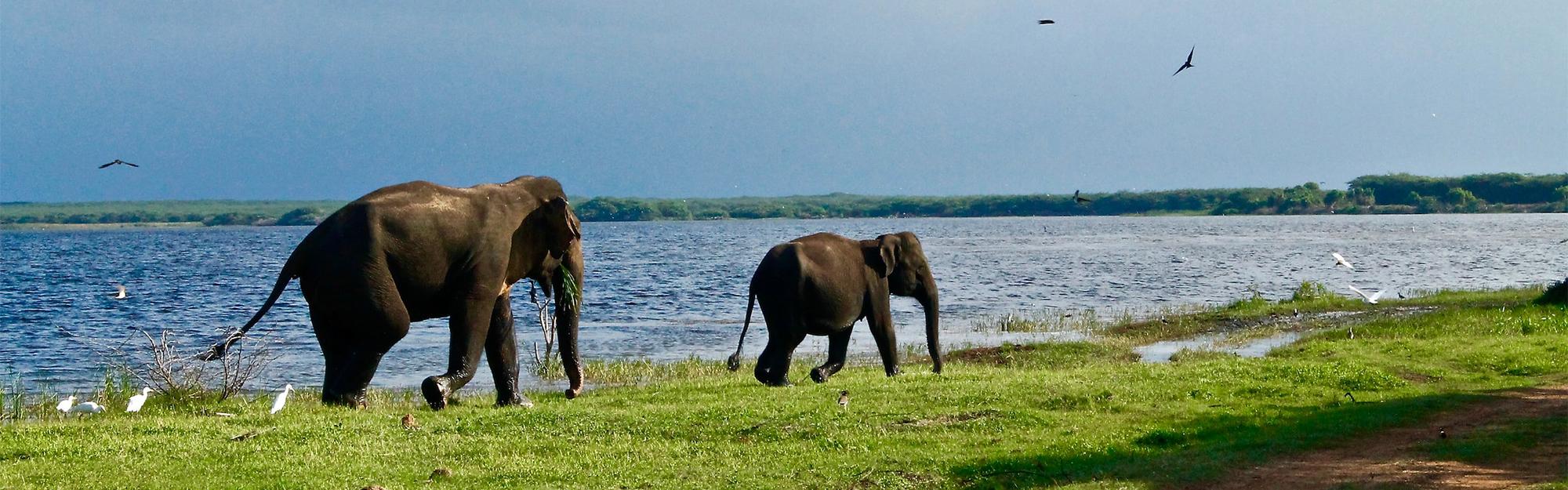
Wildlife lovers will find paradise here, as Sri Lanka is teeming with a host of exotic animals that ranges from elusive leopards and playful monkeys to crocodiles and a dazzling array of birdlife. However, it's the island's elephants that truly steal the show. Sanctuaries across the country offer visitors the chance to get up close to these gentle giants in ethical and enriching ways.
Sri Lanka's charm runs deep into its past. Ancient cities such as Anuradhapura and Panduwasnuwara reveal a rich Buddhist heritage through sacred temples, ruins, and relics that have endured for thousands of years; silent witnesses to a deeply spiritual and storied culture.
While it may not be known for glitzy nightlife or futuristic skylines, cities such as Colombo and Kandy still offer vibrant experiences, from lively markets and flavourful cuisine to fascinating museums that unveil the layers of Sri Lanka's unique identity.
Often overshadowed by better-known destinations such as Thailand or Indonesia, Sri Lanka remains a hidden treasure. For travellers seeking something authentic, immersive, and just a little off the beaten path, this island offers a journey like no other.
Best time to visit Sri Lanka
Sri Lanka's dry season lasts from November to April on the west coast, and May to September on the east coast, so the best time to visit depends on where travellers want to go. The country's proximity to the Equator ensures that heat and sunshine are almost ever-present!
What to see in Sri Lanka
-See the remains of an ancient royal fortress at Sigiriya.
-Visit the ancient sacred city of Anuradhapura.
-Wander through the busy markets of Pettah.
-Get a taste of modern Buddhism at Wewurukannala Temple.
What to do in Sri Lanka
-Visit baby elephants at the Pinnawela Elephant Orphanage.
-Spot monkeys, leopards, crocodiles, elephants and other wildlife in Yala National Park.
-Go on a pilgrimage to the summit of Adam's Peak.
-Hike to World's End in Horton Plains National Park.
Getting to Sri Lanka
Getting to Sri Lanka from the UK is fairly simple, as several airlines offer direct cheap flights to Sri Lanka from London. There are no direct flights to Sri Lanka from the US; however, there are indirect flights via several major cities. International flights land at Colombo's Bandaranaike International Airport.
Read
Running in the Family by Michael Ondaatje and Anil's Ghost by Michael Ondaatje.
Listen
Viridu or Baila
Watch
Elephant Walk (1954), The Bridge on the River Kwai (1957) and Flying Fish (2011).
Drink
Ceylon Arrack, a traditional spirit distilled from the sap of the coconut flower or Portello, a carbonated grape-flavoured drink that's popular with locals.
Eat
Sri Lankan curry and rice served on banana leaves. Hoppers, a crepe-like bowl made from rice flour and coconut milk (it's a popular street food).
What to buy
Gold and silver jewellery and gemstones, brass and lacquer ware.
What to pack
It's best that travellers bring all medications and toiletries they will need, as the selection in Sri Lanka can be limited.
What's on in Sri Lanka
Traditional forms of Sri Lankan art and dance are on display in Colombo on Navam Perahera National Day.
Did you know?
-Sri Lanka is the world's largest tea exporter, although the plant was only introduced in 1824.
-Sri Lanka was the first country to have a democratically elected female head of government.
-Sri Lanka is sometimes affectionately called 'The Land of Smiling People' thanks to its friendly locals.
A final word
Breath-taking natural beauty and ancient culture make Sri Lanka the undiscovered gem of the Indian Ocean.
Things to do in Sri Lanka
Sri Lanka's tourist attractions reflect a long and captivating history, offering visitors a wealth of cultural and natural wonders to explore. The island is home to seven UNESCO World Heritage Sites, each one bearing witness to its rich and complex past. Among the most remarkable are the ancient cities of Anuradhapura and Polonnaruwa, the iconic rock fortress of Sigiriya, the cave temples of Dambulla, and the sacred ruins of Panduwasnuwara.
In the capital, the National Museum in Colombo is a worthwhile stop, housing a fascinating collection of artefacts that shed light on Sri Lanka's multi-layered heritage. This cultural complexity is also on full display in vibrant neighbourhoods such as Pettah Bazaar, where the streets come alive with exotic scents, bustling trade, and an authentic local energy.
For a more tranquil experience, visitors can head south to the charming seaside town of Galle, with its colonial architecture and relaxed pace, or travel inland to the serene lake city of Kandy, where ancient temples and historic landmarks offer a peaceful retreat.
Nature lovers and adventure seekers aren't left out either. The dramatic Yala National Park offers thrilling wildlife safaris, while the climbs up Sigiriya Rock or the sacred Adam's Peak reward hikers with breath-taking views and spiritual resonance.
And of course, no visit to Sri Lanka would be complete without time on its golden beaches, which stretch for hundreds of miles. Top coastal destinations include the quiet fishing village of Marawila on the northwest coast, the laid-back resort town of Negombo, and the beautiful Weligama Bay in the south, known for its sweeping curves and turquoise waters.
Sri Lanka travel info
Electricity
The electrical supply is 230 volts at 50 Hz, using round, three-pin plugs.
Language
Sinhala and Tamil are the official languages, though the former has far more speakers. English is spoken at most tourist establishments.
Money
The unit of currency is the Sri Lankan Rupee (LKR), divided into 100 cents. ATMs are increasingly common, especially in urban areas, though international cards may be less frequently accepted outside major cities or tourist hotspots. Credit cards are widely accepted in larger centres, making it easy to pay for goods and services, but as with any destination, it's wise to keep an eye on card transactions to ensure security.
For those who prefer cashless options, Apple Pay and Google Pay are becoming more accepted in Sri Lanka, particularly in urban areas and at larger establishments. While these options are growing in availability, their use may still be somewhat limited outside major cities, so it's a good idea to carry some physical cash as a backup.
Foreign currency can be exchanged conveniently at bureaux de change, banks, or hotels, with banks often offering the most favourable rates. Banks are closed on Sundays, so it's best to plan ahead for any exchange needs.
Tipping
A 10 percent service charge is added to most restaurant and hotel bills. Tipping is appreciated for almost all services, and small amounts are sufficient; a 10 percent tip will be fine if there's any doubt as to a suitable amount.
Health
Food and waterborne illnesses are the most common health concerns for travellers to Sri Lanka. It's best to stick to bottled or boiled water, avoid ice in drinks, and eat food that's freshly cooked and served hot. Visitors are usually advised to get vaccinated for hepatitis A and B, typhoid (especially if visiting rural areas), and Japanese encephalitis for longer stays in the countryside. Routine vaccinations should be up to date. A yellow fever vaccination certificate is only required if arriving from a country where the disease is present. Mosquito-borne illnesses such as dengue, chikungunya, and Japanese encephalitis are present, so bring insect repellent and wear protective clothing. Travel insurance is strongly recommended. Medical care outside Colombo and other major cities may be limited, and some medications can be hard to find so bring any essential prescriptions.
Safety
Most visits to Sri Lanka are safe and enjoyable. As with travel anywhere, visitors should stay aware of their surroundings and keep an eye on local news. Problems involving tourists are rare, but it's still wise to take basic precautions. Women travelling alone should avoid isolated places after dark. Credit card fraud can happen, so stick to ATMs in trusted locations and check transactions regularly. Since the civil war ended in 2009, the north and east have opened up and are now popular with visitors.
Local customs
Sri Lanka is a culturally rich and welcoming destination, and a little local awareness goes a long way. Visitors should avoid photographing military or government buildings, and shouldn't pose with their backs to Buddha statues, as this is seen as disrespectful. They should also dress modestly when visiting temples by covering their shoulders and knees, and removing shoes and hats before entering. Topless sunbathing is not permitted.
Same-sex relationships are still criminalised under Sri Lankan law, though enforcement is rare and there's growing support for reform. LGBTQ+ travellers should exercise discretion in public.
Drinking and smoking are fine in licensed venues but often restricted in public areas such as transport hubs and religious sites. Travellers should look for signage or ask locally if they're unsure.
Respect and politeness are highly valued. Public criticism or raised voices can cause embarrassment, so a calm and courteous approach is appreciated. Understanding these customs will help ensure a smooth and respectful visit.
Doing business
In Sri Lanka's warm climate, business attire tends to be conservative. In formal sectors, men are typically expected to wear lightweight suits, while women often opt for conservative dresses or business suits. In more casual sectors, attire may be less formal, but it's advisable to dress neatly and professionally. Appointments should be scheduled in advance, and it's customary to exchange business cards upon first meeting. Punctuality is highly valued; arriving late for meetings is generally considered impolite. Standard business hours are from 8.30am to 5pm, Monday through Friday, with a lunch break around midday.
Duty free
Visitors over 18 may bring in, duty-free, up to two litres of wine, 1.5 litres of spirits, 250ml of eau de toilette, a small amount of perfume, and souvenirs worth up to USD 250. Tobacco allowances include 200 cigarettes, 50 cigars, 200g of tobacco, or 200 beedi. These items must be declared on arrival.
A certificate of registration for tobacco products is required only for Sri Lankan residents, not tourists carrying permitted amounts. Personal items of value should also be declared to ensure duty-free re-export.
Restricted items include firearms, ammunition, explosives, plants, fruits, birds, prescription medication (only for personal use), and goods for commercial purposes. Prohibited items include narcotics, pornography, and material offensive to religious beliefs.
Communications
The international country dialling code for Sri Lanka is +94. The outgoing code is 00, followed by the relevant country code (e.g. 0044 for the United Kingdom). Travellers can purchase local prepaid SIM cards for unlocked phones; WiFi is standard in hotels and guesthouses.
Passport & Visa
Visitors to Sri Lanka must have a passport with at least six months of validity from the date of arrival. While a return or onward ticket isn't mandatory for the Electronic Travel Authorization (ETA), it's strongly recommended. Immigration officials may request proof of onward travel to ensure visa compliance.
Travellers must also show proof of sufficient funds for their stay, though there's no set amount. Bank statements or credit card statements are commonly accepted as proof.
An ETA can be applied for online before travel or obtained on arrival, but it's recommended to apply in advance to avoid delays.
It's essential that travellers' passports remains valid for at least six months beyond their intended departure date from Sri Lanka. Immigration officials may apply different rules than those provided by travel agents or official sources.
Entry requirements
US nationals require passports that's valid for at least six months from their expected date of departurre. Travellers must apply online for an Electronic Travel Authorization (ETA), the short-term visa required to visit Sri Lanka. An ETA allows for a short visit of up to 30 days.
UK nationals require passports that's valid for at least six months from their expected date of departurre. Travellers must apply online for an Electronic Travel Authorization (ETA), the short-term visa required to visit Sri Lanka. An ETA allows for a short visit of up to 30 days.
Canadian nationals require passports that's valid for at least six months from their expected date of departurre. Travellers must apply online for an Electronic Travel Authorization (ETA), the short-term visa required to visit Sri Lanka. An ETA allows for a short visit of up to 30 days.
Australian nationals require passports that's valid for at least six months from their expected date of departurre. Travellers must apply online for an Electronic Travel Authorization (ETA), the short-term visa required to visit Sri Lanka. An ETA allows for a short visit of up to 30 days.
South African nationals require passports that's valid for at least six months from their expected date of departurre. Travellers must apply online for an Electronic Travel Authorization (ETA), the short-term visa required to visit Sri Lanka. An ETA allows for a short visit of up to 30 days.
Irish nationals require passports that's valid for at least six months from their expected date of departurre. Travellers must apply online for an Electronic Travel Authorization (ETA), the short-term visa required to visit Sri Lanka. An ETA allows for a short visit of up to 30 days.
New Zealand nationals require passports that's valid for at least six months from their expected date of departurre. Travellers must apply online for an Electronic Travel Authorization (ETA), the short-term visa required to visit Sri Lanka. An ETA allows for a short visit of up to 30 days.
Useful contacts
Sri Lanka Tourism: +94 11 242 6900 or www.srilanka.travel
110 (Ambulance), 118 (Police)Climate in Sri Lanka
Sri Lanka's tropical climate features distinct wet and dry seasons, though temperatures remain consistently hot and humid throughout the year. The weather in Sri Lanka is affected by two separate monsoon systems.
The southwest of the island is affected by the Yala Monsoon, which brings heavy rainfall between May and August. Its dry season typically runs from December to March. Meanwhile, the Maha Monsoon impacts the northern and eastern regions from October to January, with drier conditions from May to September. The southwest tends to receive significantly more annual rainfall than the north and east. Additionally, an inter-monsoonal period in October and November can lead to showers across the entire island.
Temperatures are relatively constant throughout the year, with coastal areas such as Colombo averaging around 81°F (27°C) year-round.
For travellers, the best time to visit depends on which part of the island they're heading to. The ideal months for exploring the west and south coasts, as well as the Hill Country, are from December to March. If travellers are planning to visit the east coast or the ancient cities, April to September offers the best weather. Sri Lanka's peak tourist season runs from December to March, when many visitors arrive to escape the cold European winter.