

Country guides
 Europe
Turkey offers a blend of sun-kissed beaches, ancient ruins and vibrant modern life in one unforgettable package. Whether travellers are drawn to pristine shores, epic religious landmarks or mouthwatering cuisine, Turkey welcomes them with open arms and endless experiences.
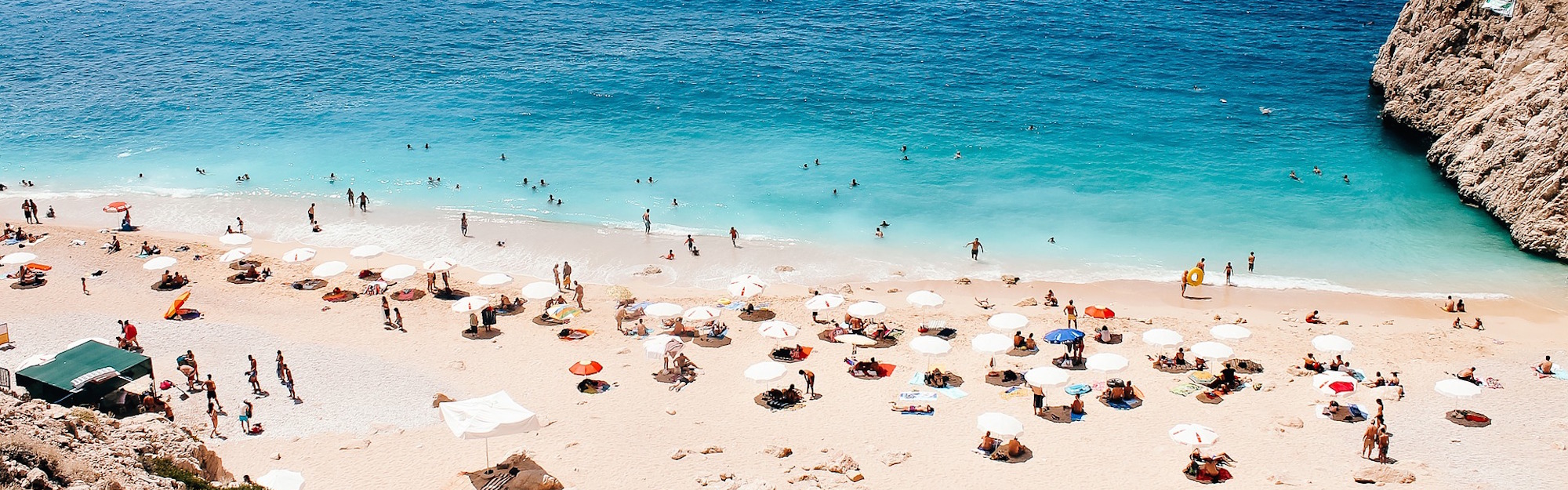
From its western beach resorts along the Aegean coast to the rugged Anatolian mountains in the east, the country is a tapestry of natural wonders. Visitors can enjoy the turquoise waters of the Mediterranean, explore ancient cities that tell stories of civilisations long past, and immerse themselves in the rich cultures that have shaped this land for millennia.
One of Turkey's greatest treasures is the city of Istanbul, which spans two continents across the Bosphorus. Here, Ottoman mosques and Byzantine churches sit alongside Roman ruins, while cutting-edge nightlife and contemporary retail developments reflect the city's dynamic fusion of old and new.
While the picture-perfect resorts of Oludeniz, Bodrum and Marmaris are undeniably alluring, there's much more to discover. Travellers can visit the otherworldly landscapes of Cappadocia, where rock-hewn homes and ancient churches are carved into the soft volcanic rock, or take time to reflect at Gallipoli, a poignant World War I site. They can also explore the awe-inspiring ruins of Ephesus and Pergamon, and unwind in the thermal waters of Pamukkale.
History, adventure, relaxation or cultural immersion: Turkey has a captivating adventure for every kind of traveller.
Best time to visit Turkey
Turkey is best visited during the periods April to June and September to October, when the weather is warm without being too hot, and the bulk of the summer tourist rush is over. Istanbul has mostly mild weather and can be visited year-round. The busiest times are July and August, in addition to early September. Travellers should bear in mind that, during this time, beaches and attractions are at their most crowded and prices at their highest.
What to see in Turkey
-Enjoy the Turkish west coast, whose luscious blue-shaded ocean gave the colour turquoise its name.
-Visit ancient Troy, and get bonus views over the Dardanelles and the hills of Gallipoli.
-Ancient Ephesus ranks as one of the world's greatest historical sites and is a better preserved Roman ruin that any found in Italy.
-See the Blue Mosque, a global symbol of Istanbul that's famed for its elegant dome and minarets.
-Explore the riches of Topkapi Palace Museum in Istanbul; then buy some personal treasures at the famed Grand Bazaar.
What to do in Turkey
-Go hot-air ballooning over Cappadocia's unique landscape at sunset.
-Visit the 'land of beautiful horses' and give horseback riding a try.
-Taste kebab, kofta and strong coffee in a traditional cafe.
-Try yachting along the Turkish Riviera.
Holiday Resorts in Turkey
Turkey has many popular resorts for sun-seekers looking for the perfect beach holiday. Each resort has its own character, varying from lively nightlife to laidback and secluded, and from singles' heaven to family-friendly paradise.
Getting to Turkey
There are many direct flights to Turkey from major European hubs, with frequent departures from London and several airports along the US East Coast.
Read
Novelists, Orhan Pamuk and Jenny White. Agatha Christie's Murder on the Orient Express.
Watch
Midnight Express (1978), Topkapi (1964), Gallipoli (1981), Murder on the Orient Express (1974), and Taken 2 (2012)
Eat
Shish kebabs, pide, meze platters, and dolmades.
Drink
Raki (an anise-flavoured spirit), strong Turkish coffee, and sahlep (a hot and creamy winter beverage).
What to buy
Turkish carpets and kilims, inlaid woodcrafts, shisha pipes, and ceramic tiles.
What to pack
A jumper or light jacket is useful for the evenings. Clothes are particularly good value in Turkey so leave some room in the suitcase and stock up before returning home.
What's on in Turkey
Experience cutting-edge art at Turkey's premier contemporary art fair, Contemporary Istanbul. Witness or particpate in the Bosphorous Swim.
Did you know?
-The world's first church is St. Peter's, which is found in Antioch (Antakya).
-The town of Harran has been continuously inhabited for 6000 years.
-Istanbul is located on two continents.
A final word
Turkey is a fascinating, beguiling country that bridges a gap between Europe and the Middle East. It's bursting at the seams with historical riches, natural beauty and sunny beaches.
Things to do in Turkey
Turkey is a country where the past and present intertwine to offer an unforgettable blend of history, natural beauty and warm hospitality. From the ancient ruins of Ephesus to the surreal white terraces of Pamukkale, the country is a treasure trove of experiences waiting to be discovered.
In Istanbul, the echoes of history are alive in its iconic mosques, palaces and bustling bazaars. The Mediterranean coast entices with golden beaches and crystal-clear waters, while the otherworldly landscapes of Cappadocia invite travellers to soar above in a hot air balloon, taking in views of its unique rock formations. Turkey's rich heritage also comes alive in the ancient city of Troy and the rock-hewn churches of Göreme.
Beyond its history, Turkey offers a culinary adventure with dishes that tantalise the senses, from succulent kebabs to irresistible baklava. Every corner of this diverse country offers something extraordinary, whether visitors are seeking relaxation, exploration or a taste of something new. Turkey promises not just a holiday, but a journey through time and culture, leaving travellers with memories that last a lifetime.
Turkey travel info
Electricity
The electrical current is 220 volts AC, 50Hz. The European two-pin plug is standard.
Language
Turkish is the official language, but English is widely understood in the main tourist areas.
Money
The official currency is the Turkish lira (TRY), which is divided into 100 kurus, and currency can be exchanged at banks, exchange booths, post offices, airports and ferry ports. Travellers should note that banks have the worst rates but will exchange lesser known foreign currencies. Banks open mainly Monday to Friday, but some are open daily in tourist areas. Major credit cards are widely accepted; Apple Pay and Google Pay are increasingly supported. Some hotels in the most popular destinations accept US dollars as payment.
Tipping
Tipping is appreciated in Turkey and it's often preferred that patrons leave service charges in cash rather than on a card. The customary amount is 10 to 15 percent of the bill, though guests at Turkish baths (hammams) typically leave between 10 and 20 percent of the total bill if service has been good. It's enough to round up the bill for taxi fares.
Health
Mosquitoes can be an irritation in mid-summer, but malaria isn't considered a significant risk in the main tourist areas of the west and south-west. However, there's a low risk in rural and southeastern areas, so travellers planning to visit those regions should consult with a healthcare provider. Most tap water in larger towns and cities is chlorinated and safe to drink, but bottled water is still recommended, especially in rural areas. Food from street vendors should be approached with caution unless it's clearly fresh or hot. The quality of healthcare in state hospitals may not meet high standards, but private hospitals in cities such as Ankara and Istanbul offer modern facilities and are well-regarded. In case of emergency, travellers should dial 112; travel insurance, including coverage for medical evacuation, is highly recommended.
Safety
Street crime in Turkey is generally low, but visitors should always remain vigilant and guard their valuables, especially in crowded tourist areas. It's advisable to avoid public demonstrations, as they can sometimes turn tense or unpredictable. Turkey lies along a major seismic fault line, so earthquakes and tremors are a real risk, particularly in the eastern and central regions. While the threat of terrorism exists, with past incidents occurring in places such as Istanbul, Ankara and popular coastal resorts, it remains a rare occurrence in tourist-heavy areas. However, caution is advised, especially in the southeast, where there are ongoing local security concerns related to regional terrorism. Staying updated on travel advisories and avoiding risky areas is recommended for a safer visit.
Local customs
While it's difficult to generalise about a country as diverse as Turkey, which stretches from Armenia to Greece, the Turkish people are typically welcoming and hospitable. Visitors to modern Istanbul or popular holiday resorts will often find locals to be open-minded, yet tourists should still be mindful of local customs, especially during the month of Ramadan. Although Turkey is a secular country, many people observe fasting during Ramadan, making it considerate to remain aware of this, particularly in more conservative areas. When visiting mosques or religious shrines, visitors should dress modestly (covering shoulders and legs) and women may be expected to cover their heads with a scarf in some places, with scarves often provided. Smoking is prohibited on public transportation and in many indoor public spaces, such as restaurants and cafes, but remains common in outdoor venues.
If invited to someone's home, it's customary to bring a small gift, though overly expensive gifts might create an unnecessary sense of obligation. Tea (çay) is a fundamental part of Turkish culture, frequently offered as a gesture of hospitality. Refusing tea may be considered impolite, so it's best to accept, even if only a small sip. Public displays of affection are generally frowned upon in more conservative or rural areas, meaning it's wise to be discreet. When greeting someone, a firm handshake is common, and in more familiar settings, a kiss on both cheeks is often exchanged. Being aware of these local customs will help ensure a respectful and enjoyable experience in Turkey.
Doing business
In Turkey, business associates are typically addressed by their first names. If the associate is male, his name is followed by 'Bey', and 'Hanım' is used for females. While English is often spoken in business settings, especially in larger cities or multinational companies, learning a few words in Turkish can help establish goodwill. A formal, conservative dress code is observed, and women should take particular care to dress modestly. It's important to note that while punctuality is valued in business meetings, there can sometimes be a more flexible approach to time in social settings. Business meetings often begin with some small talk before getting into the agenda, as building relationships is a key part of Turkish business culture. In meetings, it's also important to respect hierarchy, with the most senior person often leading the discussions. Gifts are common in Turkey, and they are usually practical items that can be used in business, such as pens or office stationery. Business cards should be exchanged with both hands, and it's courteous to have one side of the card translated into Turkish. Business hours in Turkey are generally from 9 am to 5 pm, Monday to Friday, with a one-hour lunch break, but it's always a good idea to be flexible with scheduling. Finally, if invited to someone's home or to a meal, it's considered respectful to accept the invitation, as Turkish people take hospitality seriously.
Duty free
Travellers to Turkey do not have to pay duty on the following items: 200 cigarettes, or 50 cigars, or 200g tobacco; 1 litre of alcohol over 22 percent volume or 2 litres under 22 percent volume; 120 ml of perfume or eau-de-cologne; and 1,5 km of (instant) coffee and 500g of tea.
Communications
The international country dialling code for Turkey is +90; internet connectivity is good, particularly in larger cities and tourist destinations.
Passport & Visa
Travel documents must be valid for at least 150 days when travellers arrive, and have at least one blank page. All visitors are required to hold return or onward tickets, documents for the next destination and sufficient funds for the period of their stay. It's highly recommended that travellers' passports have at least six months' validity remaining after the intended date of departure from their travel destination. Immigration officials often apply different rules to those stated by travel agents and official sources.
Entry requirements
US passport holders must have a passport that is valid for six months beyond their date of entry. Ordinary passport holders are exempted from the visa requirement for up to 90 days in any 180-day period.
UK passport holders must have a passport that is valid for six months beyond their date of entry. Ordinary passport holders are exempted from the visa requirement for up to 90 days in any 180-day period.
Canadian passport holders must have a passport that is valid for at least 60 days beyond the duration of their stay. Tourism visas are not required for stays of up to 90 days in a 180-day period.
Australian passport holders must have a passport that is valid for six months beyond their date of entry, and will need an e-visa for tourism or business if they're staying for less than 90 days in a 180-day period.
South African passports must be valid for at least six months from the intended date of arrival. South African nationals require a visa to enter Turkey.
Irish citizens require a passport with a minimum of 150 days' validity to enter Turkey. Visas are not required for stays of up to 90 days within any 180-day period for purposes such as tourism and business travel.
New Zealand citizens must have a passport that's valid for at least six months beyond the date of their departure. Visas are required for stays longer than 90 days.
Useful contacts
Ministry of Culture and Tourism: +90 (312) 470-80-00, alo176@ktb.gov.tr
112 (Police, Fire and Medical Emergencies)Climate in Turkey
The Aegean and Mediterranean coasts of Turkey have very hot and dry summers. Winters, between October and April, are mild and wet, and Turkey's coastal towns more or less shut down. Winter in Istanbul and Cappadocia can be very cold, sometimes with light snow cover.
The peak tourist season is during high summer, roughly between July and September, and this is the ideal time for a beach holiday in Turkey. The spring and autumn months are also a good time to to visit, with warm days, cool evenings, and no mosquitos. Eastern Turkey should be visited during summer as roads and mountain passes may close due to winter ice and snow.