

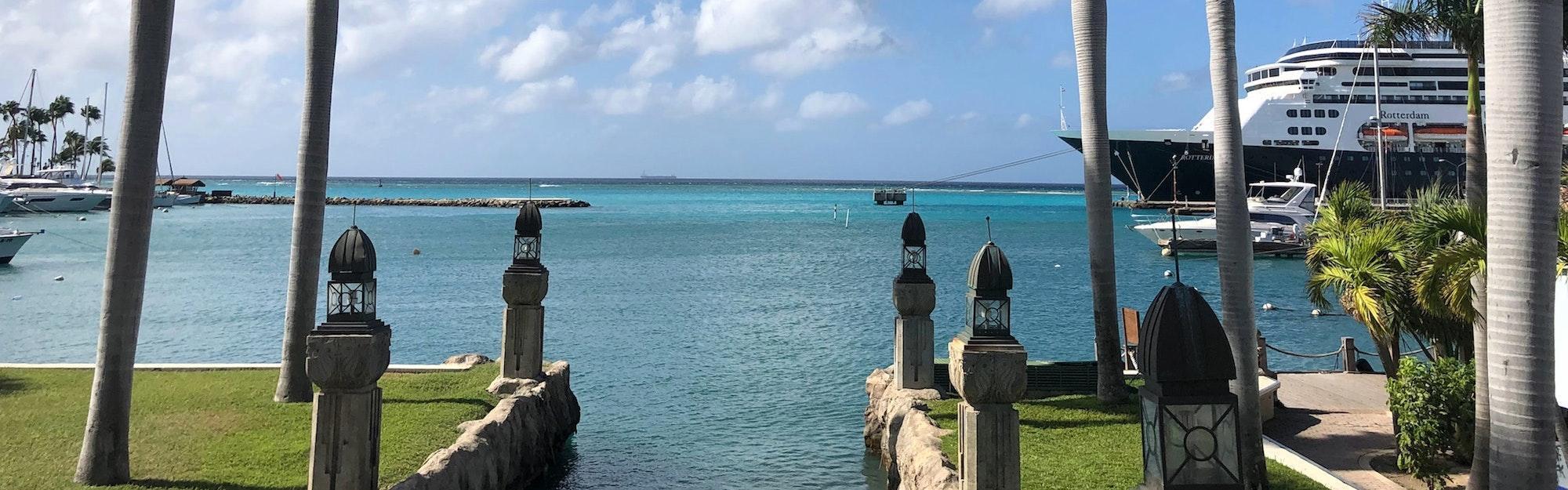

Oranjestad Travel Guide
Aruba's capital, Oranjestad, is where many visitors first encounter the island's distinctive blend of European elegance and Caribbean warmth. Its harbour, once busy with schooners and fishing boats, now welcomes cruise ships from around the world, bringing travellers into the heart of a city that wears its history with pride.
Despite its popularity, Oranjestad has held onto its laid-back charm. Downtown streets are lined with pastel-coloured Dutch colonial buildings, their ornate gables and lacy trim reflecting the island's long-standing ties to the Netherlands, and the city's name itself pays tribute to the House of Orange-Nassau (the Dutch royal family).
A walk through Oranjestad offers more than pretty architecture, though. The Archaeological Museum presents a fascinating look at Aruba's Indigenous Arawak roots through thoughtful, modern exhibits. And just a short stroll away, the 18th-century Fort Zoutman, Aruba's oldest building, houses the Museo Histórico Arubano, which traces the island's colonial and maritime history. The Willem III Tower, added in the 19th century, once served as a lighthouse and still overlooks the city.
Beyond the cultural sights, Oranjestad is vibrant and full of life, and features luxury boutiques, waterfront malls and glitzy casinos that draw the crowds. A few blocks away, the city reveals a more relaxed side full of local bars, colourful murals and a welcoming community where visitors can settle in with a cold drink and soak up the real Aruba.
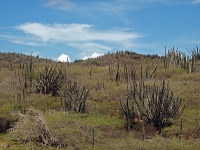
Arikok National Park
Arikok National Park is one of Aruba's most captivating landscapes, where desert hills, towering cacti, and twisted divi-divi trees stretch toward a wild northern coast. Winding trails lead visitors to ancient caves such as Fontein and Quadirikiri, where sunlight filters through openings and Arawak rock drawings whisper of the island's earliest inhabitants. Scattered ruins of gold mines and forgotten plantations hint at Aruba's layered past, while restored adobe farmhouses, known as cas di cunucu, offer a rare glimpse into traditional island life. For those craving nature, history and adventure in one place, Arikok delivers an unforgettable escape.
Getting Around
Renting a car is a great way to explore Aruba, and some companies offer deals for short-term rentals. However, travellers staying near a resort may not need one at all, since many beaches, shops and restaurants are within walking distance.
Aruba's local bus system is easy to use and connects most hotels to downtown Oranjestad. Buses run about every 30 minutes during the day and hourly in the evening, Monday through Saturday. Taxis are also available, but they don't use meters. Instead, fares are fixed, and it's best to have a hotel or restaurant call one in advance.
Many resorts provide shuttle services to popular attractions, and travellers can also rent bikes, e-bikes, scooters, or ATVs to explore on their own. While Uber and Lyft don't operate in Aruba, a few local taxi apps are beginning to appear, though coverage may be limited.
Oranjestad Climate and Weather
Oranjestad enjoys a tropical climate with warm, consistent temperatures year-round, and average daily highs that hover around 86°F (30°C). Although temperatures can rise above 90°F (32°C), the steady trade winds help keep conditions comfortable. The best time to visit is during the peak tourist season, from mid-December to mid-April, when the weather is especially pleasant. Rainfall is rare, but the island's short wet season occurs between October and January, typically bringing brief, passing showers.
Aruba travel info
Electricity
Aruba uses a 127-volt, 60Hz electrical system, with standard North American-style flat two- and three-pin plugs.
Language
The official languages of Aruba are Dutch and Papiamento, the island's native language. English and Spanish are widely spoken, as both are taught in schools. Some French is also understood, particularly in tourist areas.
Money
The official currency of Aruba is the Aruban Florin (AWG), which is generally tied to the US Dollar at a fixed rate of about 1 USD = 1.80 AWG. US Dollars are widely accepted throughout the island, and other major currencies can be exchanged at banks. Credit and debit cards, as well as Apple Pay and Google Pay, are commonly accepted in most tourist areas, larger businesses, and resorts. However, in more local or remote areas, smaller shops and vendors may not accept mobile payments, so it's always a good idea to carry cash or a card for these situations. ATMs are available in Oranjestad and across the island for easy access to cash.
Tipping
A 10 to 15 percent service charge is often included in restaurant, bar and room service bills in Aruba, but it's still nice to leave an extra tip (usually 10 to 20 percent) for good service. There's a 12.5 percent room tax on hotel bills. Taxis are typically tipped around 15 percent, and porters usually expect about $1 per bag.
Health
There are no special health requirements for visitors to Aruba, but travellers coming from yellow fever-endemic countries will need to show proof of vaccination. Aruba has had occasional cases of dengue fever, which is spread by mosquitoes; it's recommended that visitors use insect repellent to stay safe. Medical care in Aruba is good, with one main hospital and several clinics across the island. It's recommended that travellers have health insurance, but food and water are safe to consume.
Safety
Crime isn't a major issue in Aruba, and most visitors have a trouble-free experience. However, it's still a good idea for them to take basic precautions, like locking valuables in the hotel safe and being cautious when walking at night. Visitors should also be aware that the ocean currents can be strong, particularly on the northern side of the island, so it's recommended to avoid swimming there.
Local customs
Arubans are known for being friendly and welcoming, but it's important for visitors to respect the local culture. One thing to remember is the island's slower pace, so it's good to be patient and adjust to 'island time'. Topless sunbathing isn't allowed in public areas, though some private resorts may have different rules.
When it comes to dress code, swimwear is fine on the beach, but visitors should cover up when heading to restaurants or shops. Resort wear such as a cover-up or casual shirt is common around the island. While Dutch is the official language, most people speak English and Spanish, so communication is easy. Learning a few words in Papiamento, such as 'Bon dia' (Good morning) or 'Danki' (Thank you), is always appreciated. Finally, Aruba's natural beauty is a big draw, so it's important to avoid littering and to respect the environment.
Doing business
Oranjestad is the main business hub in Aruba, and there's a growing focus on international financial services. While Dutch is the official language, English is commonly used in business settings. Meetings are typically held in formal environments, such as offices or conference centres, and punctuality is expected. Handshaking is the standard greeting for both men and women, and female business associates are treated with equal respect, often holding high positions. Business hours are generally from 9am to 5pm.
Duty free
Travellers to Aruba do not need to pay customs duty on 200 cigarettes or 25 cigars, one litre of alcohol, and gift articles to the value of AWG 900.
Communications
The international dialling code for Aruba is +297. Visitors with unlocked phones can purchase local SIM cards, and most of the destination's resorts and hotels offer WiFi, as do many cafés and restaurants.
Passport & Visa
All passports must be valid for the period of the intended stay. It's recommended in some cases that travellers have at least six months' validity beyond their travel dates. Visitors to Aruba must hold sufficient funds, a return or onward ticket, and any documents required for their next destination. Under the Western Hemisphere Travel Initiative (WHTI), travellers between the United States and Canada, Mexico, Bermuda, and the Caribbean must present a passport or other acceptable identity/citizenship document when entering or re‑entering the US. Most nationalities can stay in Aruba for 30 days as tourists, with the possibility of extending stays up to 180 days per calendar year under certain conditions.
Entry requirements
United States passport holders must have a passport that's valid for the period of intended stay. A visa is not required. The standard length of stay is 30 days, but this may be extended to a maximum of 90 days without a formal extension under certain conditions.
UK nationals require a passport that's valid for the period of intended stay. A visa is not required for short tourist visits, and stays of up to 90 days are typically permitted.
Canadian nationals require a passport that's valid for the period of intended stay. A visa is not required for stays of up to 90 days within a 180-day period.
Australian nationals require a passport that's valid for the period of intended stay. A visa is not required for tourist stays of up to 90 days.
South African nationals must hold a passport that's valid for the period of intended stay and generally require a visa. However, travellers holding a valid residence permit or multi-entry visa from the United States, Canada, the Schengen Area, or the United Kingdom may be exempt from needing a visa for short stays.
Irish nationals require a passport that's valid for the period of intended stay. A visa is not required for tourist stays of up to 90 days.
New Zealanders require a passport that's valid for the period of intended stay. A visa is not required for tourist stays of up to 90 days.
Useful contacts
Aruba Tourism Authority, Oranjestad: +1 800 862 7822 or www.aruba.com
Emergencies: 911