

Country guides
 Caribbean
Aruba Travel Guide
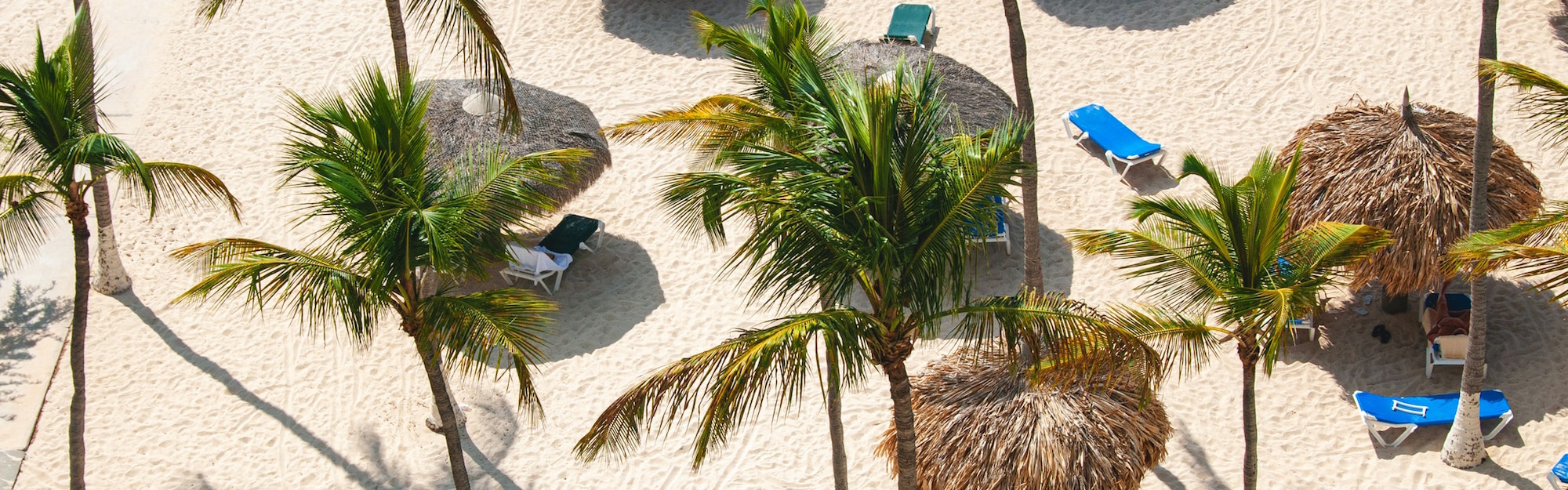
Aruba is the smallest of the ABC Islands (Aruba, Bonaire and Curaçao) and lies just off the northern coast of Venezuela. Known for its warm, sunny weather, laid-back charm and vibrant Caribbean culture, it's a favourite escape for travellers seeking carefree relaxation and breezy adventure. The island's postcard-worthy beaches are among the best in the world, and have soft white sand, turquoise water and divi-divi trees frozen in the direction of the trade winds. Those steady breezes help keep the tropical heat in check, and make Aruba a world-class destination for windsurfers and kiteboarders.
Despite its small size, the island offers a surprising variety of scenery. The serene southwest features white‑sand beaches and calm, crystal waters. Northeast, the coast is wilder, rocky and exposed, with rougher seas and stronger currents. Inland, visitors will find a dry, desert‑like terrain, sprinkled with cacti and sparse trees. Oranjestad, the capital, mixes colonial architecture and colourful facades, and serves as the arrival point for cruise ships.
Cruise passengers who stay just a few hours often enjoy leisurely strolls through the town, browsing shops or relaxing with a drink. Those staying longer have lots of options, such as beach resorts for sun and luxury, snorkelling in clear waters, climbing Hooiberg ('The Haystack') for panoramic views, or exploring rugged areas of Arikok National Park.
Best time to visit Aruba
Aruba gets less rain than anywhere else in the Caribbean and sits safely outside the hurricane belt, so there's really no bad time to visit. The busiest season runs from December to April, when the weather is perfect, but prices are higher and things can get crowded, especially around Carnival. If visitors don't mind a bit of extra heat, September can be a great time to go. The trade winds ease off, the island is quieter, and there will often be better deals on hotels and flights.
What to see in Aruba
-The Natural Pool (Conchi) is a unique rock formation on a deserted stretch of coastline in the Arikok national park, well worth the tricky approach by either foot, horseback or 4x4.
-The Antilla shipwreck is the largest in the Caribbean, just off Malmot beach, and is turning into an artificial reef, covered in coral and sea life.
-Eagle Beach features regularly on lists of the top beaches in the world. This strip of perfect white sand lies just north of Oranjestad, close to numerous resorts.
-The Aruba Archaeological Museum is an engaging new exhibit of pre-colonial Arawak life, set in a beautifully restored colonial-era merchants house.
What to do in Aruba
-Fishermen's Huts, at the end of Palm Beach, is the perfect spot for windsurfing and kitesurfing, two of the most popular and exhilarating activities on the island.
-Baby Beach is home to some of the best snorkelling in Aruba. The clear waters are no more than 5 feet (1.5m) deep at any point.
-Climb the 561 steps up the Haystack, a mountain in the centre of the island providing awesome views as far as the coast of Venezuela.
-Take a horseback tour to see the Arikok national park, Sand Dunes, Natural Pool, and Natural Bridge.
Getting to Aruba
Passengers can arrive in Aruba either via the cruise ship port in Oranjestad, or at Queen Beatrix International Airport. There are flights from most major US cities, and daily flights from all major hubs around the world, including the UK.
Read
Tropical Kiss by Jan Coffey, An Island Away and Under a Blue Flag both by Daniel Putkowski.
Listen
Wally Warning, Tsunami, and Orange Grove.
Watch
Natalee Holloway (2009).
Drink
Balashi Beer (Aruba's national beer).
Eat
Fresh fish and seafood; Pan Bati (a local sweet flatbread).
What to buy
Great souvenirs to buy in Aruba include fine ceramics, Aruba license plates, aloe products, gourmet cheese and chocolates, a range of jewellry, and Mopa Mopa Art.
What to pack
Visitors should pack plenty of sun cream, a swimming costume, light summer clothes, a hat and sun glasses, and a sturdy pair of shoes for those days spent exploring the remarkable sights in Aruba.
What's on in Aruba
Carnival season runs every year from January to March, and there are weeks of events and celebrations involving colourful floats, music, and elaborate costumes. Carnival closes with a Grand Parade in Oranjestad.
Did you know?
-Aruba has one of the most ethnically diverse populations in the world. In a population of just over 100,000, there are more than 90 nationalities and ethnic groups represented.
-Aruba has the most sunny days and least rainfall of any island in the Caribbean. On average, just 15 inches (38cm) of rain falls each year.
-As a desert island with no major source of fresh water, Aruba has been a pioneer of water purification and desalination technology for more than 80 years.
A final word
With pristine white-sand beaches, crystal blue sea, the best weather in the Caribbean, and some of the friendliest, most welcoming people, Aruba is the last word in tropical island holidays.