

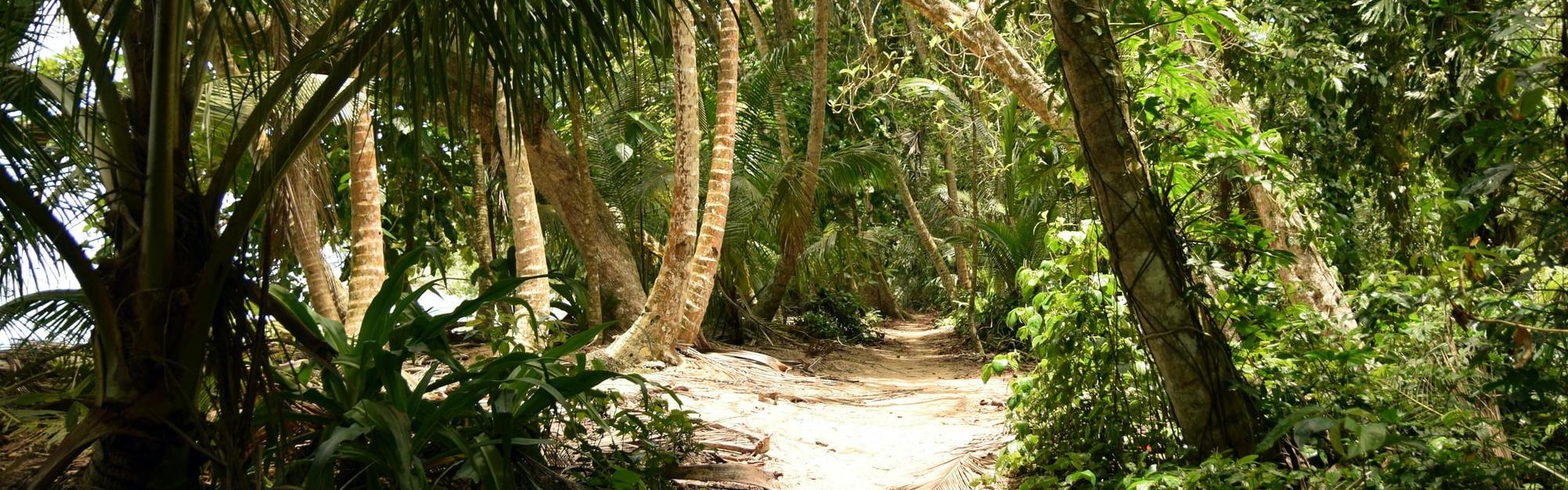

The Caribbean Lowlands Travel Guide
The Caribbean coast of Costa Rica offers a cultural richness distinct from the rest of the country. Known for its beautiful beaches, excellent surfing, and unspoilt national parks, the region is gaining popularity among travellers seeking a more laid-back, adventurous experience. Less developed than the Pacific coast, it has fewer roads, smaller towns, and large areas protected within national parks and wildlife refuges.
The regional capital, Puerto Limón, is mainly used as a transportation hub. While not a major tourist destination, it's regaining popularity as a cruise port. Just down the coast, the village of Cahuita is a relaxed, welcoming spot near the Cahuita National Park, where Afro-Caribbean culture is especially evident in the local cuisine and music.
Further south, the tranquil beach town of Puerto Viejo de Talamanca draws visitors with its vibrant surfing scene, striking coastline, and easy-going atmosphere. In the north, Tortuguero National Park is one of the most important nesting sites for green sea turtles in the Western Hemisphere. Much of the Caribbean coast is defined by its slow pace, friendly communities, and a strong sense of cultural identity. While Spanish is widely spoken, many locals also speak Limonese Creole.
There's plenty to explore, from guided wildlife tours and water activities to simply relaxing in a hammock, but the real charm of the region lies in its unhurried rhythm. It's a place best enjoyed without a schedule.
Things to do in The Caribbean Lowlands
The Caribbean coastline of Costa Rica is best known for its beautiful beaches, but it also offers pristine rainforests, abundant wildlife, and charming, laid-back beach villages. The region's distinctive Afro-Caribbean culture shines through in its relaxed pace of life, vibrant music, and friendly locals, making it a unique and welcoming destination.
The southern Caribbean coast is home to some of the area's most popular beaches, including Playa Bonita, Playa Cocles, Playa Chiquita, and Punta Uva. Puerto Viejo de Talamanca, a lively town nestled between mountains and sea, is famous for its surfing, sunny beaches, and vibrant nightlife.
Nearby, Cahuita National Park protects Costa Rica's only Caribbean coral reef, making it a top spot for snorkelling and diving. The park's jungle trails provide excellent opportunities to spot monkeys, birds, and other wildlife. The town of Cahuita, just outside the park, is known for its local music scene and serves as a great base for exploring the coast.
Further north, Tortuguero National Park is a wildlife haven, home to about half of Costa Rica's animal species and one of the world's premier nesting sites for green sea turtles. Visitors can explore its extensive network of trails and waterways to observe diverse flora and fauna.
Though less developed than the Pacific coast, the Caribbean offers plenty to see and do, with a more relaxed atmosphere that appeals to travellers seeking an authentic Costa Rican experience.
Tortuguero National Park
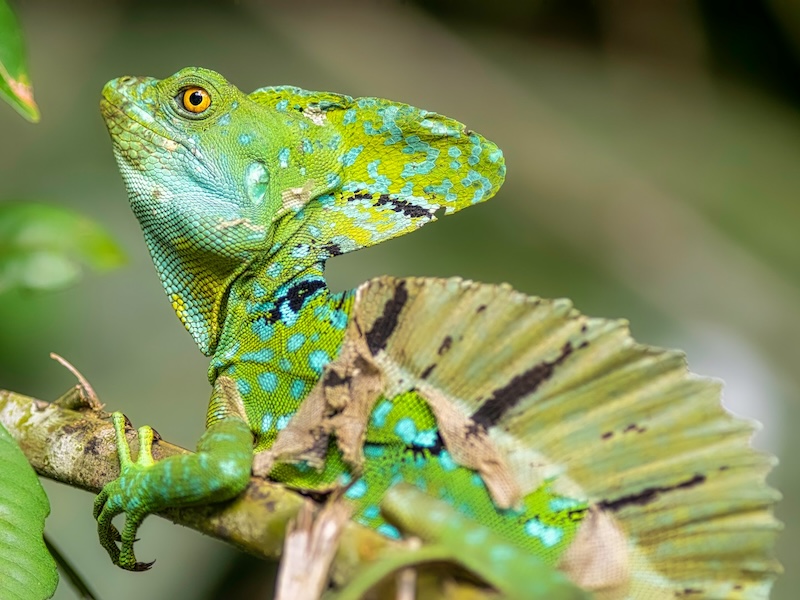
Despite its remoteness on Costa Rica's northern Caribbean coast, Tortuguero National Park is one of the country's most visited protected areas. It's the primary nesting site for green sea turtles, which come ashore from July to October, along with leatherback, hawksbill and loggerhead turtles. Covering about 125 square miles (320 sq km), the park protects beaches, canals, wetlands and rainforest; visitors can explore it by boat or trail, and view wildlife such as monkeys, sloths, manatees and over 400 bird species. Turtle nesting is the park's main attraction.
Cahuita National Park
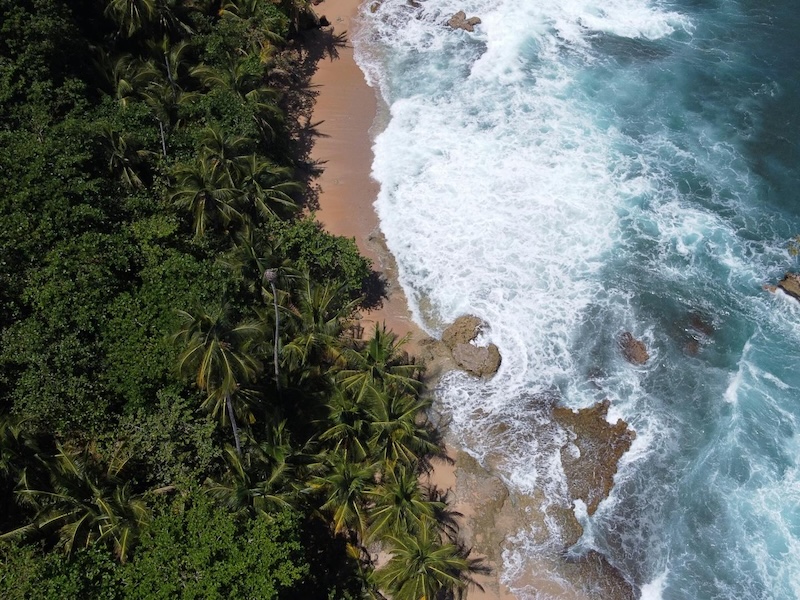
The only coral reef on the Costa Rican Caribbean coastline is found within this national park and, with 500 species of fish, it affords excellent opportunities for snorkelling. Apart from the vibrant underwater colours and fish, there are two sunken ships to explore as well. The park was established in 1978 to protect the coral reef, but unfortunately it's still seriously threatened. While the land area of Cahuita National Park is small, it has stunning beaches and is good for both land and water activities, making it one of the most visited parks on the Caribbean coast. A well-defined trail runs through the coastal rainforest and howler monkeys and sloths are among the wildlife attractions. The area is also great for bird watching and may reward visitors with sightings of the striking butterflies found in the jungle. The hike to the beach is flat and the path is easy to follow and winds through wonderful jungle scenery.
Puerto Viejo de Talamanca
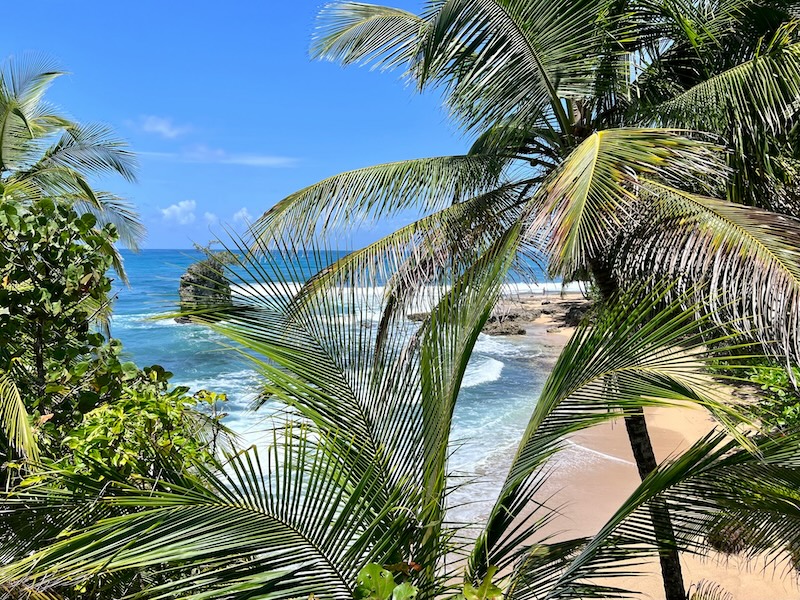
Puerto Viejo de Talamanca, commonly known as Puerto Viejo (not to be confused with Puerto Viejo de Sarapiquí in the northern lowlands), is a laid-back beach town nestled between the forested Talamanca Mountains and the Caribbean Sea. It's known for its powerful surf (particularly at Salsa Brava), vibrant Afro-Caribbean and Bribri indigenous cultures, and flavourful local cuisine. The scenic seven mile (12 km) stretch of coastline from Puerto Viejo to Manzanillo features stunning beaches such as Playa Cocles, Playa Chiquita and Punta Uva; visitors can enjoy fishing, horseback riding, cultural tours, homestays and excursions to nearby Cahuita National Park. Puerto Viejo also offers lively nightlife, reggae-infused beach bars, and a fun, social atmosphere.
Costa Rica travel info
Electricity
Costa Rica uses 120 volts at a frequency of 60Hz. Power outlets typically accommodate Type A (flat two-pin plugs) and Type B (three-pin plugs with two flat blades and a round grounding pin), the same as in North America.
Language
Spanish is the official language. English is widely spoken in tourist areas, hotels, and larger cities, but less commonly understood in rural regions.
Money
The Costa Rican colon (CRC) is divided into 100 centimos and is the official currency, although US dollars are also widely accepted. US dollars can be exchanged in banks and many hotels, but currency other than US dollars is difficult to exchange. Using black market exchange options is risky, as these unofficial outlets have been known to pass on counterfeit bills printed in Colombia. Banks close anywhere from 3pm to 4pm. Major credit cards are widely accepted. ATMs are available in major towns throughout the country, but it's advisable to always have some local cash handy.
Tipping
A 10 percent service charge is usually included in restaurant bills and, if service is particularly good, leaving an additional five to 10 percent tip is appreciated but not required. Hotels may not automatically include service charges; tipping bellhops and housekeeping staff with small amounts (around $1 to 2) is customary. Tipping taxi drivers is not expected, but rounding up the fare is common practice. Tour guides typically receive a tip of five to 10 percent of the tour price.
Health
Routine vaccinations are recommended, including hepatitis A, hepatitis B, and typhoid, and yellow fever vaccination certificate is required for those arriving from a country where yellow fever is present. The malaria risk is minimal and confined to a few low-lying regions; visitors should consult a travel health professional for the latest advice.
Mosquito-borne illnesses such as dengue fever, Zika, and chikungunya occur, particularly during the rainy season (May to November). Preventative measures include using insect repellent and wearing long sleeves.
Tap water is generally safe to drink in cities, but bottled water is advised in rural or remote areas. Healthcare services in urban areas are modern and reliable, with high standards of hygiene and care.
Safety
Costa Rica is considered one of the safest countries in Central America, but petty crime such as pickpocketing and theft from vehicles can occur, especially in San José, at airports and on public transportation.
Visitors should be cautious with belongings, avoid displaying valuables, and use official taxis or registered transportation. They should also avoid changing money on the street.
Protests and road blockades can occur with little notice, particularly on routes between San José and the coasts. It's best to monitor local news and plan travel accordingly.
Local customs
Costa Ricans, known as 'Ticos', are friendly, polite and family-oriented. Traditional gender roles remain influential, though society is gradually becoming more progressive. The population is largely mestizo and Catholic, though religious and ethnic diversity is growing. A conservative attitude prevails in social and business settings, with emphasis on courtesy and formality.
Doing business
Business culture in Costa Rica is formal, and professional dress, punctuality and scheduled appointments are expected. Regarding language, many professionals speak English but Spanish is the primary means of communication, so having business cards and promotional materials in both languages is considered respectful.
Business practices may move at a slower pace than some visitors are accustomed to, as Costa Ricans tend to be risk-averse and methodical in decision-making. Women increasingly hold leadership roles, but the business environment remains somewhat male-dominated. Visiting businesswomen are treated with courtesy and professionalism once their authority is established. Typical business hours are 8am to 4pm, Monday to Friday, with a long lunch break around 12 to 2pm.
Duty free
Travellers to Costa Rica over 18 years do not have to pay duty on 3 litres of alcohol; 500g of tobacco or 400 cigarettes or 50 cigars. Perfume for personal use is allowed provided it is a reasonable quantity.
Communications
The international access code for Costa Rica is +506. Costa Rica has one of the most advanced telecommunications systems in Latin America and WiFi is available in most hotels, restaurants, and cafes.
Passport & Visa
All foreign visitors must present a return or onward ticket, valid travel documents for their next destination, and proof of sufficient funds for their stay. A yellow fever vaccination certificate is required only for those arriving from a high-risk country, excluding Argentina and Panama, or from Tanzania or Zambia.
Although entry requirements vary by nationality, travellers are advised to have at least six months' passport validity beyond their departure date, even if shorter validity is technically permitted. Immigration officials may apply entry rules differently than airline or travel agents advise, so it's best to confirm the latest official guidance.
Entry requirements
US citizens must have a passport that is valid for the duration of their stay in Costa Rica, but do not need a visa for stays of up to 180 days.
British citizens must have a passport that is valid for at least six months after their date of departure, but can visit Costa Rica without a visa for up to 180 days under a tourist visa waiver. The exact period is at the discretion of the immigration officer on arrival.
Canadian citizens must have a passport that is valid for the duration of their stay in Costa Rica. A visa is not require for stays of up to 180 days. The immigration officer will determine the permitted length of their stay when they enter Costa Rica.
Australian citizens must have a passport that is valid for at least six months after their date of departure, but can visit Costa Rica without a visa for up to 90 days.
South African citizens must have a passport that is valid upon their arrival in Costa Rica. No visa is required for stays of up to 90 days.
Irish citizens must have a passport that is valid upon their arrival in Costa Rica. No visa is required for stays of up to 90 days.
New Zealand citizens must have a passport that is valid upon their arrival in Costa Rica. No visa is required for stays of up to 90 days.
Useful contacts
Costa Rica Tourism Board, San Jose: www.visitcostarica.com
911 (General Emergency Helpline)