

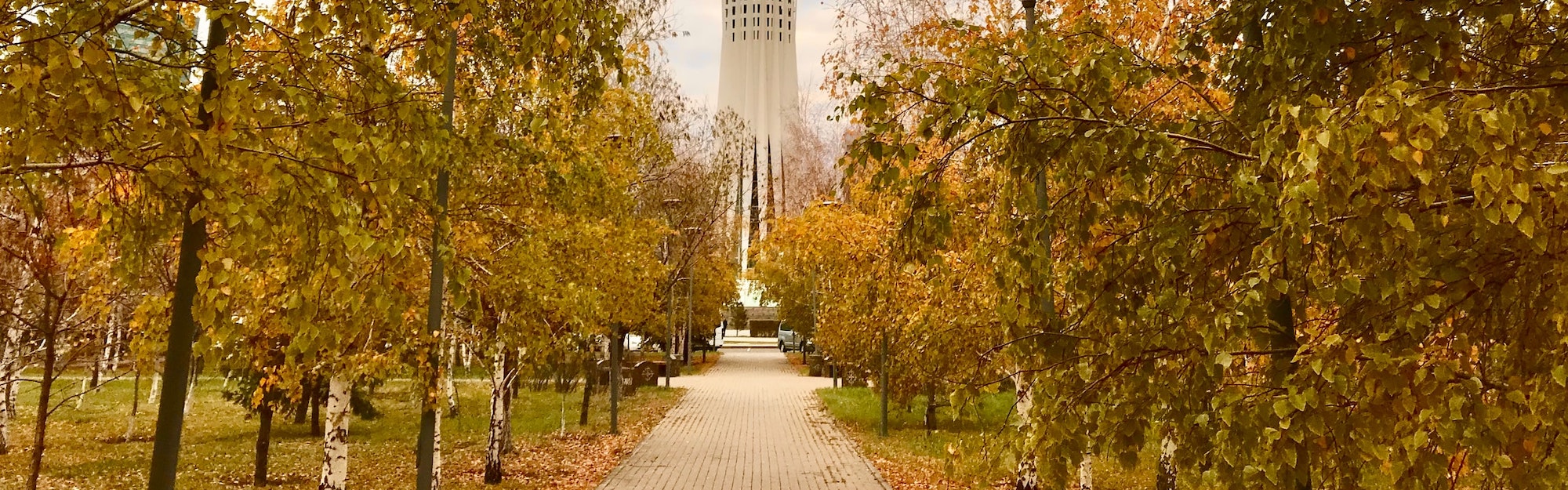

Astana Travel Guide
Located in north-central Kazakhstan on the dry steppes, Astana (formerly Nur-Sultan) is a rapidly growing Eurasian economic and political centre blending Eastern and Western cultural influences. Renamed in March 2019 after President Nursultan Nazarbayev, and changed back to Astana in 2022, the city symbolises Kazakhstan's vision for the 21st century.
Its population has grown from around 270,000 in 1999 to over 1 million, drawing young professionals to its vibrant political, business and cultural scene. Strategically positioned between Russia, China, Europe and the Middle East, the city benefits from Kazakhstan's energy-rich economy.
Known for its futuristic skyline, Astana features landmarks such as the tree-shaped Bayterek Tower, wave-like Kazakhstan Central Concert Hall, pyramid-shaped Palace of Peace and Reconciliation, and the 492-foot-tall (150m) Khan Shatyr Entertainment Center. The Ishim River divides the city, with older districts to the north and newer developments to the south.
Visitors can explore cultural museums, mosques, churches, and the city's oceanarium. Nearby is the Korgalzhyn State Nature Reserve, a UNESCO site renowned for birdlife. With its parks, gardens, modern sports venues, and theatres, Astana offers a unique blend of natural beauty and contemporary culture.