


Things to do in Ho Chi Minh City
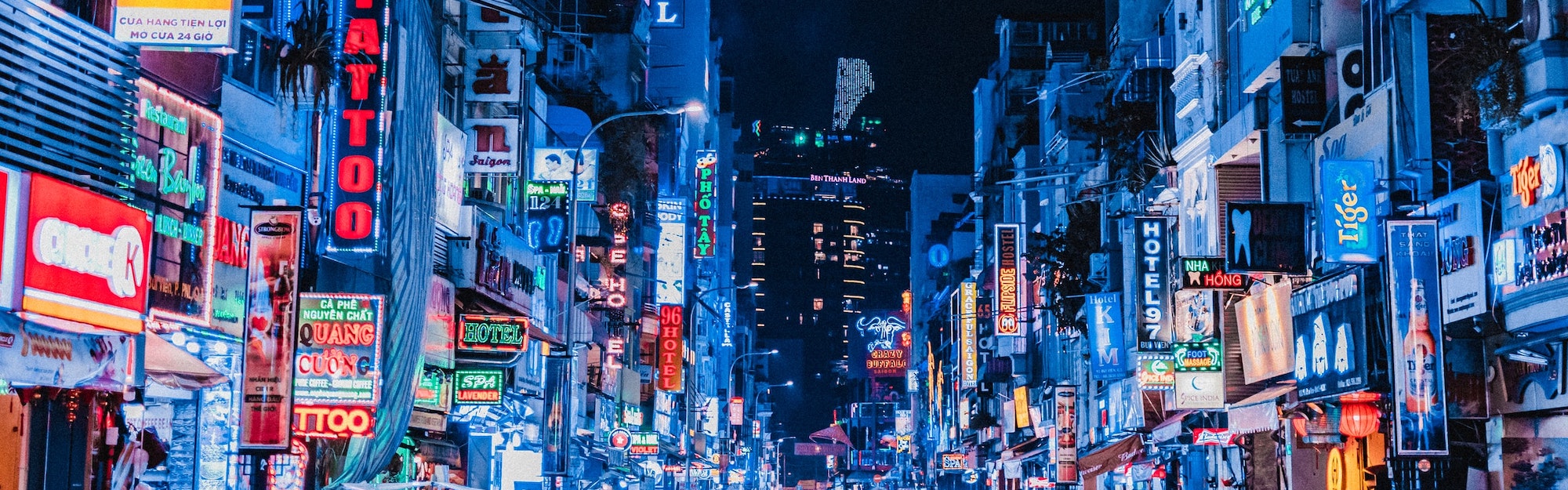
Ho Chi Minh City stands as Vietnam's premier commercial hub and is the epitome of big-city life in the country. Its vibrant energy is felt everywhere, from the busy markets of the Chinese district to the renowned nightlife of District One. The destination also boasts a rich tapestry of history through French colonial architecture, ancient remnants from past emperors and a range of fascinating museums. Much like Hanoi, Ho Chi Minh City seamlessly blends the traditional, the colonial and the modern.
The war and history museums offer a glimpse into the turbulent past of the American invasion and earlier conflicts with European powers. In contrast, the Reunification Palace celebrates Vietnam's triumph as a unified nation. Yet, amidst the urban rush, the city holds peaceful retreats, such as hidden temples, tranquil gardens and quiet cloisters where visitors can momentarily escape the hustle and bustle.
Rural Vietnam is never far from reach. Whether it's breathing in the fresh air of the rice paddies, visiting a quaint village or seeking solace in a remote temple, the countryside offers a welcome contrast to the city's frenetic pace.
Everywhere visitors look, construction is reshaping the skyline with modern skyscrapers and office blocks. For the best view of this sprawling metropolis, the Saigon Skydeck Tower offers a breath-taking 360-degree panorama. It's this fusion of youthful energy, old-world charm and easy access to rural serenity that makes Ho Chi Minh City such a unique destination; a place where history and modernity meet harmoniously.

War Remnants Museum
The disturbing War Remnants Museum highlights the horrors of modern combat, and especially portrays the suffering inflicted on the Vietnamese people during the Vietnam War. Its for…
War Remnants Museum
The disturbing War Remnants Museum highlights the horrors of modern combat, and especially portrays the suffering inflicted on the Vietnamese people during the Vietnam War. Its former name, the Museum of American War Crimes, was altered so as not to cause offence to American visitors, but the museum's displays still give an anti-American perspective. The museum houses a collection of weapons, machinery, artefacts and horrific photographs illustrating the devastating effects of napalm, Agent Orange and other weapons of mass destruction. One room is dedicated to biological warfare, including the effects of the defoliant sprays that were dumped over the country. Another room looks at worldwide demonstrations for peace and international opposition to the war. In the courtyard there are tanks, helicopters, planes and bombs on display.
Website baotangchungtichchientranh.vn/?language=en

Cholon
Cholon, the Chinese district of Saigon, is comprised of a dense network of vibrant streets and alleyways. It was first settled by the Chinese Hoa merchants at the end of the 18th c…
Cholon
Cholon, the Chinese district of Saigon, is comprised of a dense network of vibrant streets and alleyways. It was first settled by the Chinese Hoa merchants at the end of the 18th century, and is now the home of Vietnam's biggest ethnic minority community. Cholon diverges from the conventional 'Chinatown' set up that exists in many prominent cities the world over, largely due to its impressive expanse. When visitors enter Cholon, the difference in environment is immediately noticeable. Mandarin signposts lead into a fascinating labyrinth of temples, restaurants, exotic stores, medicine shops and markets. The best place to experience the bustle of trade is at the crowded Binh Tay Market, where the corridors are filled with stalls offering a variety of exotic produce, from live tethered ducks to nuts and seeds, as well as other household items. There are several temples of interest in Cholon, including the Quan Am Pagoda with its ornate exterior, Phuoc An Hoi Quan Temple, its roof exquisitely ornamented with dragons and sea monsters, and the Thien Hau Pagoda dedicated to the goddess of the sea.
Cu Chi Tunnels
The Cu Chi Tunnels system is an underground network of tunnels dug in the 1940s by the Vietnamese as a place to hide during the fight against the French. The network was later expa…
Cu Chi Tunnels
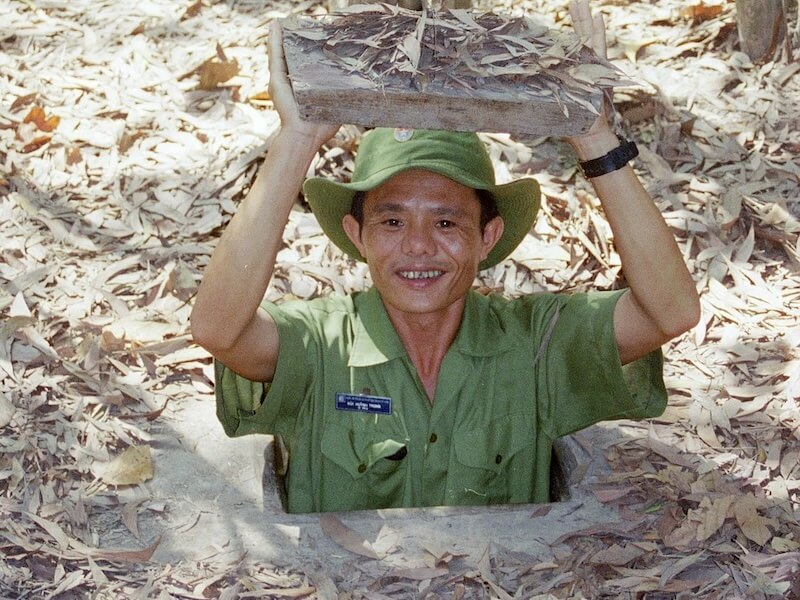
The Cu Chi Tunnels system is an underground network of tunnels dug in the 1940s by the Vietnamese as a place to hide during the fight against the French. The network was later expanded and used in the American War. Today the system is more than 150 miles (250km) long. It's comprised of winding tunnels and unlit offshoots, secret trap doors connecting narrow routes to hidden shelters, local rivers and tunnels reaching to the Cambodian border.
It was once a sprawling city of improvised hospitals, living quarters, kitchens and fresh water wells, with some tunnels barely large enough to wriggle through. The plan was to launch surprise assaults on the enemy, and then disappear; this strategy was so successful that the superior firepower of the French and American armies was insufficient in the face of continuous ambushes in which the assailants seemed to vanish into thin air.
Many of the tunnels have been enlarged to allow visitors the dirty and claustrophobic experience of crawling through a portion of the underground network, past secret trapdoors and booby traps laid against invasion. The two main sites, Ben Dinh and Ben Duoc, are different in that one was constructed specifically for tourists (Ben Dinh) and the other was actually used in war (Ben Duoc). Due to their popularity with tourists, hard-sell vendors can be a constant hassle among the touring throngs.
Mekong Delta
The delta is a vast network of waterways formed by the Mekong River. It's surrounded by a fertile patchwork of endless green rice paddies, orchards and swamplands, where most of th…
Mekong Delta
The delta is a vast network of waterways formed by the Mekong River. It's surrounded by a fertile patchwork of endless green rice paddies, orchards and swamplands, where most of the country's rice is grown. Not only does the Mekong River irrigate what is known as 'the rice bowl of Vietnam', it also serves as a vital form of transport.
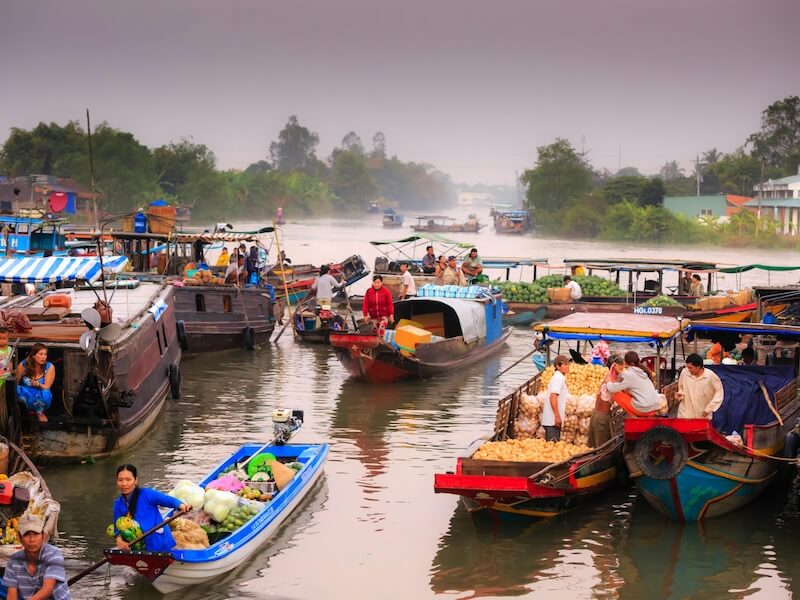
A unique way of life has evolved among the villagers that have lived on or beside the river for centuries. The best way to experience the delta is by boat, joining the rowing boats and fishermen, rickety houseboats, ferries and traditional sampans on the brown water. On the banks are small villages, vegetable gardens, fish farms and stilted houses. Trading is carried out between boats at floating markets, where whole sections of the river are covered by bobbing merchants who advertise their wares, often hung from long bamboo poles.
There are several towns in the region from where visitors can arrange boat trips if they haven't already been offered as part of an organised tour. Tourists should try to avoid the rainy season, as the tides may be too high for canal travel. There's an impressive range of local dishes on offer and, besides seafood, there are opportunities for adventurous travellers to sample snake, eel and bat.

Pham Ngu Lao
Located in District One, this area of Saigon is known as South Vietnam's backpacker district. Stretching along the streets of De Tham, Pham Ngu Lau and Bui Vien, Pham Ngu Lao is of…
Pham Ngu Lao
Located in District One, this area of Saigon is known as South Vietnam's backpacker district. Stretching along the streets of De Tham, Pham Ngu Lau and Bui Vien, Pham Ngu Lao is often compared to the more famous Khao San road of Bangkok, and is a similar amalgamation of bars, guesthouses, restaurants, souvenir shops and small travel agencies. Known also to be an expat playground, these bars stay open later than most in the city. The prominent Go2 Bar is the most popular among tourists but dozens dot the area. Day trips to the Mekong Delta or the Cu Chi tunnels are easily organised in any of the travel agencies as well as transport to most of Vietnam. Although prices vary the trips usually are the same despite the agency.

Ben Thanh Market
Located in Ho Chi Minh City's District 1, Ben Thanh Market is one of the destination's best known landmarks. It is often hot, crowded and frantic, but it's a great place to buy loc…
Ben Thanh Market
Located in Ho Chi Minh City's District 1, Ben Thanh Market is one of the destination's best known landmarks. It is often hot, crowded and frantic, but it's a great place to buy local handicrafts, branded goods and souvenirs. A wet market at the back sells every kind of food imaginable. It is rumoured that buyers will be given their purchases in differently coloured bags according to their bargaining ability, as a sign to other vendors. The market is open daily from 7am to 6pm, but an outdoor night market and food stalls that surround the area are open until much later.

Mui Ne
Mui Ne is Vietnam's most western style resort beach. The city itself is a typical Vietnamese fishing community sporting a fleet of beautiful fishing boats but with little to see or…
Mui Ne
Mui Ne is Vietnam's most western style resort beach. The city itself is a typical Vietnamese fishing community sporting a fleet of beautiful fishing boats but with little to see or do in town. The beach beside it, however, is home to luxury resorts and hotels, while cheaper guesthouses can be found across the road or closer to town. A variety of water activities are available including surfing, kite surfing, jet-skiing, and sailing. The young and tireless will enjoy the beach and roadside bars, where cheap drinks and electro music carry on late into the night. Most parts of the long six mile (10 km) stretch of beach resemble the tropical paradise Mui Ne has always been toted as, but other sections have experienced coastal erosion. Travellers should keep this in mind when selecting a resort. There are red-coloured sand dunes close to town, but beyond those lie much larger white sand dunes, which are worth the extra half-hour trip. For a small tip, children will rent out sand sleds and demonstrate how to surf the dunes. One of Vietnam's top golf courses is also just outside the city. Mui Ne is a scenic five-hour motorbike trip from Vung Tau or five to seven-hour highway bus ride from Ho Chi Minh City.

Dam Sen Water Park
The best way to cool off in the hot dusty city is the Dam Sen Water Park. The water park is set within three hectares of Vietnamese gardens and is the centre of a larger theme park…
Dam Sen Water Park
The best way to cool off in the hot dusty city is the Dam Sen Water Park. The water park is set within three hectares of Vietnamese gardens and is the centre of a larger theme park complex. Among all the rides there is a great selection of water slides which hurtle passengers, full speed, up railings and down steep drops. The large wave pool offers more relaxing fun and the wide stream encircling the park is a great place to float under the hot sun. There is also a designated section of the compound for relaxing away from the excited crowds.
Website www.damsenwaterpark.com.vn