


Things to do in Cultural Triangle
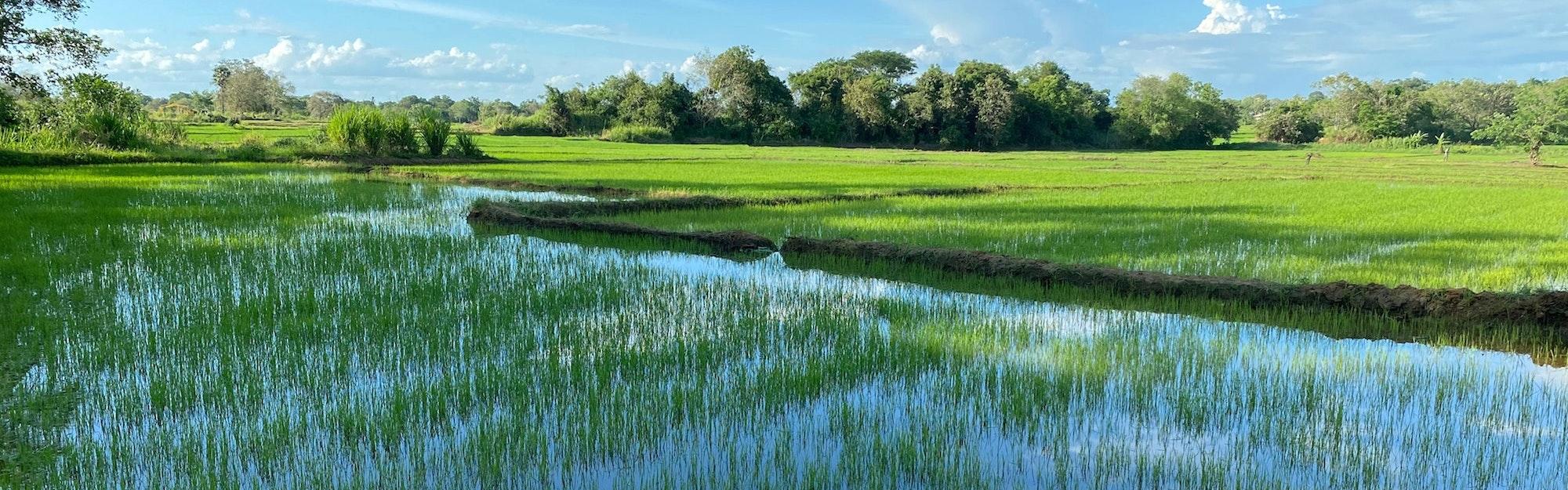
The major destinations that mark the three points of Sri Lanka's Cultural Triangle are Anuradhapura, Polonnaruwa and Dambulla, although some people put the southernmost point of the triangle at the beautiful city of Kandy. While Kandy is a must for travellers in the region, it's located in the lush highlands of Sri Lanka and is therefore different in character to the ancient wonders of the triangle, which are located in the dry interior plains where the flat landscape is interrupted by dramatic rocky outcrops. This region was traditionally referred to as Rajarata, 'The King's Land', and boasts a wealth of fascinating historical sites from the Golden Age of Sri Lankan civilisation, many of which are now UNESCO-listed.
Apart from Anuradhapura, Polonnaruwa and Dambulla, travellers are awed by the rock fortress of Sigiriya, the ancient monastery of Ritigale, and Mihintale, the birthplace of Buddhism in Sri Lanka. Lesser known attractions include the great Buddha statues at Sasseruwa and Aukana, the mysterious old cities of Yapahuwa and Panduwasnuwara, and the temples of Aluvihara and Ridi Vihara.
Anuradhapura
Anuradhapura, Sri Lanka's ancient capital, flourished from the 4th century BCE until 993 CE. Founded by King Pandukabhaya, it became a major Buddhist centre. The Jaya Sri Maha Bodh…
Anuradhapura
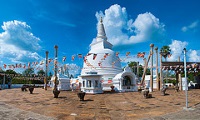
Anuradhapura, Sri Lanka's ancient capital, flourished from the 4th century BCE until 993 CE. Founded by King Pandukabhaya, it became a major Buddhist centre. The Jaya Sri Maha Bodhi, planted in 236 BCE from a sapling of the original Bodhi tree under which Buddha attained enlightenment, stands as the world's oldest documented tree. The city boasts monumental stupas such as Ruwanwelisaya and Jetavanaramaya, advanced irrigation systems, and sacred sites such as the Sri Maha Bodhi. Rediscovered in the 19th century, Anuradhapura remains a UNESCO World Heritage site and a vibrant pilgrimage destination.
Kandy
Nestled in Sri Lanka's central highlands, Kandy is a serene city encircling a tranquil lake amidst lush hills. Once the capital of the Kandyan Kingdom, it resisted colonial rule fo…
Kandy
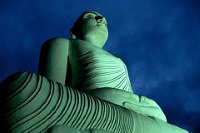
Nestled in Sri Lanka's central highlands, Kandy is a serene city encircling a tranquil lake amidst lush hills. Once the capital of the Kandyan Kingdom, it resisted colonial rule for centuries before falling to the British in 1815. Kandy is renowned for the Temple of the Sacred Tooth Relic (Sri Dalada Maligawa), which houses Buddha's tooth and is central to the annual Esala Perahera festival. This UNESCO-listed city also boasts the Royal Palace Complex, the verdant Udawattakele Forest Reserve, and the Royal Botanical Gardens in Peradeniya. Its cooler climate offers a refreshing escape from Sri Lanka's coastal heat.
Sigiriya
Sigiriya, or 'Lion's Rock', is a 5th-century citadel built atop a 200-meter granite monolith by King Kashyapa I, who reigned from 477 to 495 CE. After seizing the throne from his f…
Sigiriya
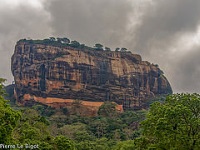
Sigiriya, or 'Lion's Rock', is a 5th-century citadel built atop a 200-meter granite monolith by King Kashyapa I, who reigned from 477 to 495 CE. After seizing the throne from his father, Kashyapa constructed this fortress to protect against his brother Moggallana. The ascent to the summit begins through the remains of a colossal lion's paws, leading to the royal palace. The site features elaborate water gardens, frescoes of celestial maidens, and a mirror wall adorned with ancient graffiti. Designated a UNESCO World Heritage site in 1982, Sigiriya is renowned for its advanced urban planning and architectural ingenuity.
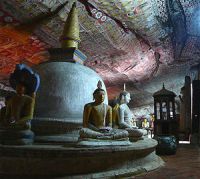
Dambulla Cave Temples
The Golden Temple of Dambulla, a UNESCO World Heritage Site since 1991, is Sri Lanka's largest and best-preserved cave temple complex. Dating back to the 1st century BCE, it compri…
Dambulla Cave Temples
The Golden Temple of Dambulla, a UNESCO World Heritage Site since 1991, is Sri Lanka's largest and best-preserved cave temple complex. Dating back to the 1st century BCE, it comprises five caves adorned with over 150 Buddha statues and 2,100 square metres of vibrant murals depicting the Buddha's life and Jataka tales. The largest cave, Maharaja Viharaya, features a 15-metre reclining Buddha and images of Hindu deities such as Vishnu and Saman. The climb to the temple involves ascending several hundred steps; visitors should be prepared for the heat and wear appropriate footwear.