

Country guides
 Europe
Things to do in Poland
Sightseeing in Poland reveals an abundance of European charm, from alpine mountains and historic buildings to resplendent lakes, lush meadows, unspoilt beaches, and even some fascinating, albeit harrowing, sites from the Second World War.
Warsaw, the capital, was the first city to fall to Hitler and had to be almost entirely rebuilt after the 1944 invasion. Parts of the Old Town were reconstructed to mirror the city as it appeared in the 17th and 18th centuries. The Historical Museum of Warsaw, which honours the city's turbulent past, is a must-visit. A trip to Poland would be incomplete without a visit to Auschwitz, Hitler's largest and most notorious concentration camp, an unforgettable and significant wartime landmark.
Two hours north of Warsaw lies the Białowieża Primeval Forest, a UNESCO World Heritage Site and one of the last remnants of the vast European primeval forests that once covered much of the continent. Further north, other rare vestiges of old Europe can be explored, such as Malbork Castle, the largest brick fortress in Europe, along with several other stunning wooden and stone churches, temples, and buildings scattered across Poland's vast, picturesque countryside. These sites can easily be accessed by bus or train.
Kraków, Poland's most popular tourist destination, was the city least affected by the war. The main attraction is its remarkably well-preserved medieval centre, but Kraków is also a vibrant, cosmopolitan city, offering a unique blend of old-world charm and modern energy, a perfect reflection of Poland as a whole.
Old Town (Starego Miasta)
The Old Town is a historic hub, meticulously rebuilt in the original 17th- and 18th-century style after the war. At its heart lies the picturesque Old Market Square (Rynek), surrou…
Old Town (Starego Miasta)
The Old Town is a historic hub, meticulously rebuilt in the original 17th- and 18th-century style after the war. At its heart lies the picturesque Old Market Square (Rynek), surrounded by restored buildings and vibrant three-story merchant houses with Baroque and Renaissance facades. The square is alive with open-air restaurants, art stalls and the Historical Museum of Warsaw. Buskers, painters and musicians add to the atmosphere; cobbled streets and alleyways lead to beautiful Gothic churches and palaces. The majestic Royal Castle, once the residence of Polish kings, stands proudly at the edge, and medieval ramparts and watchtowers complete the city's historic charm.
Museum of Warsaw
The Museum of Warsaw is one of the best of the city's impressive array of museums. Its three storeys are crammed with fascinating exhibitions, covering every aspect of Warsaw's his…
Museum of Warsaw
The Museum of Warsaw is one of the best of the city's impressive array of museums. Its three storeys are crammed with fascinating exhibitions, covering every aspect of Warsaw's history and life from the city's establishment to the present day. It occupies almost an entire side of a square in Old Town, housed in quaint historical buildings and boasting 52 rooms with permanent exhibitions, four with temporary exhibitions, a cinema, a library, and a reading room. A special feature is a documentary film showing the destruction and reconstruction of the city, with footage shot by the Nazis during their calculated and systematic annihilation of Warsaw, and footage of the careful rebuilding after the war. The film is available on demand during the museum's operating hours, but it's recommended to check the current schedule before visiting.
Website www.muzeumwarszawy.pl
The Royal Route
Known as the Royal Route, this two-and-a-half-mile (4 km) path stretches from the Royal Castle in Warsaw's Old Town to the magnificent Wilanów Palace on the city's outskirts. Runn…
The Royal Route
Known as the Royal Route, this two-and-a-half-mile (4 km) path stretches from the Royal Castle in Warsaw's Old Town to the magnificent Wilanów Palace on the city's outskirts. Running through the heart of the city from north to south, it's lined with galleries, museums and historic landmarks, including St. Anne's Church.
Along the route, visitors can explore the royal gardens of Łazienki Park, a tranquil oasis with lakes, peacocks and the elegant Łazienki Palace, once a royal summer residence. In the park, a monument to famed Polish composer Frédéric Chopin stands, and summer concerts are held on the lawns.
The Royal Route concludes at Wilanów Palace, an architectural gem inspired by Versailles, which houses a museum and an art gallery in its Orangery. The palace is also surrounded by beautiful gardens, making it a perfect spot to explore on a leisurely afternoon.
The Royal Route offers a glimpse into Poland's rich history, making it a must-see for anyone visiting Warsaw. Along the way, visitors will find plenty of cafés and restaurants to enjoy a break and take in the city's vibrant atmosphere.
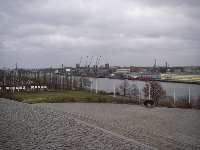
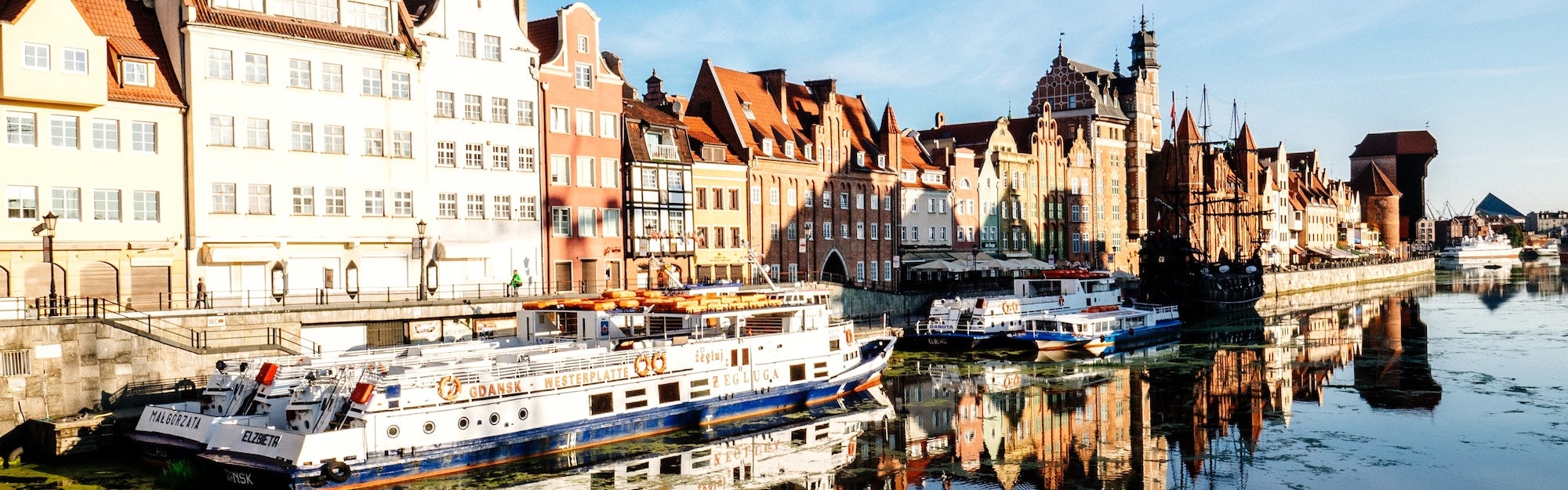
Westerplatte
The peninsula of Westerplatte saw the beginning of Second World War. A small Polish garrison heroically held out against the attack of seven days before surrendering to German forc…
Westerplatte
The peninsula of Westerplatte saw the beginning of Second World War. A small Polish garrison heroically held out against the attack of seven days before surrendering to German forces, with the site now a towering memorial to the defenders. With only 180 Polish soldiers, they fought on knowing they had no chance of reinforcement or resupply. A small museum is accompanied by ruins of the barracks and guardhouses left from the shelling, standing harrowing and dilapidated in an otherwise picturesque setting reachable by bus. Surrounding scenery is best appreciated on a boat or bike trip.
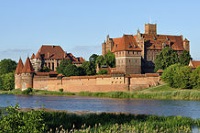
Malbork Castle
Malbork Castle is the world's largest brick fortress and one of the most impressive in Europe. The Teutonic Knights built it in 1276 and slowly began to establish themselves as fea…
Malbork Castle
Malbork Castle is the world's largest brick fortress and one of the most impressive in Europe. The Teutonic Knights built it in 1276 and slowly began to establish themselves as fearsome rulers, taking control of most of Poland until they were defeated at the Battle of Grunwald in 1410. The immense brick stronghold incorporates a system of multiple defence walls with gates and towers, guarding an interior of arcaded courtyards, chapels, a treasury, the Knights' Hall, and an armoury. The castle houses several exhibitions of tapestries, coins and medals, medieval sculptures, and weapons. During summer, the courtyard is used as a venue for sound and light shows. Guided tours are available and there are audio guides for those who prefer to explore independently, although the number of audio guides is limited.
Website www.zamek.malbork.pl
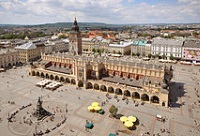
Main Market Square (Rynek Glówny)
Dating back to 1257, the Central Market Square was once one of the largest squares in medieval Europe and remains the vibrant heart of Krakow. Surrounded by historic buildings, mus…
Main Market Square (Rynek Glówny)
Dating back to 1257, the Central Market Square was once one of the largest squares in medieval Europe and remains the vibrant heart of Krakow. Surrounded by historic buildings, museums and magnificent churches, this expansive flagstone square continues to bustle with commercial and social activity. Flower sellers, ice cream vendors, musicians, pigeons, students and tourists all fill the square, adding to its lively atmosphere. The square has long been a trading hub, and was once the centre of commerce for luxury goods such as cloth and spices.
The striking St. Mary's Church, a twin-spire Gothic masterpiece, stands proudly at one end, and its hourly Hejnał mariacki trumpet call is a cherished tradition. At the centre of the square lies the splendid medieval Cloth Hall, now home to an art gallery featuring a collection of 19th-century Polish paintings and sculptures. Beneath the square, the Rynek Underground Museum reveals fascinating insights into Krakow's past, with archaeological finds that trace the city's development through the centuries.
The square also hosts numerous events and festivals throughout the year, from the lively Krakow Christmas Market to summer concerts, making it an ever-changing and dynamic destination.
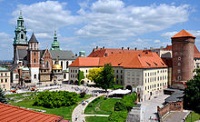
Wawel
Wawel Hill offers a stunning view of Krakow and is home to an architectural complex that includes Wawel Castle and the Gothic Wawel Cathedral. This historic site was the coronation…
Wawel
Wawel Hill offers a stunning view of Krakow and is home to an architectural complex that includes Wawel Castle and the Gothic Wawel Cathedral. This historic site was the coronation and burial place for Polish kings from the 14th to the 17th century, making it central to Poland's royal history. The Renaissance-style Wawel Castle is a mix of architectural styles, including Gothic and Romanesque elements, and now functions as a museum. Visitors can explore the Royal Private Apartments, Crown Treasury, Armoury and State Rooms. Among the cathedral's many chapels, the golden-domed Chapel of King Sigismund stands out as the most remarkable. The cathedral also houses the royal tombs of many Polish monarchs and national heroes, adding to its historical significance.
For a truly unique experience, travellers shouldn't miss the nearby Wawel Dragon's Den, which is a cave beneath the castle that's home to a statue of the legendary dragon. The dragon even breathes fire at regular intervals! Visitors can also climb the bell tower for panoramic views of the city and to see the massive 11-tonne Sigismund Bell. For those looking to explore more, the 'Dragon's Route' is a scenic pathway along the Vistula River leading up to Wawel Hill.
Wawel is a national symbol of Poland, representing the heart of Polish culture and identity. Depending on the time of year, special exhibitions, concerts or events may take place within the castle and cathedral, enhancing the experience. A variety of guided tours are available, so visitors should be sure to check the official website for more details. The site is wheelchair accessible, making it easier for everyone to enjoy its rich history.
Website www.wawel.krakow.pl
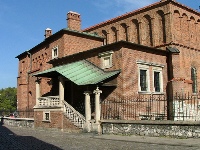
Kazimierz District and the Old Synagogue
The Kazimierz quarter was the centre of Jewish religion, culture and learning before the Second World War. Badly damaged during the Nazi occupation, it has been rebuilt so visitors…
Kazimierz District and the Old Synagogue
The Kazimierz quarter was the centre of Jewish religion, culture and learning before the Second World War. Badly damaged during the Nazi occupation, it has been rebuilt so visitors can admire the historical architecture and get an experience of what daily Jewish life was once like. The area is enlivened by art galleries, kosher restaurants and numerous cultural events. The Oskar Schindler Factory Museum is itself a popular tourist attraction in Krakow, and is dedicated to the memory of Schindler and the Jewish workers he managed to save from the death camps. The Old Synagogue is part of the Historical Museum of Krakow, where the collection of physical memories from the Kazimierz Jewish community is kept.
Website www.mhk.pl/oddzialy/stara-synagoga
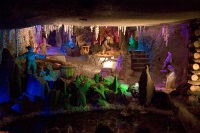
Wieliczka Salt Mine
A UNESCO World Cultural Heritage Monument, the Salt Mine at Wieliczka is a remarkable underground complex that dates back to the Middle Ages. This vast network of labyrinthine tunn…
Wieliczka Salt Mine
A UNESCO World Cultural Heritage Monument, the Salt Mine at Wieliczka is a remarkable underground complex that dates back to the Middle Ages. This vast network of labyrinthine tunnels, chambers, galleries and underground lakes stretches over nine levels and reaches a depth of more than 1,000 feet (304 meters), though visitors are limited to a tour of three levels. As visitors explore, they'll encounter centuries-old passageways leading to enormous crystalline caverns and intricately carved chapels. The highlight is the Blessed Kinga Chapel, where everything, from the altars to the sculptures, is delicately carved from salt. This stunning chapel is dedicated to Saint Kinga, the patron saint of Polish mine workers, and serves as a tribute to their enduring legacy. Added to this, the world's first subterranean therapeutic sanatorium, located 656 feet (200 meters) below the surface, takes advantage of the mine's saline air to treat conditions such as asthma.
Website www.kopalnia.pl
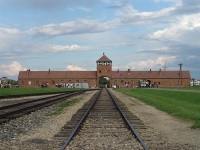
Auschwitz Memorial Museum
The Auschwitz concentration camp stands as the largest cemetery in the world, preserved as a memorial to the victims of the Holocaust during the Second World War. The site's struct…
Auschwitz Memorial Museum
The Auschwitz concentration camp stands as the largest cemetery in the world, preserved as a memorial to the victims of the Holocaust during the Second World War. The site's structures, ruins and gas chambers can be explored, alongside various exhibits at the museum.
Inside the buildings, displays of photographs and piles of personal belongings left behind by the victims can be seen, including battered suitcases, thousands of spectacles, hair and shoes. These items serve as haunting reminders of the individuals who perished here.
The sheer scale of the tragedy is most striking at the Birkenau Camp (Auschwitz II), where a viewing platform provides a perspective on the vast, fenced-in area. Birkenau was the principal site for the extermination of millions of people, designed with chilling efficiency, featuring rows of barracks and four colossal gas chambers and crematoria.
Purpose-built railway tracks run through the massive gateway, which was used to transport victims from the ghettos to the camp in overcrowded boxcars. Many were sent directly to the gas chambers upon arrival.
To fully comprehend the site and its history, guided tours are recommended, typically lasting at least three and a half hours. These tours provide essential context and a deeper understanding of the camp's significance. Given the high demand, booking a place on one of the various guided tours at least two weeks in advance is advised. For further details, the official website provides more information.
As Auschwitz is a memorial to the victims of the Holocaust, visitors are reminded to behave respectfully during their visit. It's important to maintain silence in many areas of the camp, refrain from loud talking or inappropriate behaviour, and avoid taking photos in certain locations. The site is a place of mourning and reflection, and visitors should approach it with the utmost reverence.
Website auschwitz.org/en/
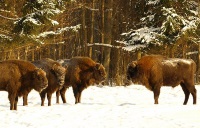
Bialowieza National Park
Bialowieza National Park is a heavily protected UNESCO World Heritage site. It guards the last remnants of the primeval forest that used to cover most of Europe at the time of the …
Bialowieza National Park
Bialowieza National Park is a heavily protected UNESCO World Heritage site. It guards the last remnants of the primeval forest that used to cover most of Europe at the time of the last ice age. The park is the last place on earth that tourists can see European bison, huge beasts that once roamed across the continent, living undisturbed in their natural habitats. An ecotourism destination of international repute, the nearby town of Bialowieza has launched numerous luxury spas and elite lodgings. Bialowieza National Park is a short train ride from Warsaw (two and a half hours) making it possible to visit the park on a daytrip, but it's best to spend at least one night in the area if possible.
Sopot
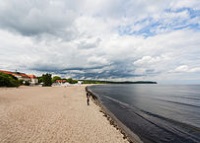
Although still very much a well-kept secret on the mainstream tourist scene, Northern European travellers have been flocking to Sopot for many years for its gorgeous sandy beaches …
Sopot
Although still very much a well-kept secret on the mainstream tourist scene, Northern European travellers have been flocking to Sopot for many years for its gorgeous sandy beaches on the shore of the Baltic Sea. Primarily a beach resort and health spa town, Sopot buzzes every summer. Throngs of visitors walk along its famous wooden pier while enjoying the long sunny days and numerous restaurants, bars, and shops. There are a few other tourist attractions in the town, like a museum and a water park, but the beachfront is the highlight. With its vibrant nightlife and relative obscurity, Sopot is the perfect cheaper option for budget travellers and backpackers.