

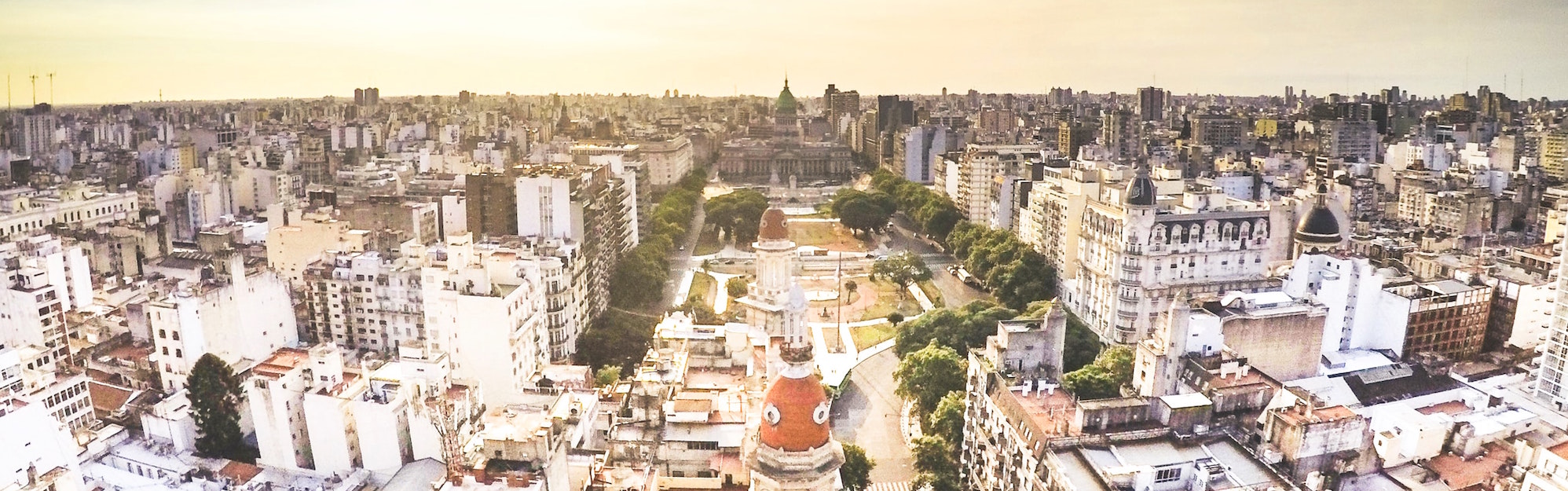

Buenos Aires Travel Guide
Buenos Aires is the capital of Argentina, and one of South America's most vibrant urban destinations. With nearly 16 million people in its metro area, it promises travellers an unforgettable blend of culture, character and constant motion.
Often called the 'Paris of South America', the city combines European elegance with Latin flair. Grand architecture and leafy boulevards contrast with colourful neighbourhoods filled with murals, music and the passion of tango, with this iconic dance remaining deeply tied to the city's identity. Visitors will see it performed in public squares, on cobblestone streets and in late-night milongas (tango dance events held in social halls or clubs).
The nightlife here is legendary, and features everything from stylish cocktail bars and relaxed wine lounges to underground clubs and all-night dance venues, where the evening truly starts after dark.
Foodies will discover that while Buenos Aires is famed for its world-class steak and bold Malbecs, its culinary scene reflects its diverse immigrant heritage. Influences come from Italy, Spain, the Middle East and Asia; dining ranges from upscale restaurants to cosy neighbourhood spots. Shopping also shines, with local fashion brands, artisan markets, antique fairs, and modern malls offering everything from handmade goods to contemporary design.
Though not on the ocean, Buenos Aires lines the Río de la Plata. Riverside promenades, parks, and outdoor cafés, especially in Puerto Madero, give it a relaxed, coastal vibe.
Traditional yet modern, refined yet raw, Buenos Aires captivates with its contrasts and leaves a lasting impression on every traveller.
Best time to visit Buenos Aires
The best times to visit Buenos Aires are in autumn (March to May) and spring (September to November), when the weather is mild and comfortable. Summer (December to February) can be hot, humid and crowded with tourists. Many locals leave the city to escape the heat, and some restaurants and museums may operate on shorter hours. October and November are especially beautiful, as the jacaranda trees bloom and cover the city in vibrant purple flowers.
What to see in Buenos Aires
-Watch the street performers of La Boca and the Plaza Dorrego. -See the ostentatious Casa Rosada, former home of Juan and Eva Peron. -Wander around the elaborate monuments of La Recoleta Cemetery.
What to do in Buenos Aires
-Navigate Nueve de Julio Avenue, the widest street in the world. -Learn to tango in one of Buenos Aires' trendy nightclubs. -Take the kids to the Botanical Gardens. -Catch a polo match or take a lesson.
Beyond Buenos Aires
Buenos Aires is the gateway to Argentina, as most international flights land here. From Buenos Aires, travellers can spend the weekend at the fashionable beach resorts of Mar del Plata, 230 miles (400km) to the south. Many head north to Cordoba and the rolling plains of the Pampas where the gauchos (cowboys) roam, and further north to the spectacular Iguazu Falls. Montevideo, across the border in Uruguay, is also accessible from Buenos Aires by ferry.
Getting there
Ezeiza Ministro Pistarini International Airport is located 14 miles (22km) southwest of Buenos Aires, and is connected to the city via shuttles, taxis and buses. Direct flights to Buenos Aires are available from a number of cities worldwide, including London, Miami, Santiago de Chile, Istanbul and Moscow.
Did you know?
-The Spanish spoken in Buenos Aires is coloured with local slang called Lunfardo, and differs from that spoken in other parts of the country.
-The standard greeting in Buenos Aires is a kiss on the cheek, whether male or female.
-Buenos Aires has the second largest Jewish population (over 300,000) in the Americas, second only to New York City.